NASA/Bill White (KSC-20170412-PH_SWW01_0002)NASA (ISS073-E-0257194, June 28, 2025)NASA (ISS071-E-449837, July 24, 2024)NASA (ISS071-E-207494, June 24, 2024)
Two ways to help: give to an organization, or roll up your sleeves. Every button opens the organization’s own official page. Saving Planets never receives the money.
Not sure this is your cause? See if your interest lies with one of our other 84 hand-selected groups.Find your cause
A government agency or a public university, confirmed on that agency’s or university’s own site.
The shield beside a Donate button shows the check name when you hover, focus, or tap it, and opens that group’s own record. It is not a Charity Navigator, Candid, or BBB seal. A button does not mean the group passed every check on this list. Featuring a group is not a partnership or an endorsement.
On November 7, 2026, Charity Navigator's profile for Mote Marine Laboratory, EIN 59-0756643, Sarasota, website mote.org, displayed a Four-Star rating and a 99 percent score.·Last reviewed: ·21 sources cited
Woodwell Climate Research Center, which runs the fund, is a Four-Star charity on Charity Navigator, with audited financial statements.·Last reviewed: ·3 sources cited
Volunteer, citizen science and hands-on work, grouped by hub.
Where
A place is listed only when we have one. Other rows stay under Any place.
🛰️ Earth Observation 52 organizations
ESA, JAXA and some other agencies do not publish a public volunteer sign-up. A button says Careers or Contact when that is the real page. These official projects are actions you can take:
Sentinel Asia
Sentinel Asia shares satellite images and damage maps with disaster agencies across the Asia-Pacific.
A citizen science app allowing volunteers in GLOBE countries to take observations and contribute to the Global Learning and Observations to Benefit the Environment (GLOBE) community.
Globe at Night is an international citizen-science campaign to raise public awareness of the impact of light pollution by inviting citizen-scientists to measure and submit their night sky brightness observations.
Through these projects, sometimes called citizen science or participatory science projects, volunteers and amateurs have helped make thousands of important scientific discoveries.
ESA's Biomass satellite, launched April 29, 2025, carries the first P-band radar in space, seeing through forest canopies to measure the carbon stored in trees.
The Copernicus Sentinel-3 satellites measure Earth's oceans, land, ice and atmosphere, and a third satellite, Sentinel-3C, launched on September 15, 2026.
From geostationary orbit on MTG-S1, Sentinel-4 measures air pollution such as nitrogen dioxide and ozone over Europe and North Africa every hour (ESA).
Digital Earth Africa turns satellite data into free and open maps of water, farmland and coasts for the whole African continent (Digital Earth Africa).
NASA's EPIC camera rides on NOAA's DSCOVR spacecraft at the L1 point, photographing the entire sunlit face of Earth several times a day, with an archive...
ESA–JAXA EarthCARE carries the first space cloud radar that can measure how cloud particles move up and down, sharpening forecasts of how clouds affect climate.
NASA's EMIT instrument on the International Space Station maps the minerals in desert dust and has spotted methane super-emitters from space (NASA JPL).
ESA's FORUM will measure Earth's outgoing far-infrared radiation, never measured from space before, filling a missing piece of the climate jigsaw (ESA).
Japan's SHIKISAI satellite checks the health of Earth from space every 2 or 3 days, tracking clouds, aerosols, ocean color, plants, snow and ice (JAXA).
The UN's satellite methane alert system has sent more than 3,500 alerts about major leaks in 33 countries, and responses rose from 1% to 12% in a year.
NISAR, a NASA and ISRO radar satellite launched from India on July 30, 2025, scans nearly all of Earth's land and ice twice every 12 days, even through clouds.
NASA's OCO-2 satellite has measured carbon dioxide around the planet since 2014, showing where carbon is released and where forests and oceans absorb it.
NOAA's SARSAT satellites relay distress beacon signals to rescuers; the international system has supported more than 50,000 rescues worldwide since 1982.
Tanager-1, built by Planet with a NASA JPL-designed spectrometer for the nonprofit Carbon Mapper, pinpoints methane and CO2 plumes from single sources.
The Global Learning and Observations to Benefit the Environment (GLOBE) Program is an international science program that provides the public worldwide with the opportunity to participate in data collection and the scientific process, and contribute meaningfully to our understanding of the Earth system and global environment.
Costa Rica's FONAFIFO pays the owners of forests and forest plantations for the environmental services they provide, under Forestry Law 7575 (FONAFIFO).
About 80 species of mangrove trees guard tropical coastlines: their tangled roots hold mud in place, soften storm surges and give fish food and shelter.
Predator Free 2050 is a nationwide goal to eradicate rats, possums, feral cats and mustelids from Aotearoa New Zealand, led by the Department of Conservation.
Rewilding Europe helps wild nature make a comeback. With more than 30 different species reintroduced and over 1 million hectares of land being rewilded across 11 different landscapes in Europe.
Terraformation grows native, biodiverse forests from seed to canopy across the tropics and Hawaii, funding seed collection, nurseries, planting and monitoring.
Saving Planets' own forest rule: plant three trees for every one removed, so each removal becomes a net gain for habitat, soil and shade, and is easy to verify.
In 2000, the Chilika Development Authority opened a new mouth between India's Chilika Lake and the sea, and the lagoon and its fisheries recovered (CDA).
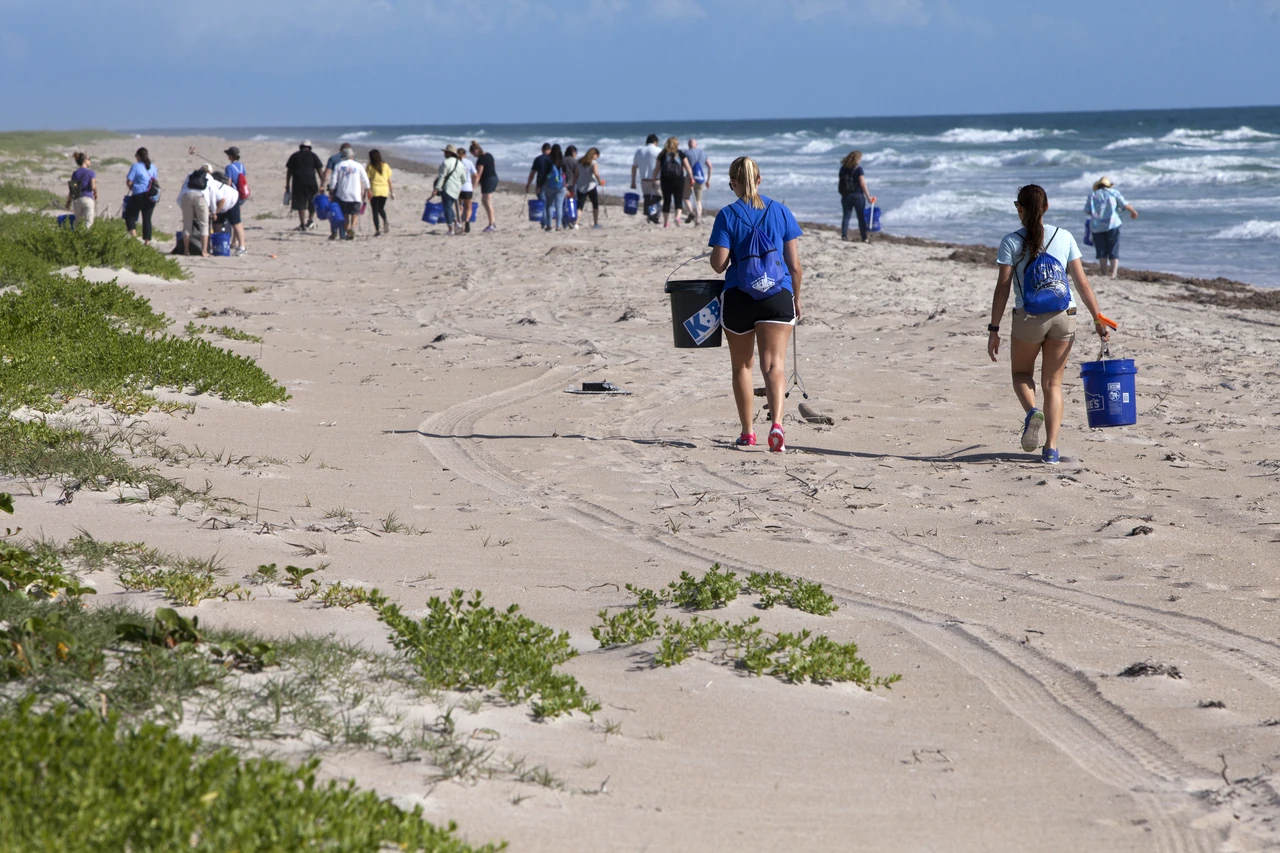
Clean Up the Lake removes submerged litter from freshwater lakes using scuba divers and volunteers, and GPS-pins, sorts and weighs every piece it finds.
Keep Tahoe Blue, the League to Save Lake Tahoe, has protected the lake for decades, and its volunteers picked up 1,330 pounds of litter after July 4, 2026.
NOAA forecasts and tracks toxic algae in western Lake Erie through the summer so cities and swimmers can keep drinking water and people safe (NOAA NCCOS).
Saving Planets' own lake solution: recover plastic from freshwater lakes by skimming, shoreline collection and divers, before it travels downstream to the sea.
A Nevada nonprofit whose ROVs and volunteer divers pull submerged trash from Lake Tahoe, from the surface down to 1,640 feet: over 13 tons in summer 2024 alone.
The Alaska SeaLife Center in Seward is a nonprofit aquarium and research center that rescues stranded marine animals and studies Alaska's marine ecosystems.
A satellite system that tracks wildlife and ocean instruments from tiny transmitters, following more than 8,000 animals every month for conservation science.
A 2026 study of 28 atoll islands found that removing rats and restoring native plants boosts the seabirds, reefs and sand that help atolls keep up with…
Global Fishing Watch uses satellites and SI to map fishing; its 2024 Nature study found about 75% of industrial fishing vessels are not publicly tracked.
The Palau National Marine Sanctuary makes about 80% of Palau's exclusive economic zone a no-take area, with the other 20% kept as a Domestic Fishing Zone.
Plastic Bank pays collectors in vulnerable communities to gather ocean-bound plastic, exchanged at local branches for income, food vouchers and school supplies.
The Ocean Cleanup removes legacy plastic from ocean garbage patches and intercepts it in rivers: more than 65 million kilograms caught as of October 2026.
Tubbataha, a no-take marine park of 96,828 hectares in the Philippines, protects pristine coral atolls and the sea life that seeds the Sulu Sea (UNESCO).
Europe's asteroid watch centre computes orbits and impact risks every day and keeps a public list of every asteroid with a non-zero chance of hitting Earth.
How the James Webb Space Telescope tracked asteroid 2024 YR4 in February 2026 and ruled out a 2032 Moon impact, two years before ground telescopes could.
CCAMLR manages Antarctic marine life with an ecosystem-based approach, allowing only sustainable harvesting that accounts for effects on the ecosystem.
Two Copernicus satellites will measure sea ice, sea-surface temperature and salinity over 95% of the globe every day, with sub-daily polar views (ESA).
About 100 scientists from the UK, US, South Korea, Germany and Sweden are working out how fast Antarctica's Thwaites Glacier could raise sea levels (ITGC).
The Svalbard Global Seed Vault stores backup copies of the world's crop seeds free of charge, more than 100 metres inside an Arctic mountain (Seed Vault).
On 14 January 2026, the Ice Memory Sanctuary opened at Concordia Station: a 35-meter cave in the Antarctic ice, about −52 °C, with no mechanical refrigeration.
The space station now recycles 98% of the water its crews bring along, thanks to a Brine Processor Assembly, technology that matters wherever water is…
NASA's Psyche used a Mars flyby on 15 May 2026 to head for a metal-rich asteroid it will orbit from August 2029, to learn what a planet's core is like.
Seoul removed an ageing road and elevated motorway that covered the Cheonggyecheon stream and restored it along a 5.84 km corridor through the city centre.
Two Elwha River dams came down between 2011 and 2014, and more than 20 million tons of trapped sediment flowed downstream to rebuild the river and coast.
NEWater is high-grade reclaimed water from PUB, Singapore's National Water Agency, made from treated used water in a three-step purification process at 4…
Penobscot River Restoration Trust (Natural Resources Council of Maine)
After two dams came out of Maine's Penobscot River, nearly 5.93 million river herring climbed the Milford fish lift in 2025, up from about 590,000 in 2015.
River Cleanup and its volunteers have recovered more than 4.39 million kg of waste from rivers worldwide and aim for 1,000 plastic-free rivers by 2050.
Sungai Watch stops plastic in Indonesian rivers with trash barriers, daily collection and sorting, plus upcycling, working in Bali and Java since 2020.
The Great Bubble Barrier's bubble curtain guides plastic out of Amsterdam's canals into a catchment across the full width and depth, while boats and fish pass.
Waterkeeper Alliance unites hundreds of local Waterkeeper groups that patrol and protect more than 6 million square miles of rivers, lakes and coastlines.
Astroscale inspects, services and removes debris in orbit: ELSA-d, ADRAS-J's 2024 close-up of an H-IIA upper stage, and ADRAS-J2, targeted for fiscal 2027.
JAXA and ISRO are building LUPEX, also called Chandrayaan-5, to study water at the lunar south pole; launch is no earlier than 2028 on an H3 rocket (JAXA).
Atmospheric drag is Earth's natural space debris removal: it pulls low-orbit junk down to burn up, faster when the Sun is active, but barely works up high.
Life extension in GEO: two MEVs have docked with three satellites, and the Mission Robotic Vehicle and three pods launched July 21, 2026 (company figures).
Titan is a prebiotic time capsule, and NASA's Dragonfly rotorcraft explores it from 2034, building radar, power and autonomy tools that matter for Earth.
The first spacecraft to fly through the Sun's outer atmosphere, helping scientists understand the space weather that affects life and technology on Earth.
NOAA's SOLAR-1 (formerly SWFO-L1) watches the Sun from L1, about one million miles from Earth, streaming space weather data to forecasters in real time.
Three natural shields protect Earth: the heliosphere, the magnetosphere, and the atmosphere with its ozone layer, deflecting solar wind and most harmful UV-B.
Saving Planets doesn't take donations and doesn't receive any of the money. Every Donate button goes straight to the organization's own official page, and every Offer to Help button goes to its own volunteer, get-involved or careers page. When an organization has no donation or volunteer page, the button goes to its official contact page instead, and the row says so. Many space agencies don't take donations, but NASA invites anyone to help with real research through its citizen science projects.