Want to go deeper? NASA's Orbital Debris Program Office answers the most common debris questions.
 For further information
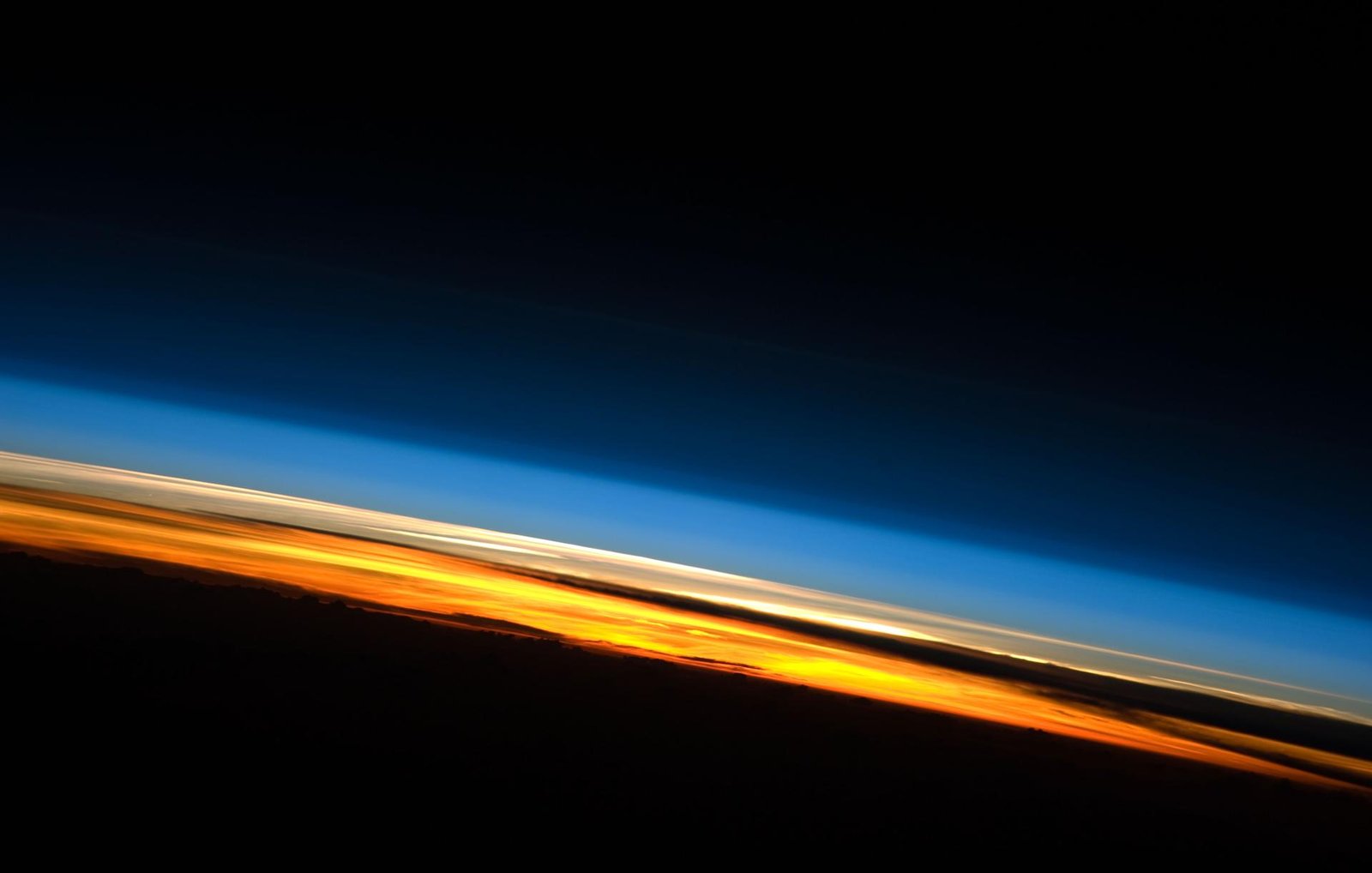
Earth's own debris vacuum, powered by the Sun.
Image: NASA, ISS Expedition 29 crew (iss029e034092): the Progress 42 cargo ship burning up on re-entry.
Earth's own upper atmosphere, energized by the Sun. No company, no launch.
A natural debris vacuum. Even where the air is extremely thin, it still produces drag that slows objects in low Earth orbit and pulls them down until they burn up.
Source: NOAA SWPC, Satellite drag
All the time, and harder when the Sun is active. Solar activity heats the upper atmosphere so denser air rises to satellite altitudes. Satellites that boost about four times a year when the Sun is quiet may need to every 2 to 3 weeks at solar maximum.
Source: NOAA SWPC, Satellite drag
Low Earth orbit, below about 2,000 km. It works best low down: debris below 600 km normally falls back within several years.
Source: NOAA SWPC
Every piece that re-enters is one less collision risk. Over the past 50 years, an average of one cataloged piece of debris has fallen back to Earth each day.
Atmospheric drag is the only debris removal system already clearing low orbit every day. Paired with Jupiter, it makes two natural cleanup crews: one for comets, one for our own junk.
Drag fades fast with height. At 800 km, NASA says orbital decay is often measured in centuries, and above 1,000 km debris normally keeps circling for a thousand years or more. The heaviest concentration of debris sits near 750 to 1,000 km, right where drag is weakest. That is why missions like ADRAS-J2 and ClearSpace-1 still matter.
Source: NASA Orbital Debris Program Office FAQ
Re-entry is not risk-free, but NASA reports most debris does not survive the heating, and no serious injury or significant property damage from re-entering debris has been confirmed.
Want to go deeper? NASA's Orbital Debris Program Office answers the most common debris questions.
For further information