Want to go deeper? NASA's Artemis II pages have the mission story, crew and images.
 For Further Information
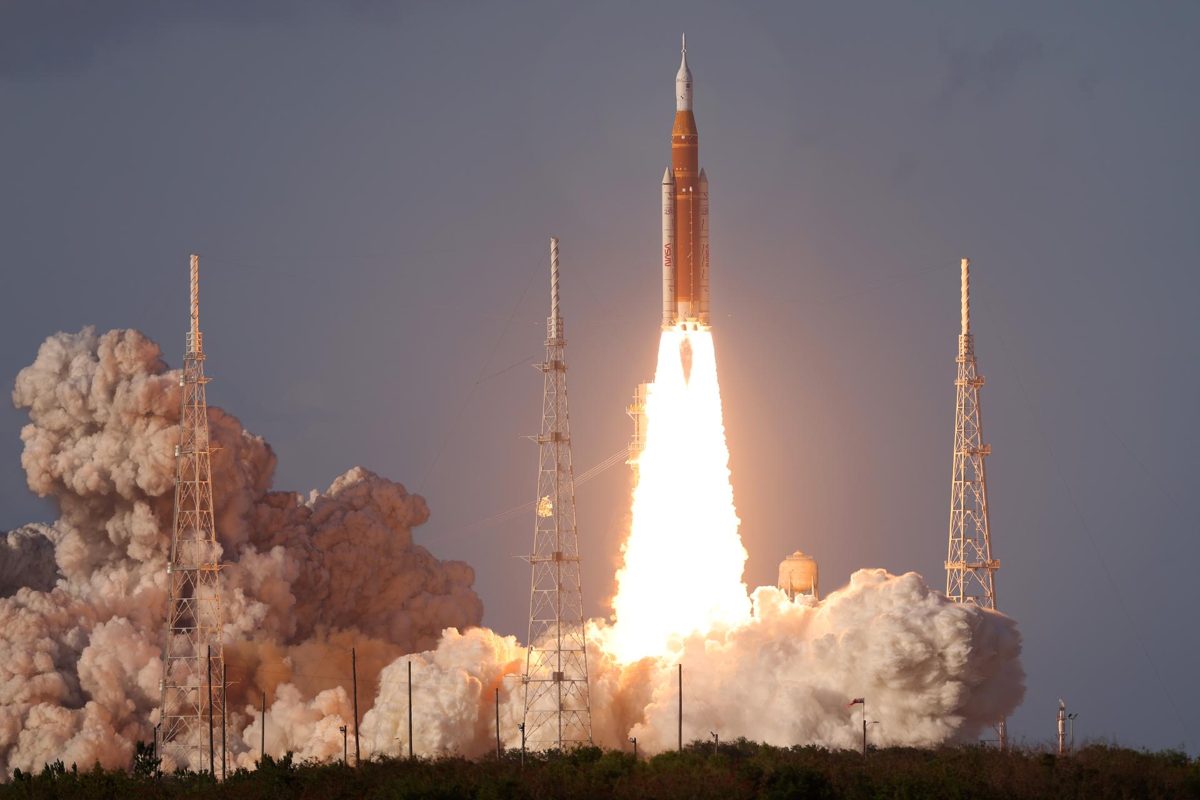
Four astronauts, one loop around the Moon, and a new record for how far humans have traveled.
Image: NASA, Artemis II launch.
NASA target: 2027 · Crewed demonstration in low Earth orbit
Artemis III will carry out a series of objectives in low Earth orbit designed to demonstrate critical systems needed for future lunar landings, beginning with Artemis IV. NASA's SLS rocket will launch four crew members aboard Orion from Kennedy Space Center in Florida.
Source: NASA, Artemis III mission
Source: NASA, Artemis architecture update
Source: NASA, Artemis III crew
Last updated October 11, 2026. Dates are NASA targets and shift. Data (JSON)
Goal: Test the rocket, spacecraft and ground systems without a crew.
Crew: None (uncrewed).
Hardware: SLS rocket and Orion spacecraft (uncrewed).
Source: NASA, Artemis I
Goal: Prove Orion and SLS with a crew aboard.
Crew: Reid Wiseman (NASA, Commander), Victor Glover (NASA, Pilot), Christina Koch (NASA, Mission Specialist), Jeremy Hansen (CSA, Mission Specialist)
Hardware: SLS rocket and Orion spacecraft.
Source: NASA, Artemis II crew back on Earth
Source: NASA, Artemis II distance record
Goal: Demonstrate Critical Systems for Lunar Landing
Crew: Randy Bresnik (NASA, Commander), Luca Parmitano (ESA, Pilot), Andre Douglas (NASA, Mission Specialist), Frank Rubio (NASA, Mission Specialist)
Hardware: SLS, Orion, and one or both human landing systems: SpaceX Starship and Blue Origin Blue Moon (company-built, NASA contracts).
Source: NASA, Artemis III mission
Source: NASA, Artemis III crew
Goal: Land two astronauts near the lunar South Pole for about a week of science.
Crew: Not yet announced.
Hardware: SLS (standardized configuration from Artemis IV), Orion docking with a commercial human landing system in lunar orbit. Gateway is not listed in NASA's February 2026 plan update.
Source: NASA, Artemis IV
Goal: An additional astronaut landing on the Moon.
Crew: Not yet announced.
Hardware: SLS, Orion and a commercial human landing system (per NASA's plan).
NASA leads, with partners ESA, CSA and JAXA. CSA's Jeremy Hansen flew on Artemis II and ESA's Luca Parmitano is Artemis III pilot. Landers are built by SpaceX (Starship) and Blue Origin (Blue Moon), companies under NASA contracts.
Source: NASA, Artemis program
Source: NASA, Artemis III crew
A series of crewed missions on SLS and Orion: a lunar flyby (Artemis II, flown), an Earth-orbit lander test (Artemis III) and a return to the lunar surface (Artemis IV).
Source: NASA, Artemis program
Artemis II flew April 1–10, 2026. NASA targets: Artemis III in 2027 and Artemis IV in early 2028, as of October 11, 2026.
Source: NASA, Artemis III mission
Source: NASA, Artemis IV
Launches from Kennedy Space Center in Florida; Artemis III stays in low Earth orbit, Artemis IV lands near the Moon's South Pole.
Source: NASA, Artemis III mission
Source: NASA, Artemis IV
To explore more of the Moon for scientific discovery and economic benefit, and to build a foundation for the first crewed missions to Mars.
Source: NASA, Artemis program
Living tracker · Artemis II flown; Artemis III and IV ahead
This page gives anyone, anywhere in the world, one living place to follow the Artemis program: NASA's current target dates, who is flying, what each mission must prove, and the hardware carrying them. Every figure links back to NASA, and the schedule refreshes from a single data file as NASA updates its plans.
It also keeps the bigger story in view. Artemis II carried four people 252,756 miles from Earth, farther than humans had ever gone, and brought them home. Following each step outward is a way to see how small and precious home is, and why the work on Earth matters.
Source: NASA, Artemis program
Source: NASA, Artemis II distance record
The Artemis II crew reached 252,756 miles from Earth on April 6, 2026, the farthest humans have ever traveled.
Every Artemis flight is a round trip. Orion is the only spacecraft able to bring crews home at lunar reentry speeds, and the whole program is built to return people safely to the planet they left. The farther the Artemis II crew traveled, the smaller Earth looked, and the clearer it became that there is one home worth protecting.
Source: NASA, Artemis IV
That is the thread of Project Rawane: the same skills that let us fly to the Moon (precise rendezvous, life support, guiding spacecraft safely home) are the skills that clean up orbit, defend Earth from asteroids and watch over our oceans and forests.
Want to go deeper? NASA's Artemis II pages have the mission story, crew and images.
For Further InformationNASA doesn't take donations, but anyone can join one of its citizen science projects.