Want to go deeper? NOAA, How much oxygen comes from the ocean? has the full story and the latest updates.
 For Further Information
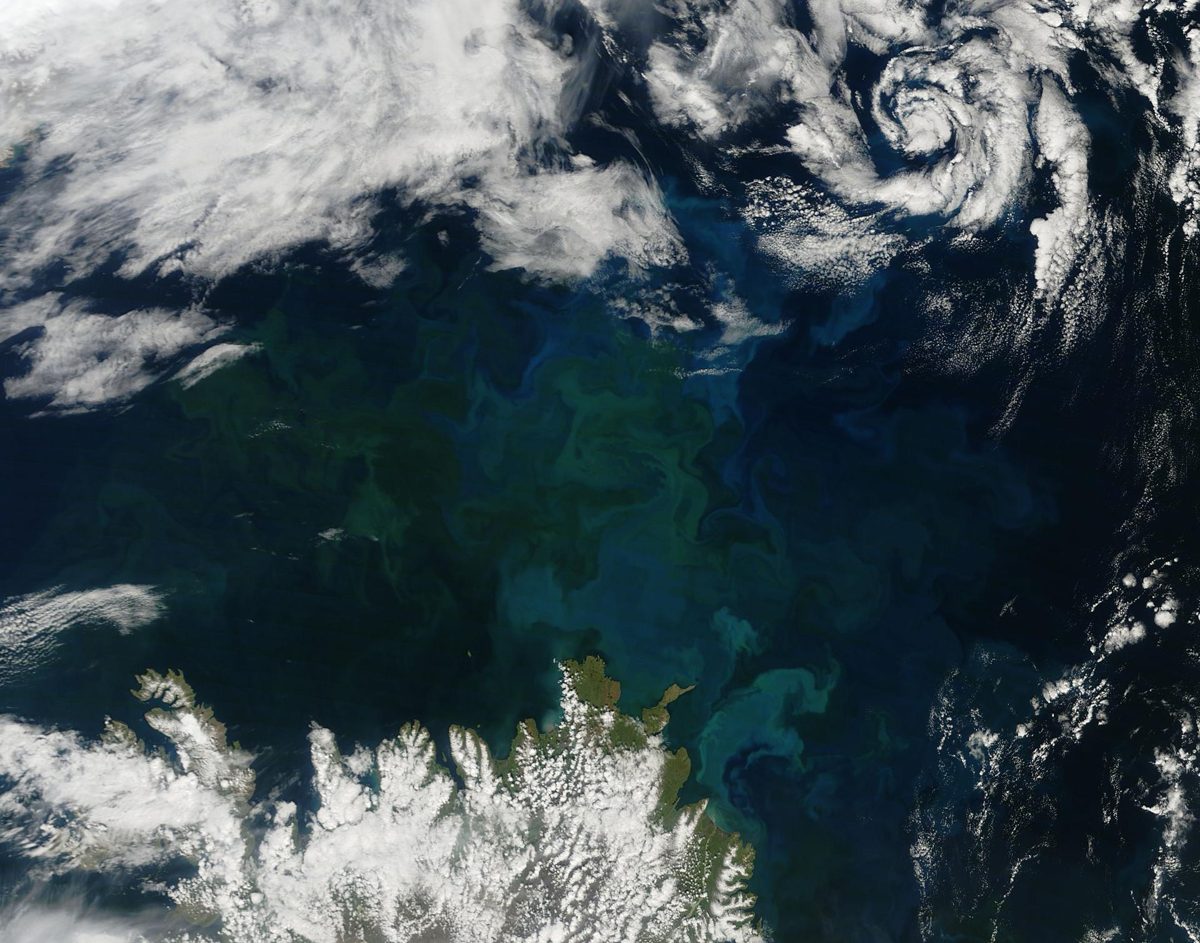
Tiny ocean plants produce about half of Earth's oxygen, making phytoplankton one of the planet's most important natural systems.
Image: NASA.
Phytoplankton, drifting plants, algae and bacteria that photosynthesize near the ocean surface.
A natural system that turns sunlight and carbon dioxide into food and oxygen.
Every day; marine life uses about as much oxygen as phytoplankton produce.
The sunlit upper layer of every ocean; satellites like NASA's PACE track it from space.
Source: NOAA, How much oxygen comes from the ocean?
Source: NASA, PACE mission
Healthy oceans mean breathable air and a working food web.
Natural solution
About half of Earth's oxygen comes from the ocean, and most of it is made by phytoplankton, drifting plants and algae too small to see one by one. A single kind, Prochlorococcus, produces up to 20% of the oxygen in our whole biosphere. Keeping the ocean healthy keeps this oxygen engine running.
Source: NOAA, How much oxygen comes from the ocean?
For Further Information: NOAA, How much oxygen comes from the ocean?
About half of Earth's oxygen comes from the ocean, most of it made by tiny phytoplankton.
Want to go deeper? NOAA, How much oxygen comes from the ocean? has the full story and the latest updates.
For Further Information