Want to go deeper? ESA, Aeolus: a historic end has the full story and the latest updates.
 For Further Information
ESA guided its retired Aeolus wind satellite down in the first assisted reentry of its kind, cutting the already low debris risk by a factor of 150.
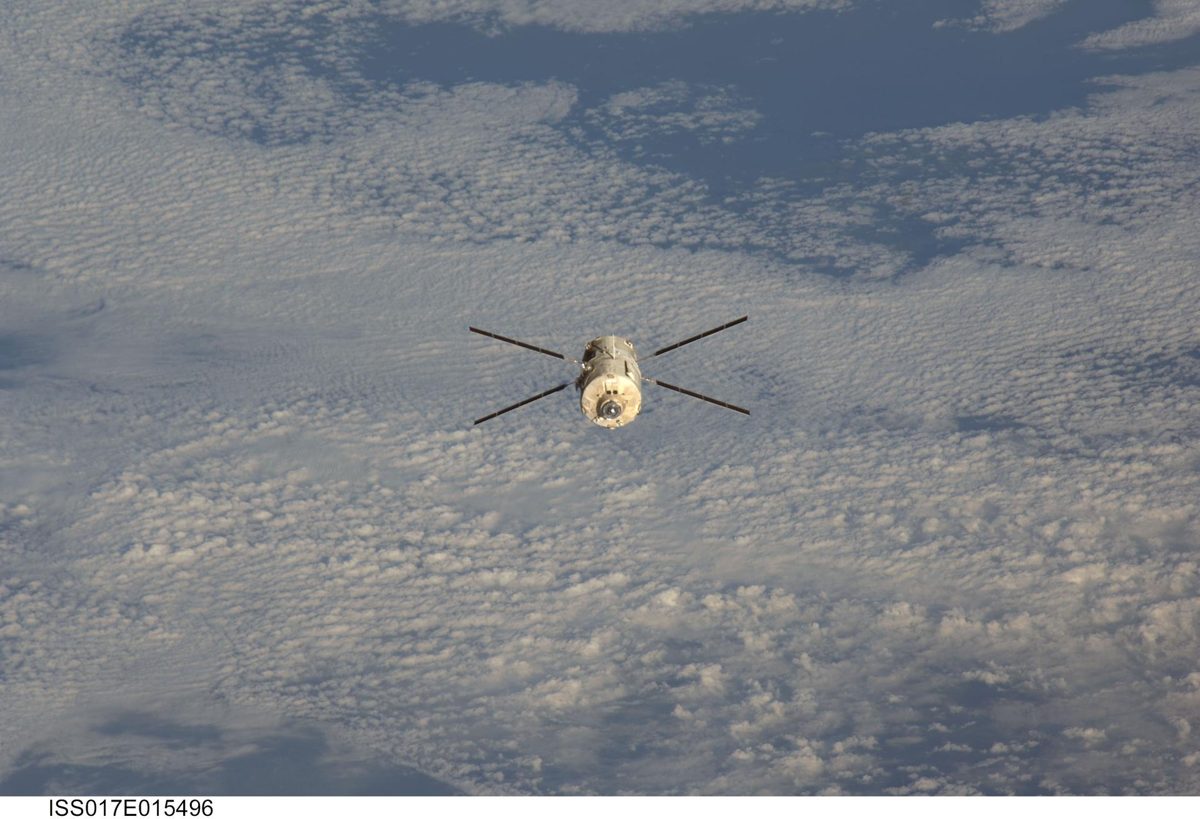
Image: NASA.
The European Space Agency, operating from its ESOC mission control in Darmstadt, Germany.
Source: ESA, Aeolus: a historic end
A series of engine burns that steered a satellite never designed for controlled reentry into a safer, planned reentry.
Source: ESA, Aeolus: a historic end
Burns from July 24, 2023; Aeolus reentered above Antarctica on July 28, 2023.
Source: ESA, Aeolus: a historic end
Low Earth orbit, ending in Earth's atmosphere with debris targeted at the Atlantic ground track.
Source: ESA, Aeolus: a historic end
To show that old satellites can be brought home more safely, and to push ESA toward debris-neutral missions by 2030.
Source: ESA, Aeolus: a historic end
Source: ESA, Zero Debris Charter
Agency solution · active (Zero Debris approach)
When ESA's Aeolus wind satellite ran out of mission life, it was not designed for a controlled ending. In July 2023 ESA's mission control used its last fuel to lower it to 120 km and line it up so any surviving pieces would fall along a planned Atlantic track, the first assisted reentry of its kind. The already low risk from falling debris dropped by a factor of 150, and the satellite spent weeks less adrift in orbit.
Source: ESA, Aeolus: a historic end
Source: ESA, Final images before Aeolus demise
It is part of ESA's Zero Debris approach: by 2030 all ESA missions are to be debris neutral.
Source: ESA, Zero Debris Charter
For Further Information: ESA, Aeolus: a historic end
ESA's first-of-its-kind assisted reentry of the Aeolus satellite cut the already low risk from falling debris by a factor of 150.
Want to go deeper? ESA, Aeolus: a historic end has the full story and the latest updates.
For Further Information