Want to go deeper? Visit NOAA.
 For further information
NOAA's first satellite built only for operational space weather watch.
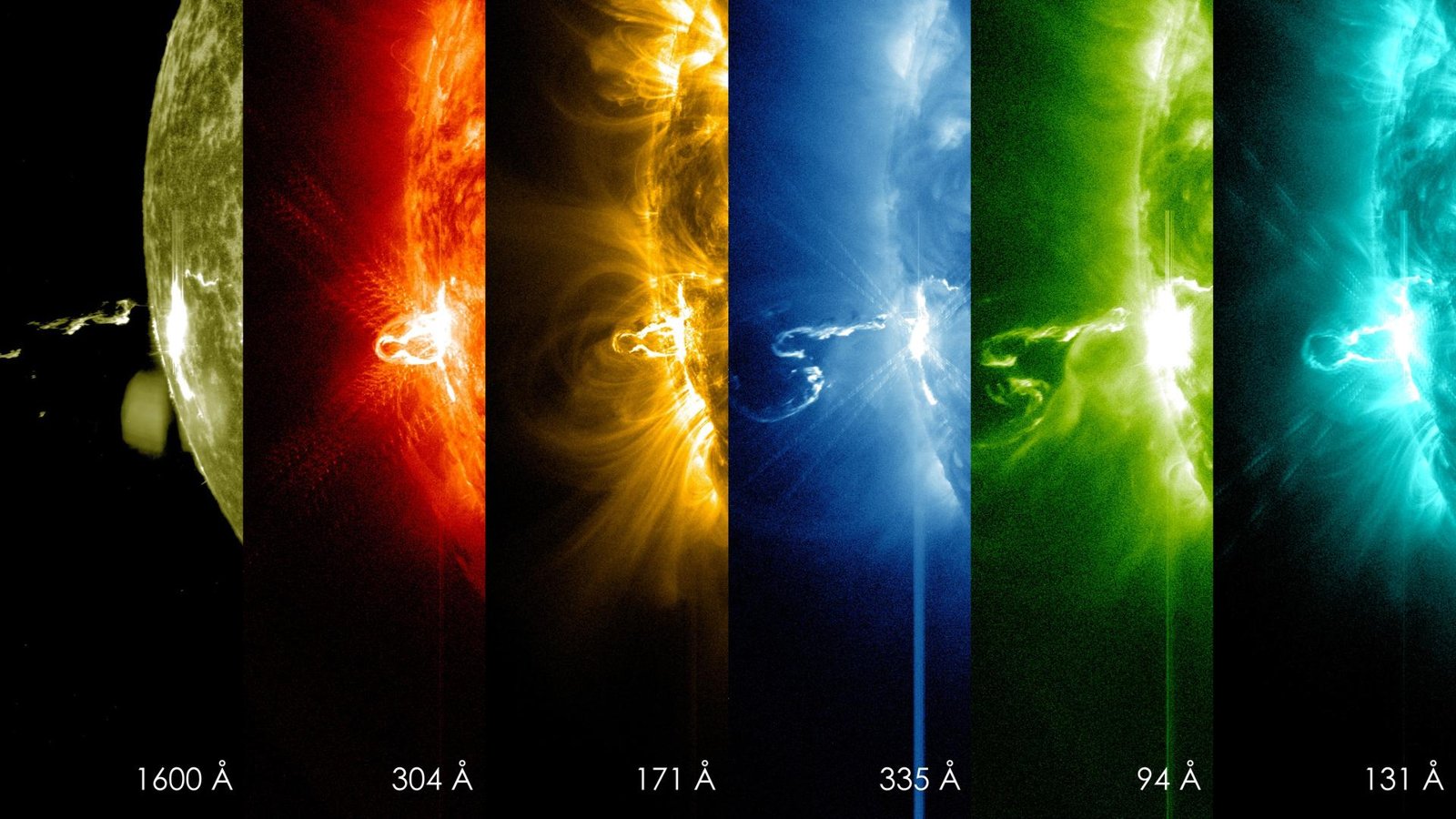
Image: NASA/SDO (Solar Dynamics Observatory), a solar flare seen in six wavelengths.
Agency solution · active
NOAA's SOLAR-1 (formerly SWFO-L1) launched on September 24, 2025 on a Falcon 9, reached the Sun-Earth L1 point, about one million miles from Earth, on January 23, 2026, and entered operational service on June 10, 2026.
Source: NOAA NESDIS, SOLAR-1 reaches L1
Source: NOAA, SOLAR-1 enters operations
It is the first U.S. satellite designed exclusively for continuous, operational space weather observations, streaming solar wind data and coronal mass ejection images to NOAA's Space Weather Prediction Center in real time, free to the public.
Source: NOAA, SOLAR-1 enters operations
NOAA, delivering data to its Space Weather Prediction Center.
Source: NOAA, SOLAR-1 enters operations
The first U.S. satellite designed exclusively for continuous, operational space weather observations.
Source: NOAA, SOLAR-1 enters operations
Launched September 24, 2025; reached L1 January 23, 2026; operational June 10, 2026.
Source: NOAA NESDIS, SOLAR-1 reaches L1
Source: NOAA, SOLAR-1 enters operations
The Sun-Earth L1 point, about one million miles from Earth.
Source: NOAA NESDIS, SOLAR-1 reaches L1
Real-time solar wind data and coronal mass ejection images, free to the public, give forecasters warning before storms reach Earth.
Source: NOAA, SOLAR-1 enters operations
Want to go deeper? Visit NOAA.
For further information