Want to go deeper? NASA, JAXA’s first wooden satellite deploys has the full story and the latest updates.
 For Further Information
LignoSat, the world's first wooden satellite, proved wood can survive in orbit; a follow-on is a potential solution on the horizon.
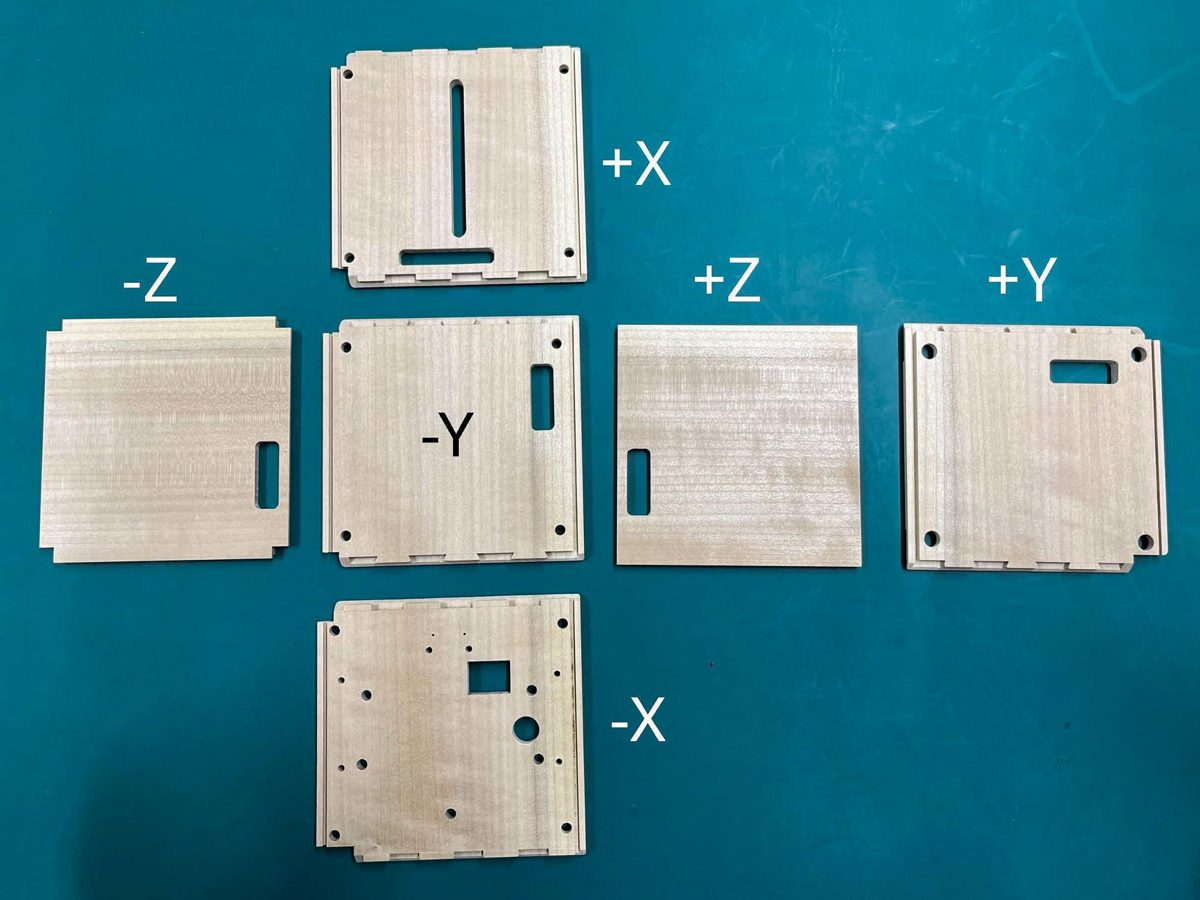
Image: Kyoto University via NASA.
Kyoto University with Sumitomo Forestry; JAXA deployed it from the space station.
Source: NASA, JAXA’s first wooden satellite deploys
Source: Kyoto University, LignoSat report (UNISEC, Aug 2026)
A 10 cm CubeSat with a wooden structure, testing how wood handles strain, temperature and radiation in space.
Deployed December 9, 2024; reentered April 4, 2025.
Source: Kyoto University, LignoSat report (UNISEC, Aug 2026)
Low Earth orbit, released from Japan's Kibo module on the International Space Station.
A renewable structure that burns up more cleanly could cut the pollution satellites leave behind when they reenter.
Source: Kyoto University, LignoSat report (UNISEC, Aug 2026)
University and company solution · demonstrated; follow-on on the horizon
Metal satellites leave alumina particles in the upper atmosphere when they burn up; wood burns away more cleanly. LignoSat, built by Kyoto University with Sumitomo Forestry from honoki magnolia panels joined without glue or nails, was deployed from the International Space Station by JAXA on December 9, 2024. It stayed in one piece until reentering on April 4, 2025, though no radio signal was received.
Source: NASA, JAXA’s first wooden satellite deploys
Source: Kyoto University, LignoSat report (UNISEC, Aug 2026)
LignoSat follow-on. This is a potential solution Kyoto University is advancing. We expect to know more within the coming months and will keep you updated here.
Source: Kyoto University, LignoSat report (UNISEC, Aug 2026)
For Further Information: NASA, JAXA’s first wooden satellite deploys
LignoSat, the world's first wooden satellite, was built from magnolia wood panels joined with a traditional Japanese technique that uses no glue or nails.
Want to go deeper? NASA, JAXA’s first wooden satellite deploys has the full story and the latest updates.
For Further Information