Want to go deeper? NASA JPL has the full study story.
 For Further Information
Water breathed out by Amazon trees starts the rainy season two to three months before winds alone would bring it (NASA JPL).
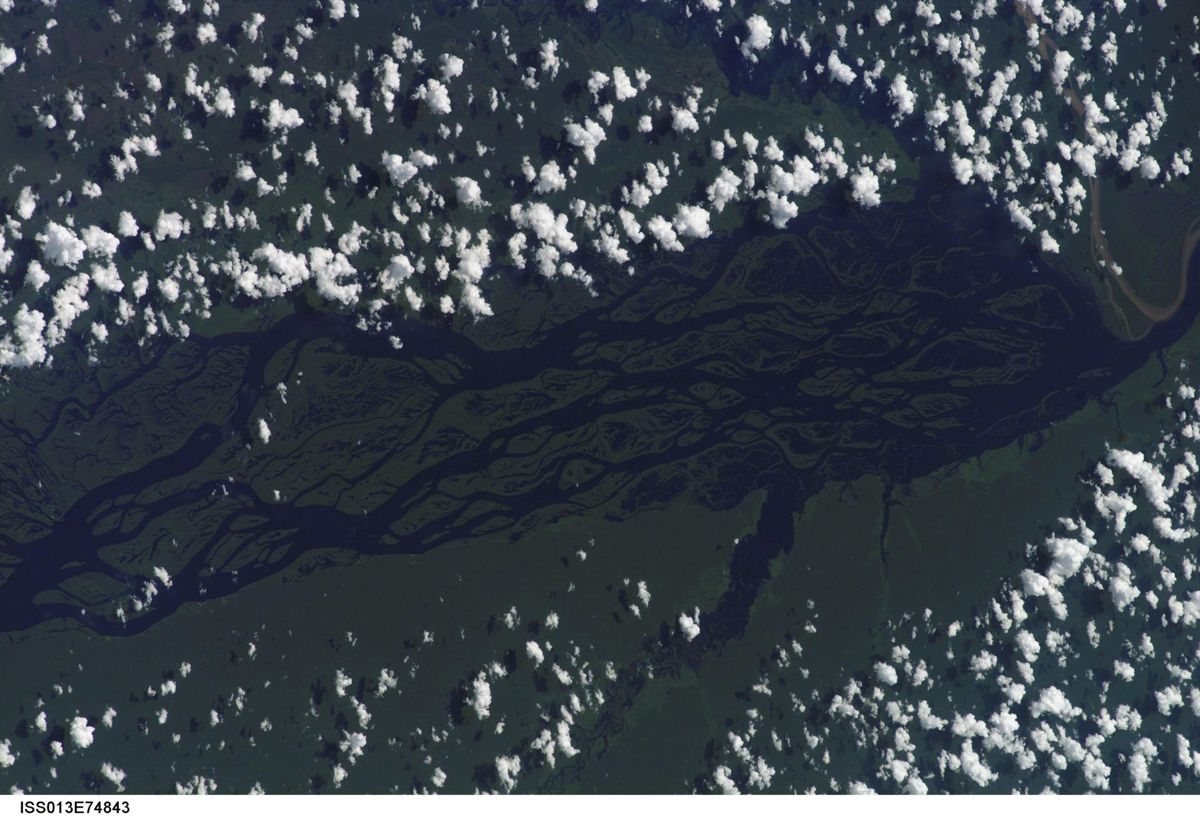
Image: NASA (ISS013-E-74843).
The rainforest itself, as shown by NASA JPL scientists using satellite data.
Transpiration: trees pull water from the ground and release vapor that builds rain clouds.
The rainy season now starts in mid-October, two or three months before ocean-driven rains would arrive in December or January.
The finding helps explain why deforestation in this region is linked with reduced rainfall.
Natural solution
Satellite measurements of water vapor showed the moisture that starts the rains comes from plants. If the dry season grows longer than five to seven months, the forest may not receive enough rain to keep its trees alive and could turn to grassland.
Source: NASA JPL, the Amazon makes its own rainy season
For Further Information: NASA JPL, the Amazon makes its own rainy season
Amazon trees start their own rainy season two to three months before the ocean-driven rains arrive.
Losing a major Amazonian forest ecosystem could increase Brazilian droughts and potentially disrupt rainfall as far away as Texas, so keeping the forest standing protects water for people.
Source: NASA JPL, the Amazon makes its own rainy season
Standing forest makes its own rain, which keeps the forest alive. Pair this with Saharan Dust Feeds the Amazon: dust feeds the trees, and the trees water themselves.
Want to go deeper? NASA JPL has the full study story.
For Further Information