Want to go deeper? ESA's ExoMars pages have rover tests, the landing site and mission news.
 For Further Information
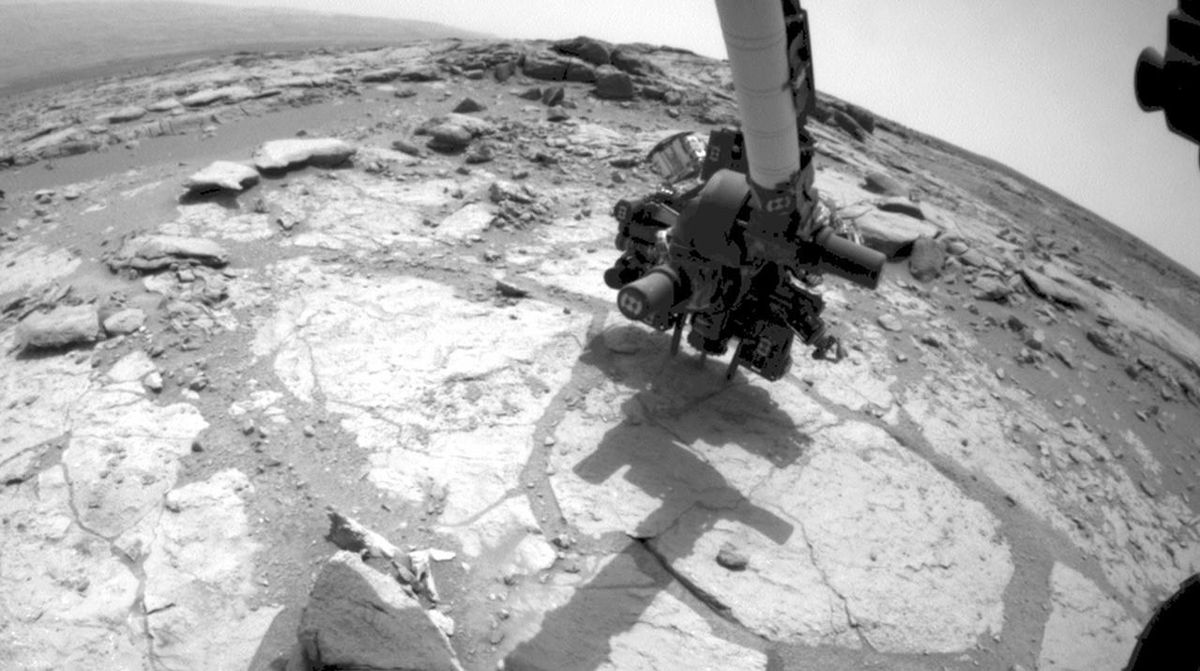
Europe's first Mars rover, Rosalind Franklin, will drill 2 meters down to look for signs of past life, targeting launch in 2028.
Image: NASA/JPL-Caltech/MSSS (PIA17068, NASA's Curiosity drilling on Mars).
Rosalind Franklin, the first European rover and the first mission able to both travel across Mars and study it at depth, with an onboard laboratory.
Source: ESA, ExoMars rover
The rover mission will target launch in 2028. The first ExoMars mission, the Trace Gas Orbiter, launched in 2016.
Source: ESA, ExoMars
A Martian landing site chosen for its high potential to hold well-preserved organic material from the planet’s early history.
Source: ESA, ExoMars rover
Agency solution · launch targeted for 2028
Rosalind Franklin will collect samples with a drill reaching 2 meters below the surface and analyze them in its onboard laboratory. Underground samples are more likely to keep biomarkers, because the thin Martian atmosphere offers little protection from radiation at the surface. The rover is expected to travel several kilometers.
Source: ESA, ExoMars rover
ExoMars tackles a question that belongs to everyone: has life ever existed beyond Earth? The rover carries next-generation instruments in an onboard laboratory to look for the answer.
Source: ESA, ExoMars
Source: ESA, ExoMars rover
Mars shows what happens to a world that lost its protective atmosphere: its surface is exposed to radiation that can destroy organic material. Learning that story helps us value the atmosphere that shields life on Earth.
Source: ESA, ExoMars rover
Want to go deeper? ESA's ExoMars pages have rover tests, the landing site and mission news.
For Further Information