Want to go deeper? NASA's story has the satellite data and visualizations.
 For Further Information
Every year about 27.7 million tons of Saharan dust falls on the Amazon, delivering some 22,000 tons of phosphorus that the rainforest needs (NASA).
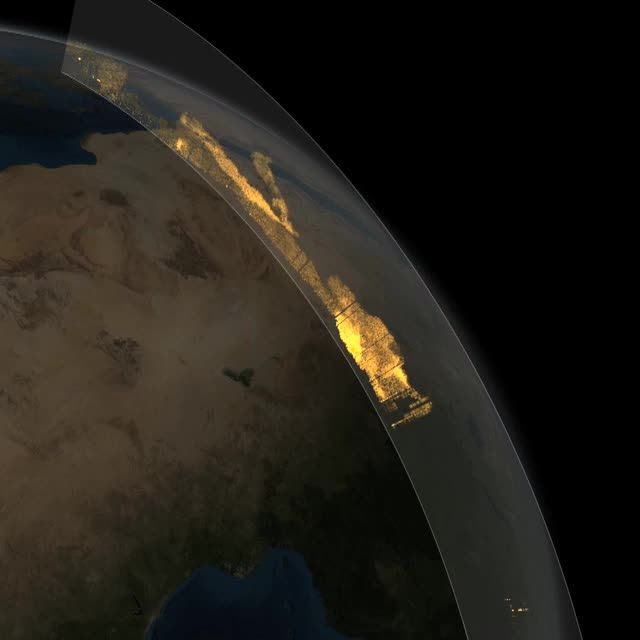
Image: NASA's Goddard Space Flight Center.
Nature, measured by NASA’s CALIPSO satellite and scientists at NASA Goddard.
Wind carries phosphorus-rich dust from the Sahara across the Atlantic to fertilize the Amazon.
Every year; the satellite estimate covers multiple years of data.
Much of the dust comes from the Bodélé Depression in Chad, an ancient lake bed, and falls over the Amazon basin.
Rain washes phosphorus out of Amazon soils; the dust replaces it.
Natural solution
On average wind lifts 182 million tons of dust a year past the western edge of the Sahara, and 27.7 million tons fall over the Amazon basin. The estimated 22,000 tons of phosphorus it brings each year is about the same amount the Amazon loses to rain and flooding.
Source: NASA, Saharan dust feeds the Amazon
Source: Yu et al. 2015, Geophysical Research Letters
For Further Information: NASA, Saharan dust feeds the Amazon
About 27.7 million tons of Saharan dust fall on the Amazon each year, enough to fill 104,908 semi trucks.
A healthy Amazon matters to people far beyond Brazil: its forest helps make its own rain (see The Amazon Makes Its Own Rainy Season), and Saharan dust keeps that forest fed.
Source: NASA, Saharan dust feeds the Amazon
Source: NASA JPL, the Amazon makes its own rainy season
Phosphorus is an essential nutrient for plant growth. Dust from one of the planet’s most desolate places replaces what the rain washes away in one of its most fertile.
Want to go deeper? NASA's story has the satellite data and visualizations.
For Further Information