Want to go deeper? NASA's release explains how the station reached 98% water recovery.
 For Further Information
The space station now recycles 98% of the water its crews bring along, thanks to a Brine Processor Assembly, technology that matters wherever water is scarce.
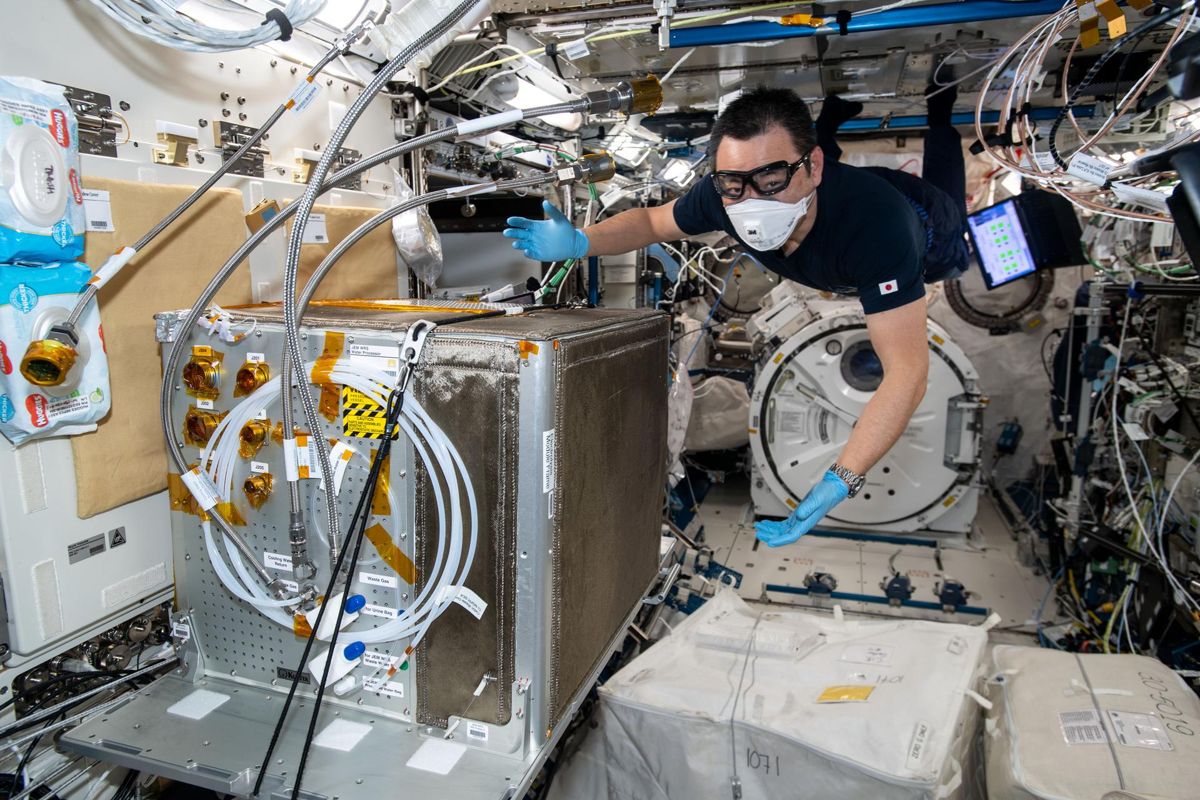
Image: NASA (iss065e333421).
NASA, with the space station’s Environmental Control and Life Support System.
A Brine Processor Assembly that squeezes the last water out of urine brine, lifting total water recovery to 98%.
Long missions beyond low Earth orbit need to recover close to 98% of the water crews start with, because resupply is not possible.
Agency solution · active
The Urine Processor Assembly recovers water from urine by vacuum distillation; the Brine Processor Assembly then runs the leftover brine through a membrane and evaporates the rest. NASA says the system now reaches its 98% water recovery goal, and the reclaimed water is cleaner than what we drink on Earth.
Source: NASA, water recovery milestone on the ISS
For Further Information: NASA, water recovery milestone on the ISS
Crews drink water that has been reclaimed, filtered and cleaned so it is cleaner than tap water on Earth, and the same closed-loop thinking is what future crews will need far from home.
Source: NASA, water recovery milestone on the ISS
Recovering 98% means only about 2% of the water is lost; the rest keeps going around and around. That is the most efficient water loop people have built.
Want to go deeper? NASA's release explains how the station reached 98% water recovery.
For Further InformationNASA doesn't take donations, but anyone can join one of its citizen science projects.