Want to go deeper? Mote's coral reef restoration program page has the full story.
 For Further Information
Mote scientists have restored more than 216,000 corals to Florida's Coral Reef, and their restored corals now spawn (Mote figure).
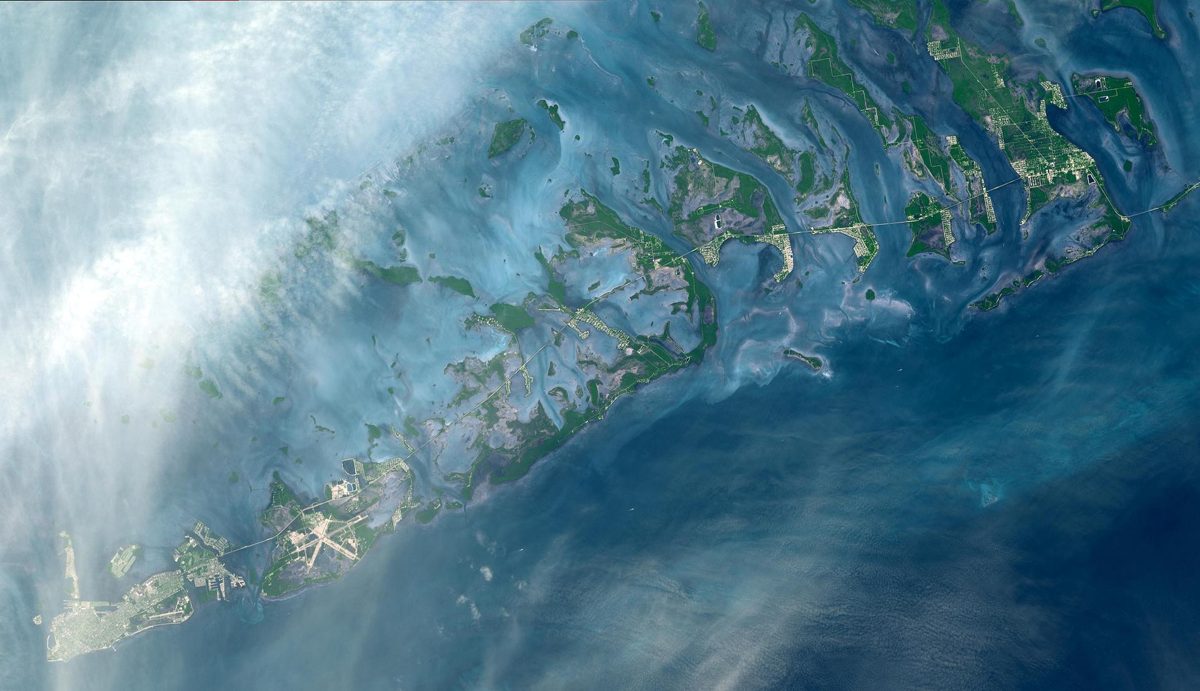
Image: NASA/JPL.
Mote Marine Laboratory & Aquarium, an independent nonprofit research institution, with partners including NOAA’s Florida Keys National Marine Sanctuary.
Coral reef restoration: growing corals and replanting them on the reef.
Ongoing; restored corals began spawning in 2020.
Florida’s Coral Reef, which stretches about 350 miles from the Dry Tortugas to St. Lucie Inlet.
Reefs are declining steeply from warming, acidification, disease, pollution and overfishing.
Nonprofit solution · active
Mote scientists have restored more than 216,000 corals to Florida’s Coral Reef (Mote figure). Starting in 2020, several restored corals spawned, the first of any massive or mounding species documented to spawn after restoration in Florida or Caribbean waters.
Source: Mote Marine Laboratory, coral reef restoration
For Further Information: Mote Marine Laboratory, coral reef restoration
Florida’s Coral Reef provides more than $8 billion in economic impact, attracts visitors and protects coastlines from major storms (Mote figure).
Source: Mote Marine Laboratory, coral reef restoration
The reef supports diverse life including fisheries, and restored corals reproducing on their own means new generations of coral.
Want to go deeper? Mote's coral reef restoration program page has the full story.
For Further InformationLinks go straight to the organization. Saving Planets doesn't receive any of the money.