Want to go deeper? NOAA Ocean Service explains how salt marshes work.
 For Further Information
Salt marshes are nurseries for more than 75% of fisheries species and buffer shorelines from erosion and floods (NOAA).
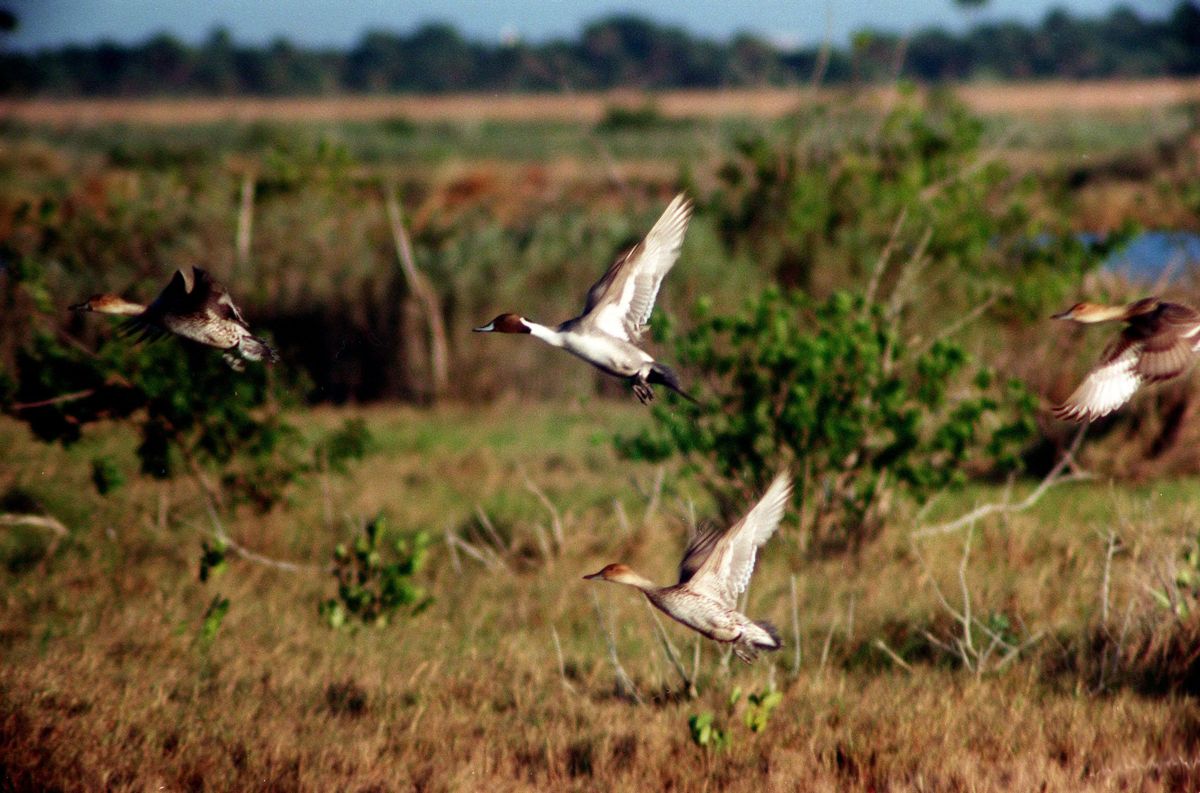
Image: NASA/KSC (KSC-99WL10).
Nature, described by NOAA’s National Ocean Service.
Coastal wetlands flooded and drained by the tides, with deep, spongy peat soils.
Worldwide, especially at middle to high latitudes; in the U.S. on every coast, with about half along the Gulf Coast.
They are essential for healthy fisheries, coastlines and communities.
Natural solution
Salt marshes provide food, refuge or nursery habitat for more than 75% of fisheries species, including shrimp, blue crab and many finfish. They protect shorelines from erosion by buffering waves and trapping sediment.
Source: NOAA Ocean Service, What is a salt marsh?
For Further Information: NOAA Ocean Service, What is a salt marsh?
Salt marshes are food, refuge or nursery habitat for more than 75% of fisheries species, including shrimp and blue crab.
Salt marshes reduce flooding by slowing and absorbing rainwater, protect shorelines from erosion, and support the seafood many communities depend on.
Source: NOAA Ocean Service, What is a salt marsh?
They filter runoff and metabolize excess nutrients to protect water quality, and shelter young fish and shellfish. See also Mangrove Forests and Seagrass Meadows.
Want to go deeper? NOAA Ocean Service explains how salt marshes work.
For Further Information