Want to go deeper? ESA's Plato site has mission updates, images and the launch campaign.
 For Further Information
ESA's Plato will use 26 cameras to hunt for Earth-like planets around Sun-like stars, with launch planned for March 2027 on Ariane 6.
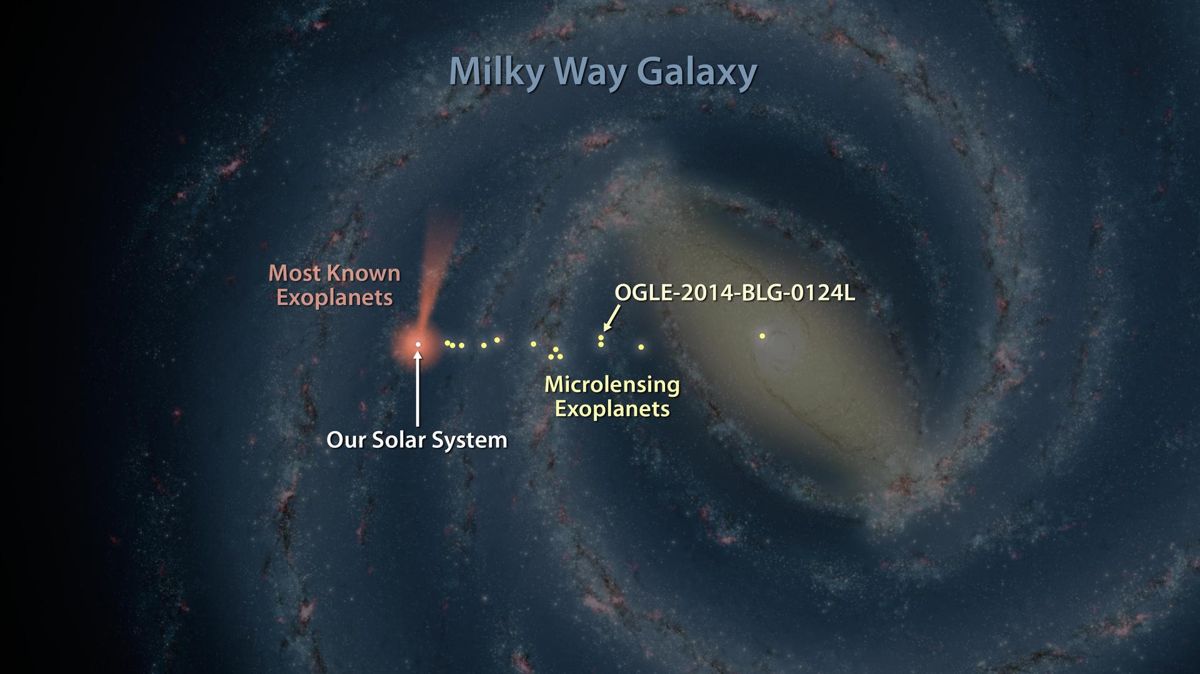
Image: NASA/JPL-Caltech (PIA19333, artist concept).
PLAnetary Transits and Oscillations of stars: a space telescope with 26 cameras that studies rocky exoplanets and the stars they orbit.
Source: ESA, Plato
Source: ESA, Plato factsheet
Launch planned for March 2027 on an Ariane 6 rocket. Spacecraft assembly was completed in October 2025 and final testing is under way.
Source: ESA, Plato
Source: ESA, Plato factsheet
A halo orbit around the Sun-Earth Lagrange point L2, watching more than 200,000 stars.
Source: ESA, Plato
To answer one of humanity’s biggest questions: does a second Earth exist in the Universe?
Source: ESA, Plato factsheet
Agency solution · launch planned March 2027
Plato will measure the sizes of terrestrial exoplanets in orbits up to the habitable zone of Sun-like stars, discover exomoons and rings around them, and characterize their host stars by studying tiny variations in starlight. Its 26 cameras look at more than 200,000 stars.
Source: ESA, Plato
Plato completed its milestone and critical design reviews; ESA says the spacecraft is undergoing final testing at ESTEC before launch.
Source: ESA, Plato factsheet
Plato is built to answer a question people have asked for millennia: does a second Earth exist? Its catalogue of rocky planets, with their sizes, densities and ages, will be shared with scientists worldwide.
Source: ESA, Plato factsheet
By finding rocky planets in the habitable zone of Sun-like stars and studying how such systems evolve, Plato shows how rare and precious a living world like Earth is.
Source: ESA, Plato factsheet
Want to go deeper? ESA's Plato site has mission updates, images and the launch campaign.
For Further Information