Joint Polar Satellite System (NOAA)
NOAA's polar weather satellites circle Earth 14 times a day; polar-orbiting satellites supply about 85% of the data used by weather prediction models (NOAA).
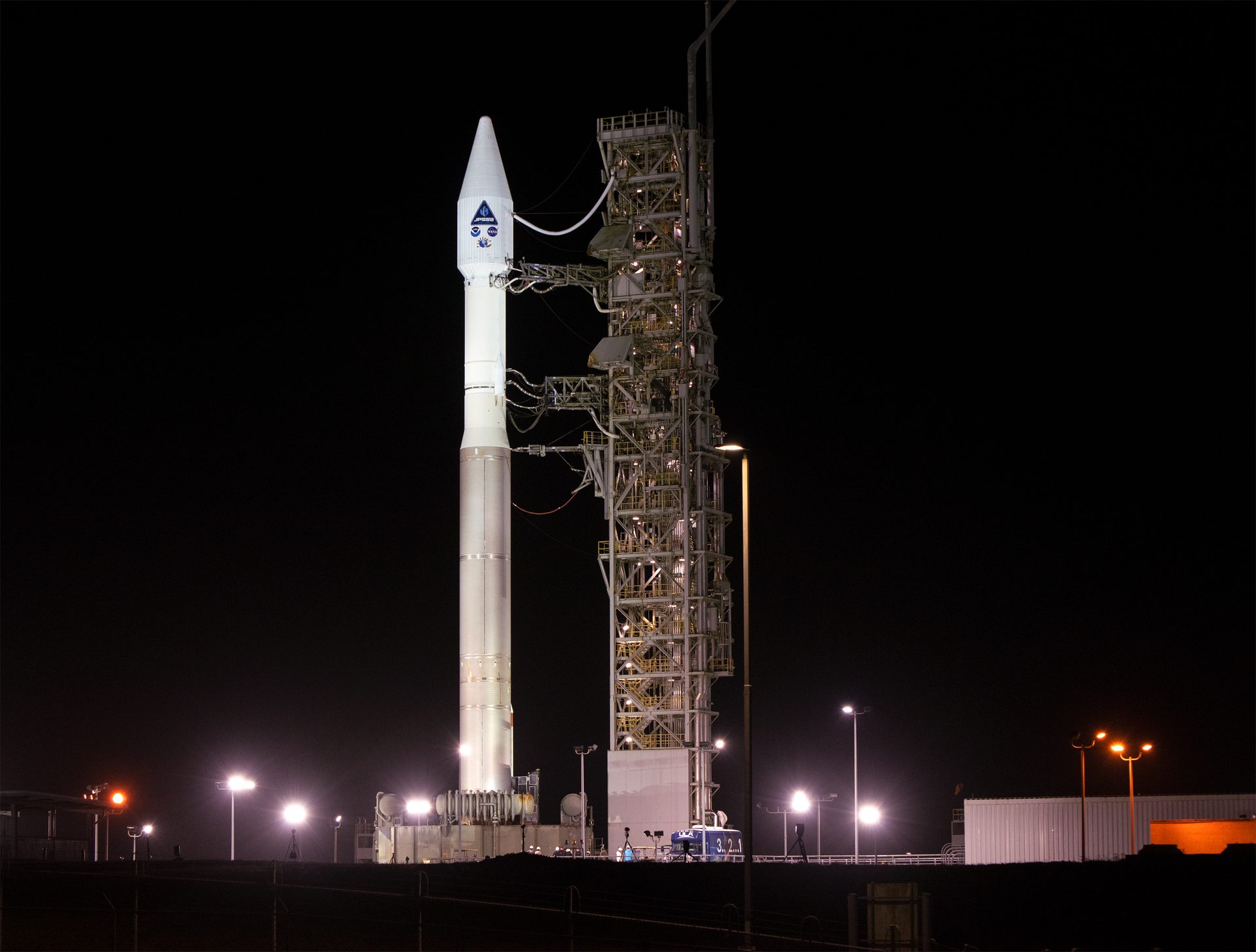
Image: NASA/Liz Wilk (KSC-20221109-PH-LNW01_0001).
Last reviewed: 4 sources cited
Explain Like I'm 10
- JPSS satellites fly over the North and South Poles, around and around.
- They scan the whole Earth twice a day for temperature, clouds and rain.
- Forecasters use the data to warn people before hurricanes and blizzards.
The Five W's of JPSS
Who
NOAA, with NASA. The fleet includes Suomi NPP, NOAA-20 (JPSS-1) and NOAA-21 (JPSS-2), with JPSS-3 and JPSS-4 to come.
What
Satellites that measure atmospheric temperature and moisture, wind shear, land and sea surface temperature, clouds and rainfall rates.
Source: NOAA NESDIS, NOAA satellites have you covered this hurricane season
When
Flying now. JPSS-4 is the next to launch, with a launch readiness date of 2027.
Where
Pole-to-pole orbits, 14 times a day, giving full global coverage twice daily.
Why
They provide the majority of data that informs numerical weather forecasting in the U.S.
Impact Statement
Agency solution · active
Data from JPSS and other polar-orbiting satellites provide about 85% of the data used by weather prediction models (NOAA).
Source: NOAA NESDIS, NOAA satellites have you covered this hurricane season
For Further Information: NOAA NESDIS, Joint Polar Satellite System
JPSS satellites The curved path an object takes as it travels around a planet, moon or star, like a satellite circling Earth. Glossary pole to pole 14 times a day, covering the whole globe twice daily (NOAA).
How This Saves People & the Planet
For People
JPSS data help guide the preparation and evacuation information communities need well before a hurricane strikes (NOAA).
Source: NOAA NESDIS, NOAA satellites have you covered this hurricane season
For Nature
JPSS measures land and sea surface temperatures, observations that also track the condition of oceans and land (NOAA).
Source: NOAA NESDIS, NOAA satellites have you covered this hurricane season
Get Involved With JPSS
Want to go deeper? NOAA has the full JPSS story.
For Further InformationRelated Solutions
More solutions like this one, matched by meaning.
Help This Work
This is a public mission, so there is nothing to donate. You can explore its free data or join a citizen science project.