Chandrayaan-5 / LUPEX Moon Ice Rover (ISRO-JAXA)
JAXA and ISRO are building LUPEX, also called Chandrayaan-5, to study water at the lunar south pole; launch is no earlier than 2028 on an H3 rocket (JAXA).
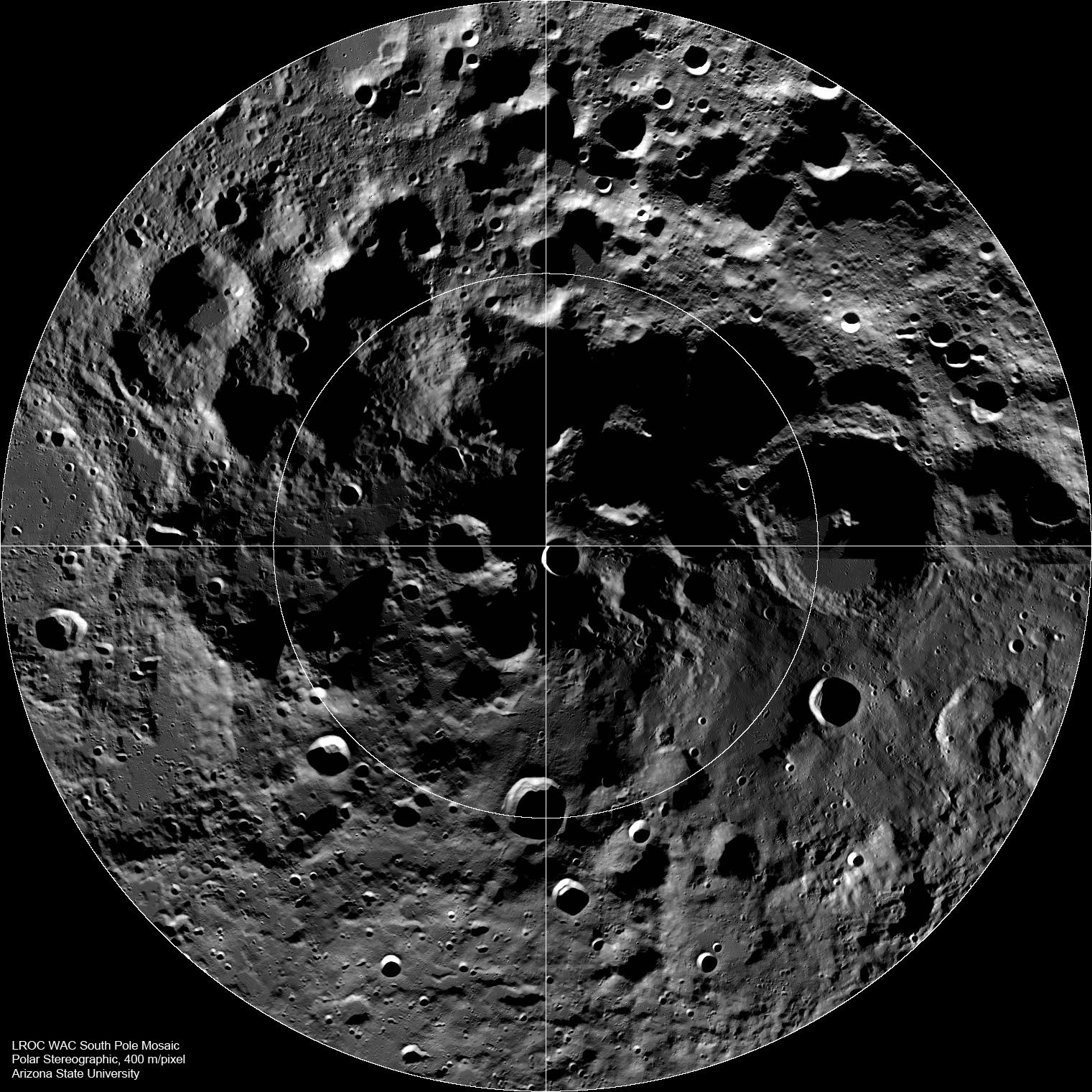
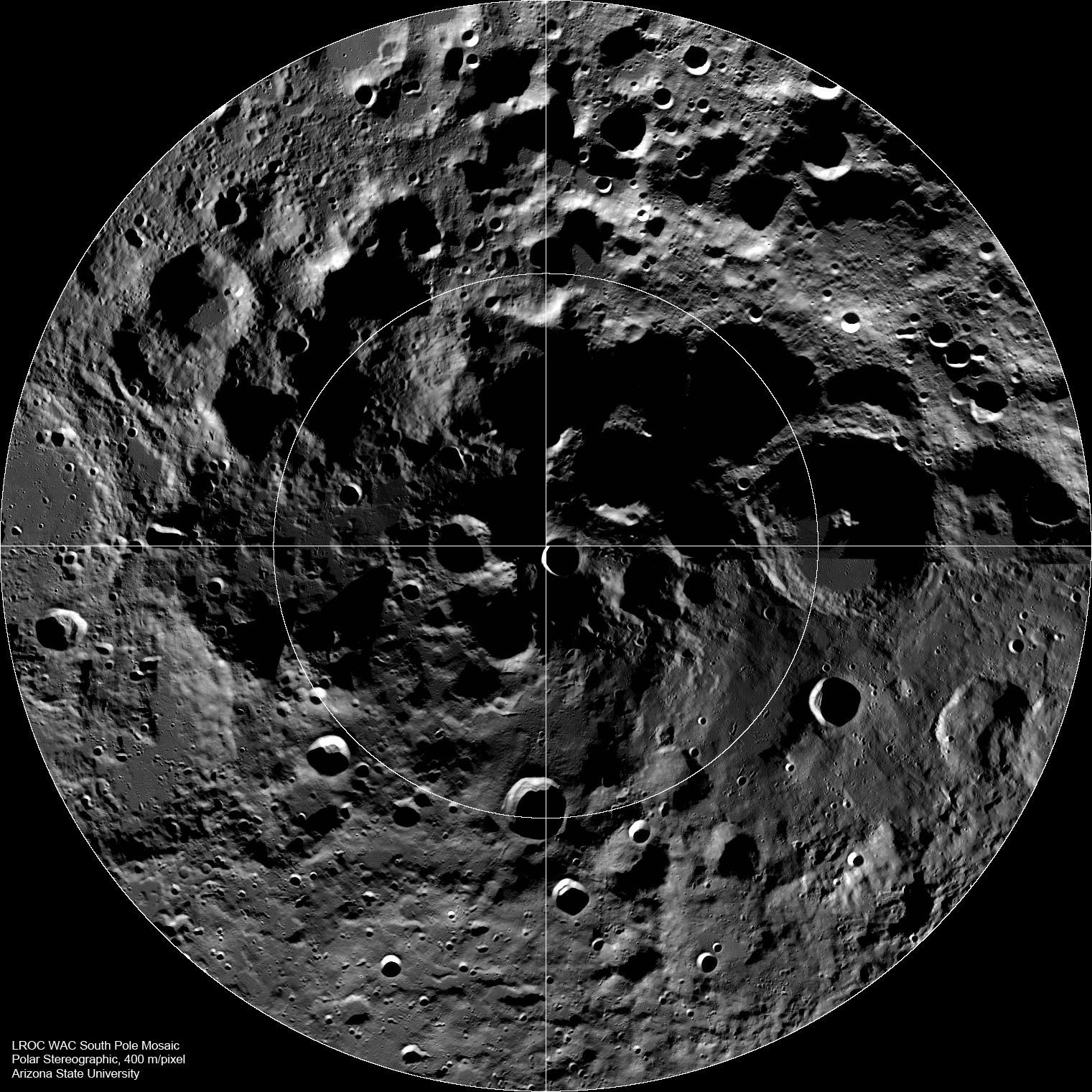
Image: NASA/GSFC/Arizona State University (PIA13523, the lunar south pole).
Last reviewed: 2 sources cited
India and Japan are sending a rover to look for ice at the Moon's south pole.
LUPEX's payload, including a rover, will weigh more than 350 kg, and the mission will operate for more than 3 months (JAXA).
Explain Like I'm 10
- Scientists think there may be frozen water hiding near the Moon's south pole.
- Japan and India are building a rover to drive there and check.
- Knowing where the water is will help plan future human trips to the Moon.
The Five W's of LUPEX
Who
JAXA (Japan) and ISRO (India), with instruments from partners.
What
A lunar lander and rover to look for water and study how it is held in the Moon's polar regions.
When
Launch no earlier than 2028 on Japan's H3 rocket.
Why
Understanding water on the Moon matters for future human exploration beyond Earth (JAXA).
Connected Solutions
- Artemis Program NASA's crewed flight around the Moon.
Impact Statement
Agency solution · in development
It builds on India's Chandrayaan-3, which soft-landed on the Moon on 23 August 2023 (ISRO).
Source: ISRO, Chandrayaan-3
For Further Information: ISRO, Chandrayaan-3
The spacecraft will have a launch mass of around 6 tons or more (JAXA).
How This Saves People & the Planet
For People
Water on the Moon could one day support human explorers (JAXA).
Source: JAXA, Lunar Polar Exploration Mission (LUPEX)
For Nature
Studying lunar water helps us understand how planetary bodies keep water, including our own (JAXA).
Learn More About LUPEX
Want to go deeper? JAXA has the full mission plan.
 For Further Information
Related Solutions
More solutions like this one, matched by meaning.

Help This Work
Links go straight to the organization. Saving Planets doesn't receive any of the money.