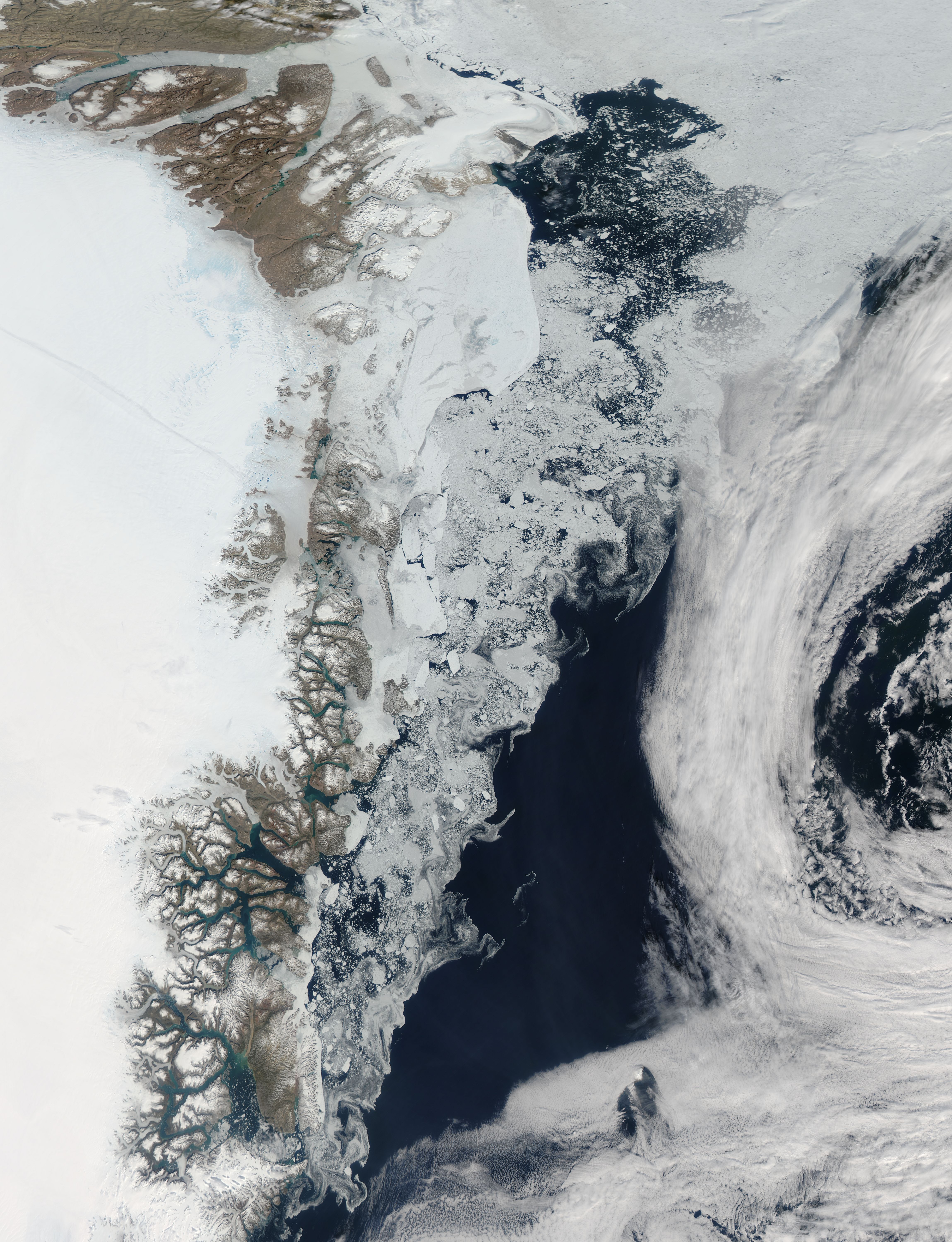
GCOM-W "SHIZUKU" Sea-Ice Watch (JAXA)
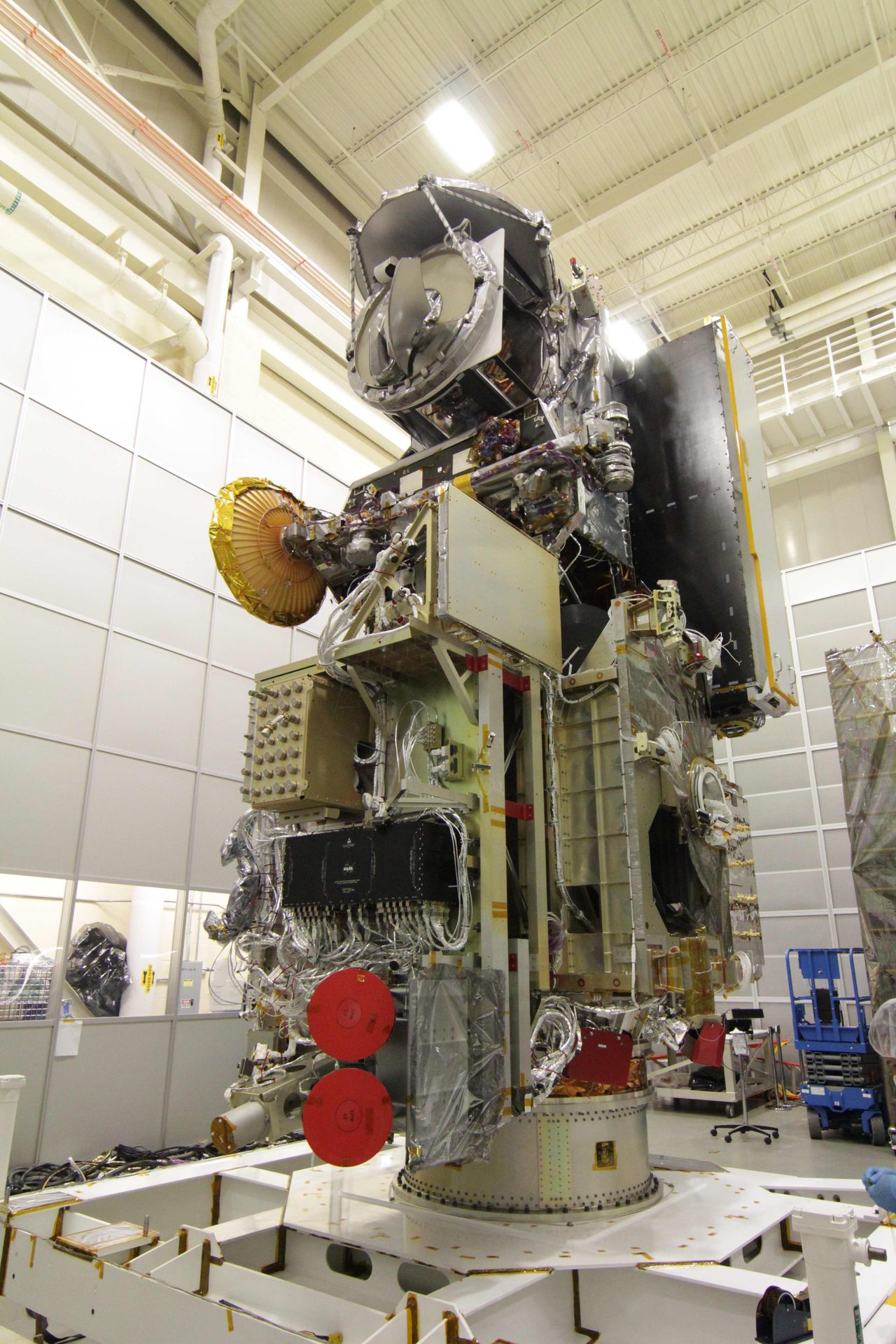
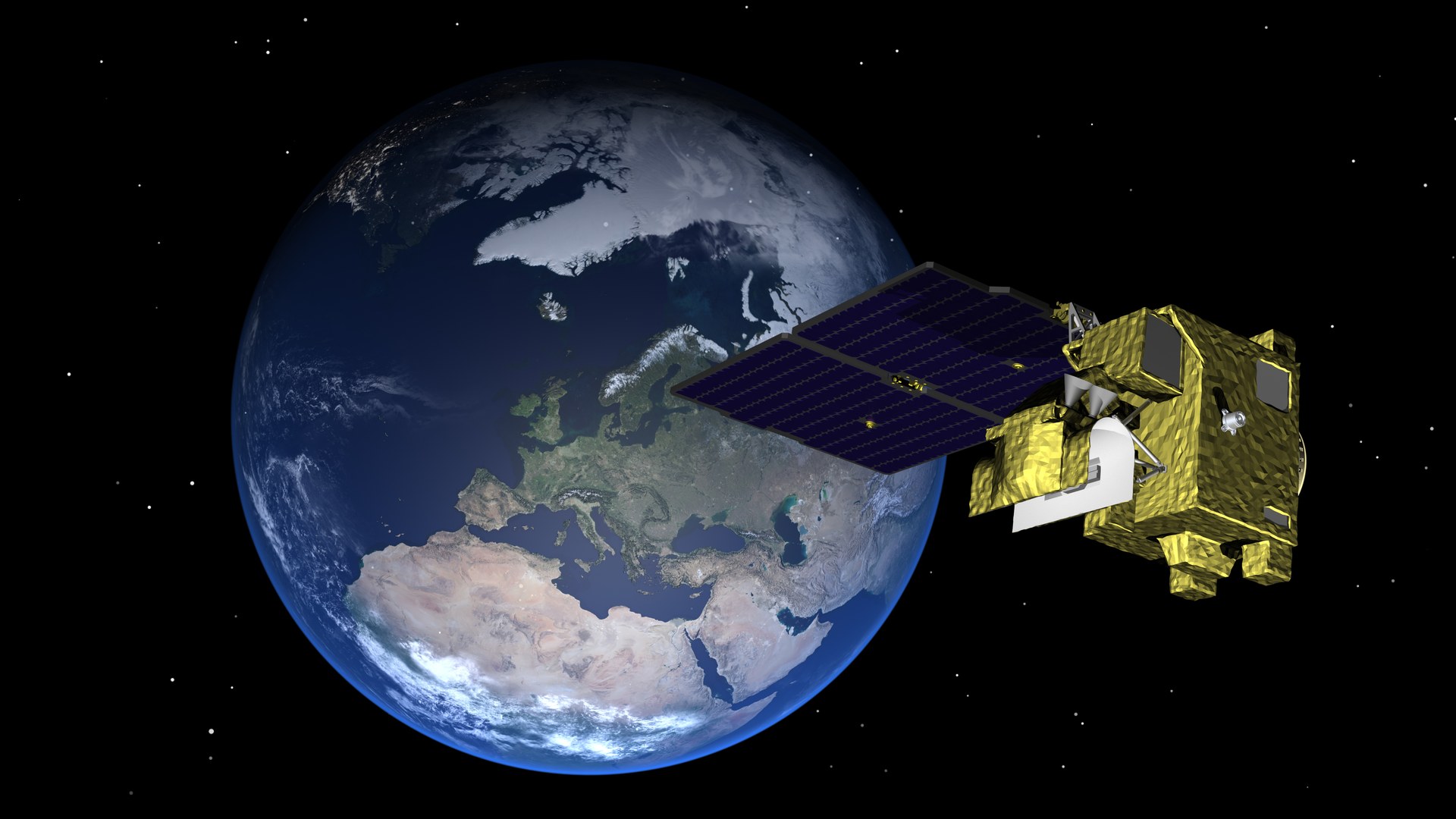
JAXA's SHIZUKU satellite, launched in 2012, measures sea ice, rain, snow and sea temperature through clouds, day and night (JAXA).
Image: NASA Goddard Space Flight Center (MODIS on Aqua, sea ice in the Greenland Sea).
Last reviewed: 2 sources cited
A spinning 2-metre antenna has watched the Arctic sea ice for more than a decade.
SHIZUKU's AMSR2 sensor can observe over 99% of Earth's area in just two days (JAXA).
Source: JAXA, GCOM-W "SHIZUKU"
Explain Like I'm 10
- Sea ice is frozen ocean water that floats around the North and South Poles.
- SHIZUKU is a Japanese satellite with a big spinning antenna that "hears" faint microwaves from Earth.
- Those signals show where the ice is, even through clouds and in the dark polar winter.
The Five W's of SHIZUKU
What
A satellite carrying AMSR2, a microwave radiometer that measures precipitation, water vapour, sea temperature, snow depth and sea ice.
Source: JAXA, GCOM-W "SHIZUKU"
When
Launched on 18 May 2012 on an H-IIA rocket from Tanegashima Space Center.
Source: JAXA, GCOM-W "SHIZUKU"
Where
In The curved path an object takes as it travels around a planet, moon or star, like a satellite circling Earth. Glossary, covering the whole planet, including both polar regions.
Source: JAXA, GCOM-W "SHIZUKU"
Why
Long, steady records of sea ice and water show how the climate is changing.
Source: JAXA, GCOM-W "SHIZUKU"
Connected Solutions
- GOSAT-GW (JAXA) Carries the next AMSR sensor alongside greenhouse gas instruments.
Impact Statement
Agency solution · active
In August 2012, SHIZUKU recorded Arctic sea ice at 4.21 million km², below the previous record low of 4.25 million km² set in 2007 (JAXA).
Source: JAXA, Arctic sea ice extent smallest in observation history (Aug. 2012)
For Further Information: JAXA, Arctic sea ice extent smallest in observation history (Aug. 2012)
AMSR2's antenna is about 2 metres across, the world's largest observation sensor on a satellite (JAXA).
How This Saves People & the Planet
For People
SHIZUKU data on rain, water vapour and sea temperature support weather and water information people use (JAXA).
Source: JAXA, GCOM-W "SHIZUKU"
For Nature
Tracking sea ice shows how the Arctic Ocean's frozen cover is changing from year to year (JAXA).
Source: JAXA, Arctic sea ice extent smallest in observation history (Aug. 2012)
Learn More About SHIZUKU
Want to go deeper? JAXA has the full mission story.
 For Further Information
Related Solutions
More solutions like this one, matched by meaning.
Help This Work
Links go straight to the organization. Saving Planets doesn't receive any of the money.