Lake Washington Cleanup (Seattle)
In the 1960s Seattle-area Metro moved sewage away from Lake Washington. Phosphorus fell from about 70 to 16 parts per billion and the water cleared.
✨ New solutionAdded
Image: Doug Wilson, U.S. National Archives (public domain).
Last reviewed: 1 sources cited
Explain Like I'm 10
- In the 1950s and 1960s, treated sewage flowing into Lake Washington fed slimy algae.
- The Seattle area built more than 100 miles of big pipes to send the sewage somewhere else.
- The lake cleared up: you could see about 10 feet down by 1968, and nearly 25 feet by 1993.
The Five W's of Lake Washington Cleanup
Who
The Municipality of Metropolitan Seattle, or Metro, was established in 1958 and given the task of diverting sewage from the lake.
What
Between 1963 and 1968, more than 100 miles of large trunk lines and interceptors carried sewage to treatment plants at West Point and Renton instead of the lake.
When
Effluent that once entered the lake at 20 million gallons a day was reduced to zero discharge in February 1968.
Where
Lake Washington, beside Seattle. Treated effluent went to Puget Sound, where currents and tides diluted it.
Why
Between 1941 and 1963 the lake received growing amounts of treated sewage. University of Washington zoologist W.T. Edmondson showed that A nutrient that helps algae and plants grow. Too much of it in lakes and rivers makes algae grow faster than the ecosystem can handle. Glossary from the effluent was feeding the algae.
Impact Statement
Government solution · active · New solution
After the last lakeshore treatment plant closed, phosphorus dropped from about 70 parts per billion to about 16, a level maintained into the 1990s and beyond.
Source: King County, The Lake Washington story
At the time, the $140 million campaign was considered the most costly pollution control effort in the country.
How This Improves Our Planet’s Health
Clear water again
Water clarity, as low as 30 inches in 1964, reached 10 feet in 1968 and nearly 25 feet in 1993.
Source: King County, The Lake Washington story
A food web back in balance
With less phosphorus, the nuisance cyanobacterium Oscillatoria faded. Daphnia, tiny filter-feeding crustaceans that graze on algae, then thrived, which helped clear the water even more.
Source: King County, The Lake Washington story
For people
The cleanup showed that a city can reverse pollution in a big lake. King County says the restoration has been studied extensively ever since.
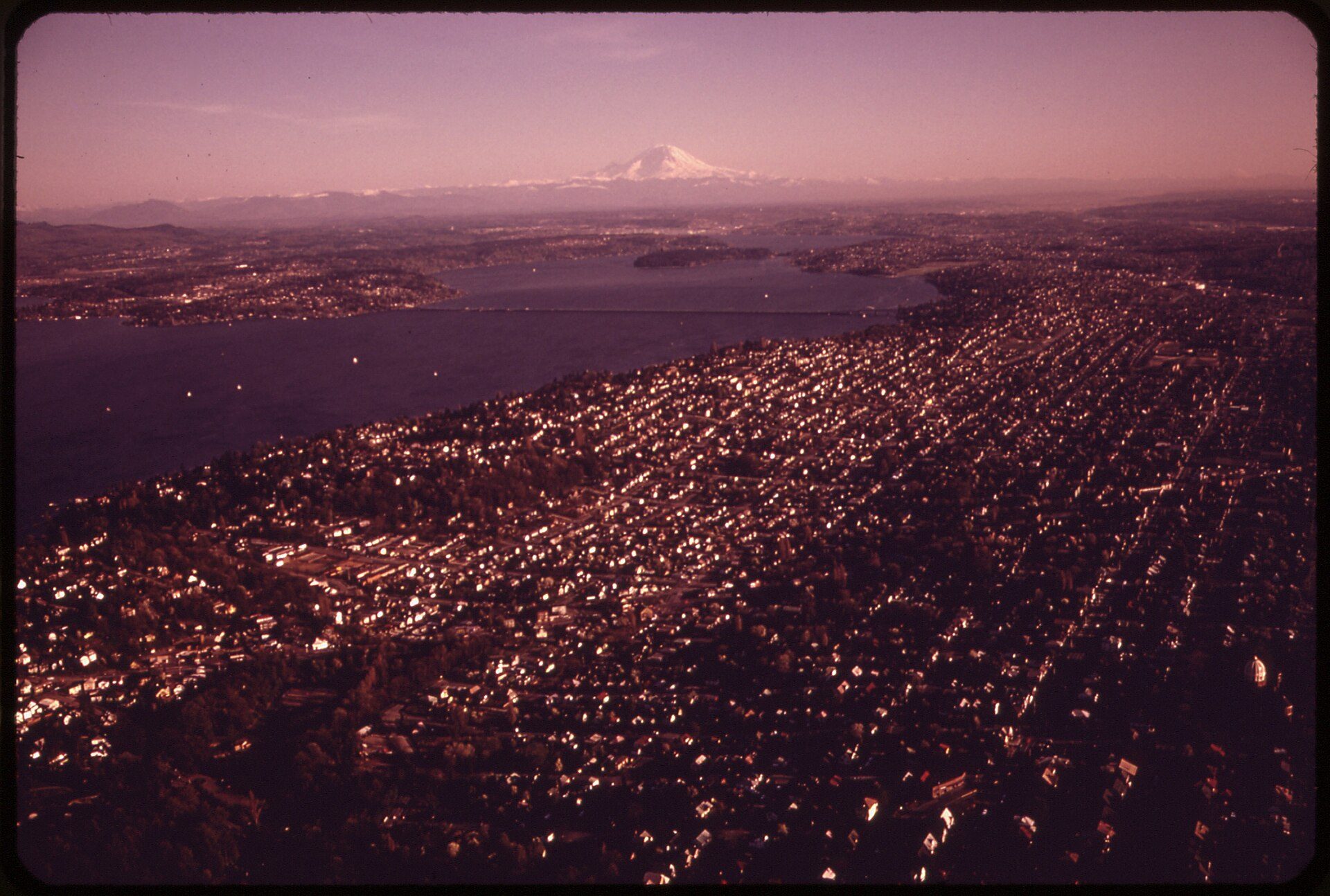
Image: Doug Wilson, U.S. National Archives (public domain).
Learn About Lake Washington Cleanup
Want to go deeper? The official page has the full details behind the numbers here.
For Further InformationRelated Solutions
More solutions like this one, matched by meaning.

Help This Work
This was a public sewage-diversion project, so there is no Donate button. Saving Planets is showcasing it, not partnering with anyone.