Vera C. Rubin Observatory
A new NSF–DOE observatory on Cerro Pachón, Chile, began its 10-year sky survey in July 2026 and is already finding asteroids by the thousand.
Image: Rubin Observatory/NOIRLab/NSF/AURA/F. Bruno (CC BY 4.0).
Last reviewed: 3 sources cited
Explain Like I'm 10
- Rubin Observatory is a huge new telescope in the mountains of Chile.
- Its camera has 3,200 megapixels, about as many pixels as 260 phone cameras.
- In its first look at the sky it found 2,104 asteroids nobody had recorded before, including 7 that come near Earth.
The Five W's of the Vera C. Rubin Observatory
Who
The NSF–DOE Vera C. Rubin Observatory is a new astronomy facility funded jointly by the U.S. National Science Foundation and the U.S. Department of Energy’s Office of Science. It is named for astronomer Vera Rubin.
Source: Rubin Observatory, About
What
The 8.4-meter Simonyi Survey Telescope uses the LSST Camera, the largest digital camera ever built. The camera has 3,200 megapixels, about as many pixels as 260 modern phone sensors, and weighs about 3,000 kg.
Source: Rubin Observatory, LSST Camera
When
Rubin Observatory began the 10-year Legacy Survey of Space and Time in July 2026. The first released asteroid imagery comes from seven nights in April and May 2025.
Source: Rubin Observatory, About
Where
The observatory stands on Cerro Pachón in Chile and photographs the southern sky.
Source: Rubin Observatory, About
Why
The survey is a time-lapse of the southern sky. Among its first Solar System finds were 2,104 new asteroids, including 7 near-Earth objects, 11 Jupiter Trojans, and 9 objects beyond Neptune.
Impact Statement
Agency solution · active
The first released imagery, from seven nights in April and May 2025, included 2,104 asteroids never seen before, 7 of them near-Earth objects.
Source: Rubin Observatory, A Swarm of New Asteroids
Rubin’s first released look at the sky included 2,104 new asteroids, 7 of them near-Earth objects.
How This Saves People & the Planet
For People
By finding near-Earth objects sooner, the survey gives scientists more warning if an asteroid is ever on a course that could threaten Earth. The observatory says that is the point of raising the discovery rate.
Source: Rubin Observatory, A Swarm of New Asteroids
For Nature
Most of those 2,104 new finds are main-belt asteroids, leftover rock and metal from the birth of the Solar System, plus a few Jupiter Trojans and icy objects beyond Neptune.
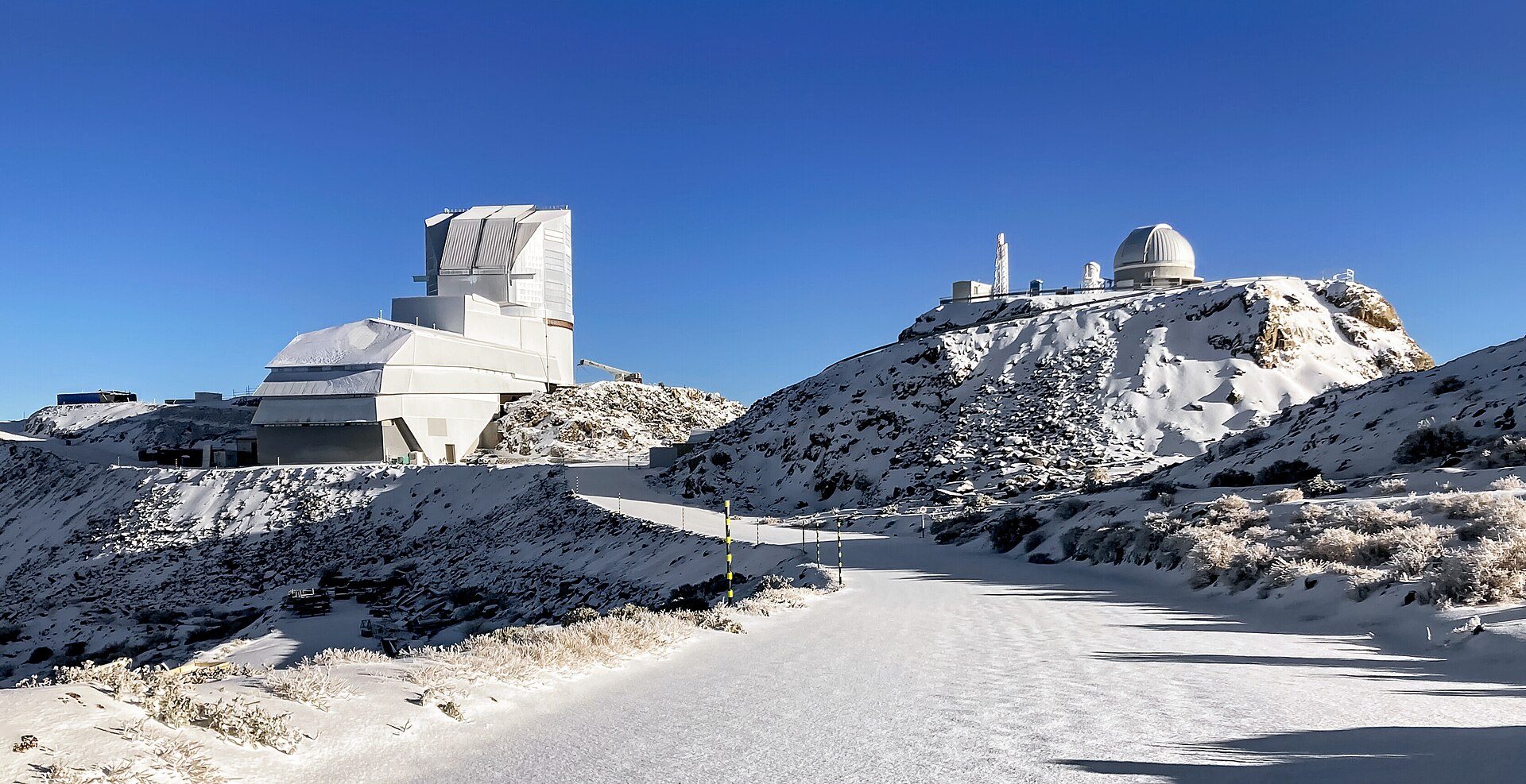
Image: Rubin Observatory/NOIRLab/NSF/AURA/F. Bruno (CC BY 4.0).
Learn About the Vera C. Rubin Observatory
Want to go deeper? The observatory’s About page has the survey story, and the camera page has the 3,200-megapixel instrument.
For Further InformationHelp This Work
This is a government-funded observatory, so there is no donate button. The About page and the asteroid release are free to read.