ATLAS Asteroid Terrestrial-impact Last Alert System
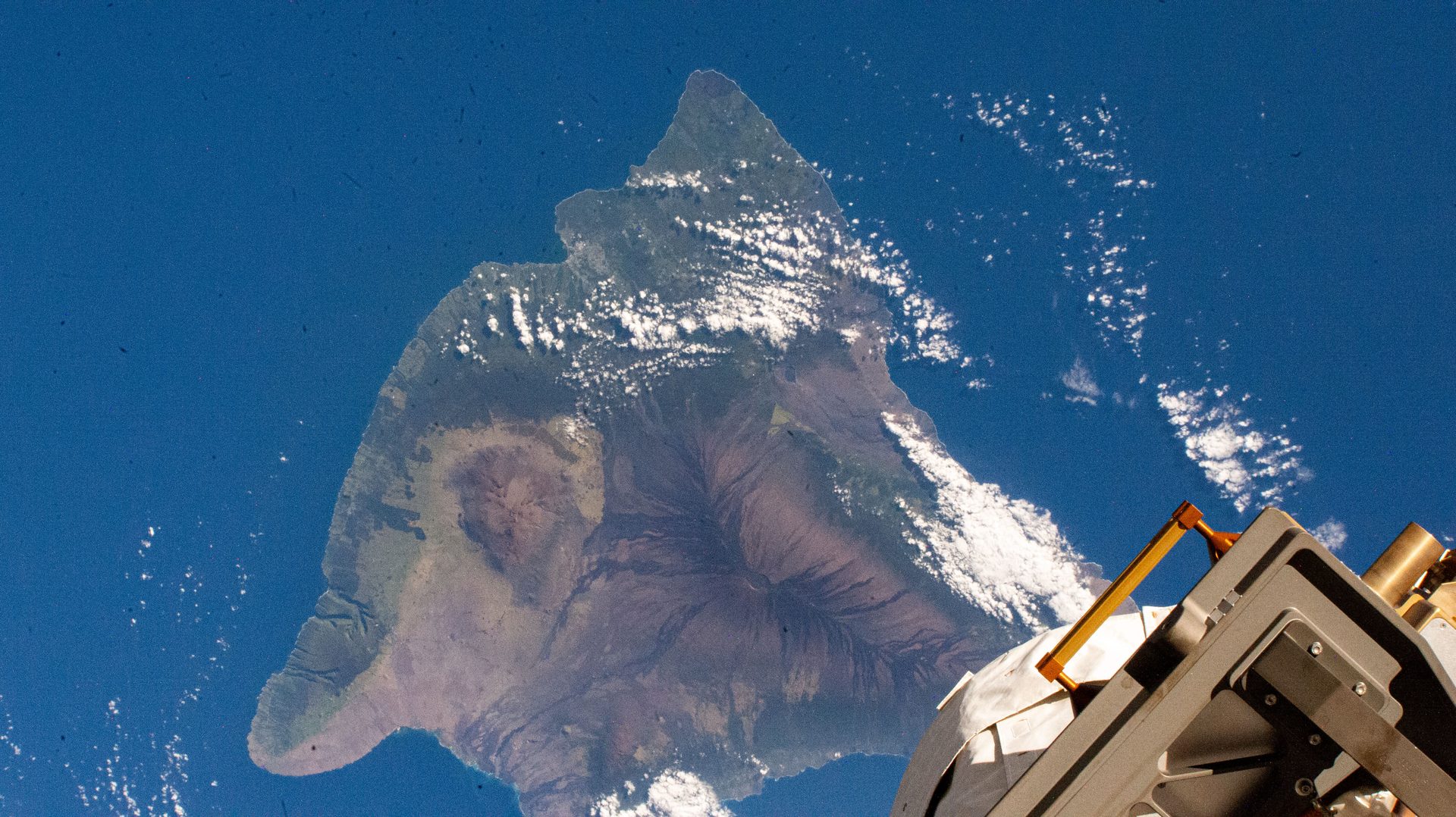
Four robotic telescopes, two in Hawaiʻi, search the entire dark sky every 24 hours for asteroids that could hit Earth (NASA).
Image: NASA (ISS072-E-421839, Dec. 28, 2024).
Last reviewed: 4 sources cited
Explain Like I'm 10
- ATLAS is four robot telescopes that scan the night sky.
- They look for space rocks that come close to Earth.
- An early warning gives people time to get ready or move away.
The Five W's of ATLAS
Who
The University of Hawaiʻi Institute for Astronomy operates ATLAS for NASA's Planetary Defense Coordination Office.
What
Four telescopes, each imaging a patch of sky 100 times larger than the full Moon in one exposure, designed to catch objects passing closer than the Moon.
When
The Hawaiʻi telescopes were built under a 2013 NASA grant and became fully operational in 2017; two southern telescopes later completed the system.
Where
Haleakalā and Mauna Loa in Hawaiʻi, Sutherland in South Africa and El Sauce Observatory in Chile.
Why
Finding A rocky object that orbits the Sun, much smaller than a planet. Most are in a belt between Mars and Jupiter. Glossary early means there is time to act if one is headed for Earth.
Impact Statement
Agency solution · active
ATLAS has discovered more than 700 An asteroid or comet whose orbit brings it close to Earth's path around the Sun. Scientists track them to make sure none is on course to hit us. Glossary and 66 comets, and detected 2019 MO and 2018 LA, two small asteroids that hit Earth (NASA).
Source: NASA, ATLAS now capable of full-sky search
For Further Information: NASA, ATLAS now capable of full-sky search
ATLAS measured asteroid 2018 LA less than 5 hours before it exploded over Africa, which sharpened the impact prediction (University of Hawaiʻi).
How This Saves People & the Planet
For People
A last-minute alert can tell people where a small asteroid will strike, time enough to stay clear (University of Hawaiʻi).
Source: University of Hawaiʻi, ATLAS pinpoints meteorite impact prediction (Jul 13, 2018)
For Nature
An impact would harm habitats as well as people. ATLAS searches the entire dark sky every 24 hours so threats are found early (NASA).
Get Involved With ATLAS
Want to go deeper? The University of Hawaiʻi has the full ATLAS story.
For Further InformationRelated Solutions
More solutions like this one, matched by meaning.
Help This Work
This is a public mission, so there is nothing to donate. You can explore its free data or join a citizen science project.