Near-Earth Object Coordination Centre (ESA)
Europe's asteroid watch centre computes orbits and impact risks every day and keeps a public list of every asteroid with a non-zero chance of hitting Earth: 2,044 at last count (ESA).
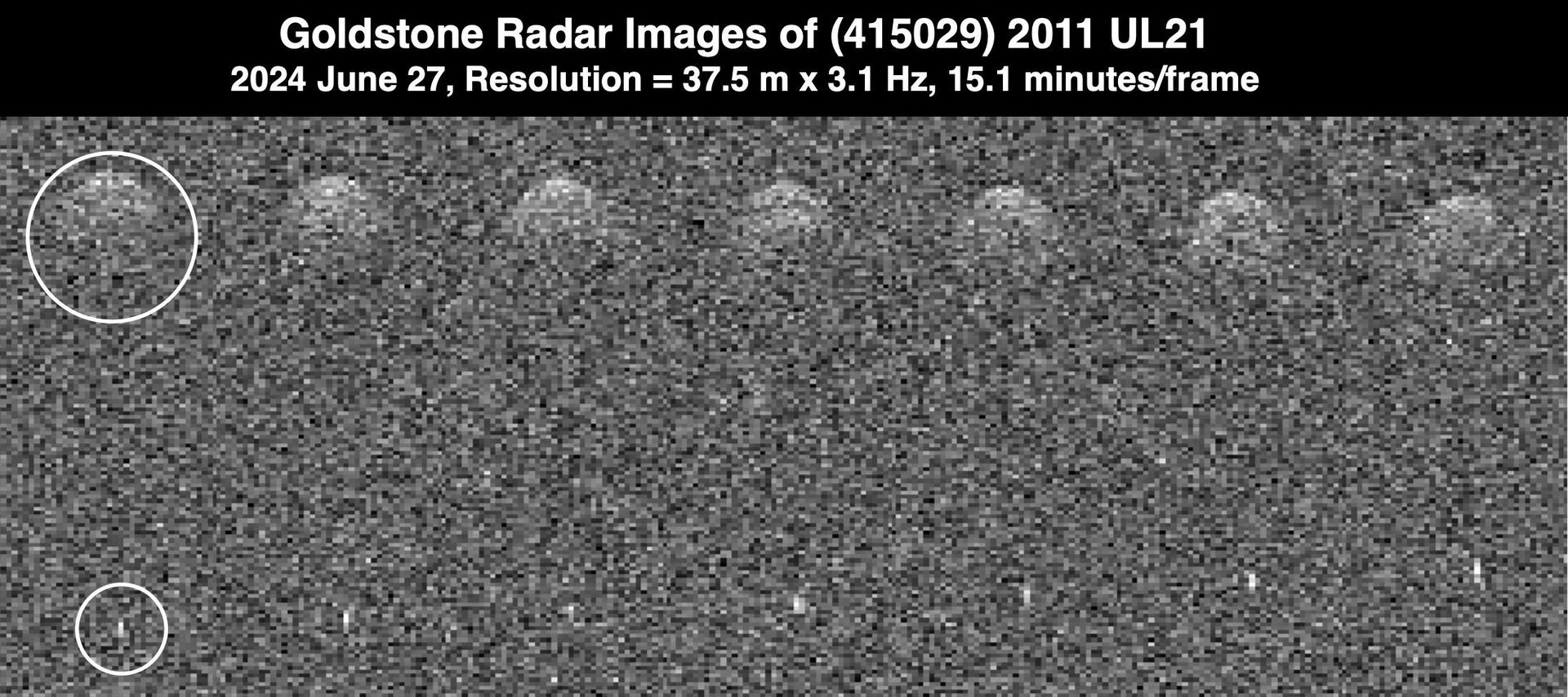
Image: NASA/JPL-Caltech (PIA26384).
Last reviewed: 4 sources cited
Explain Like I'm 10
- Some A rocky object that orbits the Sun, much smaller than a planet. Most are in a belt between Mars and Jupiter. Glossary pass near Earth, and scientists need to know where they will go.
- ESA's centre in Italy collects An instrument that collects light (or other energy) to see faraway things more clearly. Glossary data and works out their paths.
- If an asteroid ever looks dangerous, they warn emergency teams.
The Five W's of NEOCC
Who
The European Space Agency's An asteroid or comet whose orbit brings it close to Earth's path around the Sun. Scientists track them to make sure none is on course to hit us. Glossary Coordination Centre, the operational heart of its Planetary Defence Office.
What
Every day it provides The curved path an object takes as it travels around a planet, moon or star, like a satellite circling Earth. Glossary information, impact monitoring, data and risk analysis for asteroids and comets.
When
Every day, using information gathered from across the globe.
Where
ESA's ESRIN site in Frascati, Italy, linked to a network of European data sources.
Why
To evaluate and monitor the threat from objects that come near Earth, and propose mitigation if needed, for example to emergency agencies.
Impact Statement
Agency solution · active
ESA's public risk list currently holds 2,044 near-Earth asteroids for which a non-zero impact probability has been computed (ESA NEOCC).
Source: ESA NEOCC, Risk list
For Further Information: ESA, Near-Earth Object Coordination Centre
Each risk list entry shows the asteroid's riskiest Earth approach, with its date, size, speed and probability (ESA NEOCC).
How This Saves People & the Planet
For People
If an impact ever threatens, the centre can advise emergency response agencies so people can be protected (ESA).
Source: ESA, Near-Earth Object Coordination Centre
For Nature
Planetary defence protects Earth, its inhabitants and the infrastructure we depend on (ESA).
Get Involved With NEOCC
Want to go deeper? ESA has the full NEOCC story.
For Further InformationRelated Solutions
More solutions like this one, matched by meaning.
Help This Work
This is a public mission, so there is nothing to donate. You can explore its free data or join a citizen science project.