Hawaiian Monk Seal Recovery
NOAA Fisheries estimates about 1,600 Hawaiian monk seals. Up to 30 percent of the seals alive today are alive because of direct recovery work.
Image: NOAA Fisheries PIFSC (public domain). Source.
Last reviewed: 1 source cited
Explain Like I'm 10
- Hawaiian monk seals live only in Hawaiʻi. Scientists estimate about 1,600 of them.
- NOAA Fisheries and partners rescue seals that are tangled, hooked, or starving.
- Up to 30 percent of the seals alive today are alive because someone helped them directly.
The Five W's of Hawaiian monk seal recovery
Who
NOAA Fisheries runs the recovery program for the Hawaiian monk seal, an endangered seal that lives only in the Hawaiian Islands. It is listed as endangered and is on CITES Appendix I throughout its range.
What
Field teams and partners step in when a seal is entangled, hooked, injured, or starving. NOAA Fisheries says up to 30 percent of the monk seals alive today are alive because of these direct recovery interventions, which also let rescued seals have pups later.
When
The Hawaiian monk seal has been listed as endangered under the Endangered Species Act since 1976. The population declined for about six decades, then began to grow in 2013 and is still growing slowly.
Where
The seals live along the Hawaiian archipelago and nowhere else. NOAA Fisheries estimates about 1,600 seals: nearly 1,200 in Papahānaumokuākea and about 400 in the main Hawaiian Islands.
Why
The population is increasing, but it is still only about one-third of its historic size. Young seals in Papahānaumokuākea have struggled to find enough food, and seals also face entanglement, sharks, and disappearing beaches.
Impact Statement
Agency solution · active
Up to 30 percent of Hawaiian monk seals alive today are alive because of direct recovery interventions, and the population, about 1,600 animals, has been growing since 2013.
Source: NOAA Fisheries, Hawaiian monk seal
Rescued seal Honey Girl lived another 8 years after intervention in 2012 and had four more pups.
How This Saves People & the Planet
For People
In the main Hawaiian Islands, NOAA Fisheries coordinates volunteers who watch pupping and haul-outs, put up signs so people give resting seals space, and help count seals on the beaches.
Source: NOAA Fisheries, Hawaiian monk seal
For Nature
One seal shows what an intervention can do. R5AY, known as Honey Girl, had seven pups by age 15. In 2012 she was found extremely thin, with hook-and-line injuries so severe that NOAA Fisheries intervened. She lived another 8 years and gave birth to four more pups before she died in 2020 at age 23.
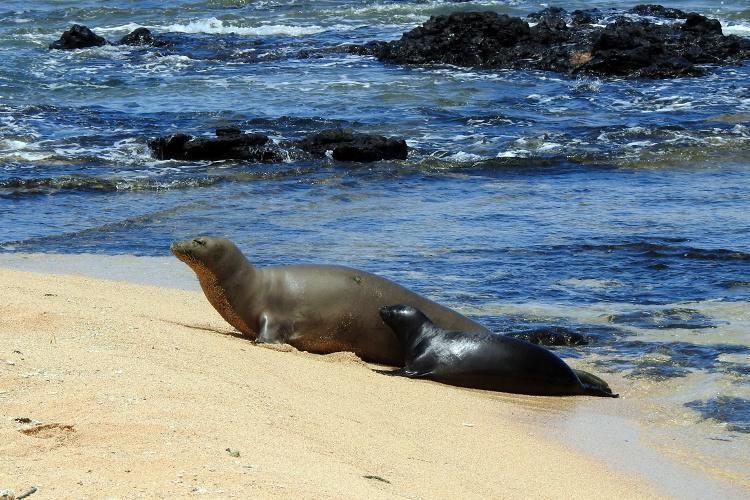
Image: NOAA Fisheries PIFSC (public domain). Source.
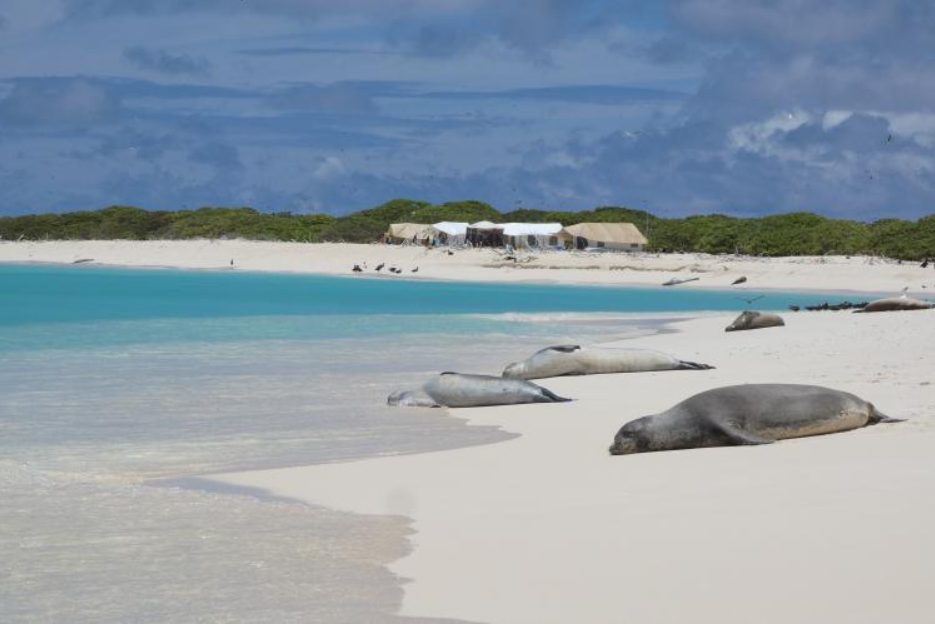
Image: NOAA Fisheries/Juliana Fetkewicz, Permit #22677-02 (public domain). Source.
Learn About Hawaiian Monk Seal Recovery
Want to go deeper? NOAA Fisheries publishes the population numbers, the threats, and the Honey Girl story.
For Further InformationHelp This Work
This is a federal recovery program, so there is no donate button. NOAA Fisheries coordinates volunteer groups in the main Hawaiian Islands; the species page explains how that help works. Saving Planets is showcasing the program, not partnering with it.