Mekong River Commission
Cambodia, Lao PDR, Thailand, and Viet Nam created the Mekong River Commission in 1995. The river’s capture fishery is about 2.3 million tonnes a year, worth around US$11 billion.
Image: NASA (public domain). The Mekong on the border between Thailand and Laos. Source.
Last reviewed: 2 sources cited
Explain Like I'm 10
- Four countries share the Mekong River and agreed in 1995 to manage it together.
- The commission works on fish, floods, drought, boats, and the river’s ecosystems.
- People still depend on the river’s fish: about 2.3 million tonnes a year.
The Five W's of the Mekong River Commission
Who
The Mekong River Commission is an intergovernmental organization set up in 1995 by the Mekong Agreement among Cambodia, Lao PDR, Thailand, and Viet Nam.
Source: Mekong River Commission, About
What
It helps the member countries with fisheries, flood and drought management, freedom of navigation, and protection of important ecosystems.
Source: Mekong River Commission, About
When
The commission was established in 1995, and it has supported capture-fisheries monitoring in the basin since that year.
Where
The work covers the Lower Mekong River Basin, shared by the four member countries.
Source: Mekong River Commission, About
Why
The commission estimates the basin’s capture fishery at about 2.3 million tonnes a year, worth around US$11 billion. It also says food security for about 65 million people in the Lower Mekong still depends on rice and fish.
Impact Statement
Agency solution · active
The Lower Mekong capture fishery is about 2.3 million tonnes a year, worth around US$11 billion, in a basin where food security for about 65 million people still depends on rice and fish.
Source: Mekong River Commission, Fisheries monitoring
The Mekong River Commission estimates the Lower Mekong capture fishery at about 2.3 million tonnes a year, worth around US$11 billion.
How This Saves People & the Planet
For People
Food security for about 65 million people in the Lower Mekong still depends on rice and fish. Fish supply animal protein and micronutrients; rice supplies most of the energy.
Source: Mekong River Commission, Fisheries monitoring
For Nature
The river is home to more than 1,100 fish species, including the world’s largest freshwater fish. The largest share of the catch comes from the floodplain in central Cambodia.
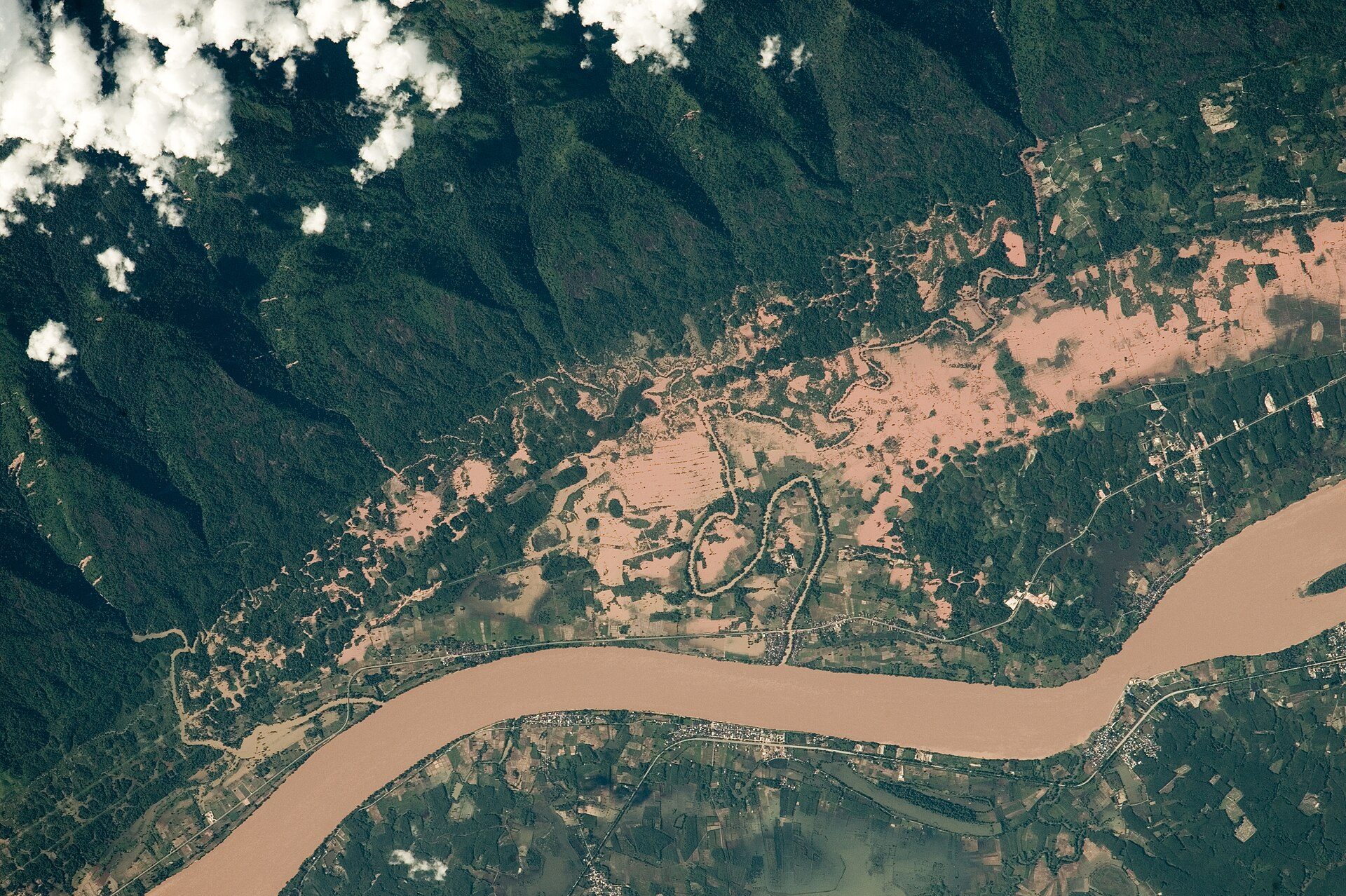
Image: NASA (public domain). The Mekong on the border between Thailand and Laos. Source.
Learn About the Mekong River Commission
Want to go deeper? The commission’s fisheries page has the 2.3 million tonne catch and the US$11 billion estimate.
For Further InformationHelp This Work
The commission is an intergovernmental body, so there is no donate button. It publishes its own audit reports; this page does not collect money.