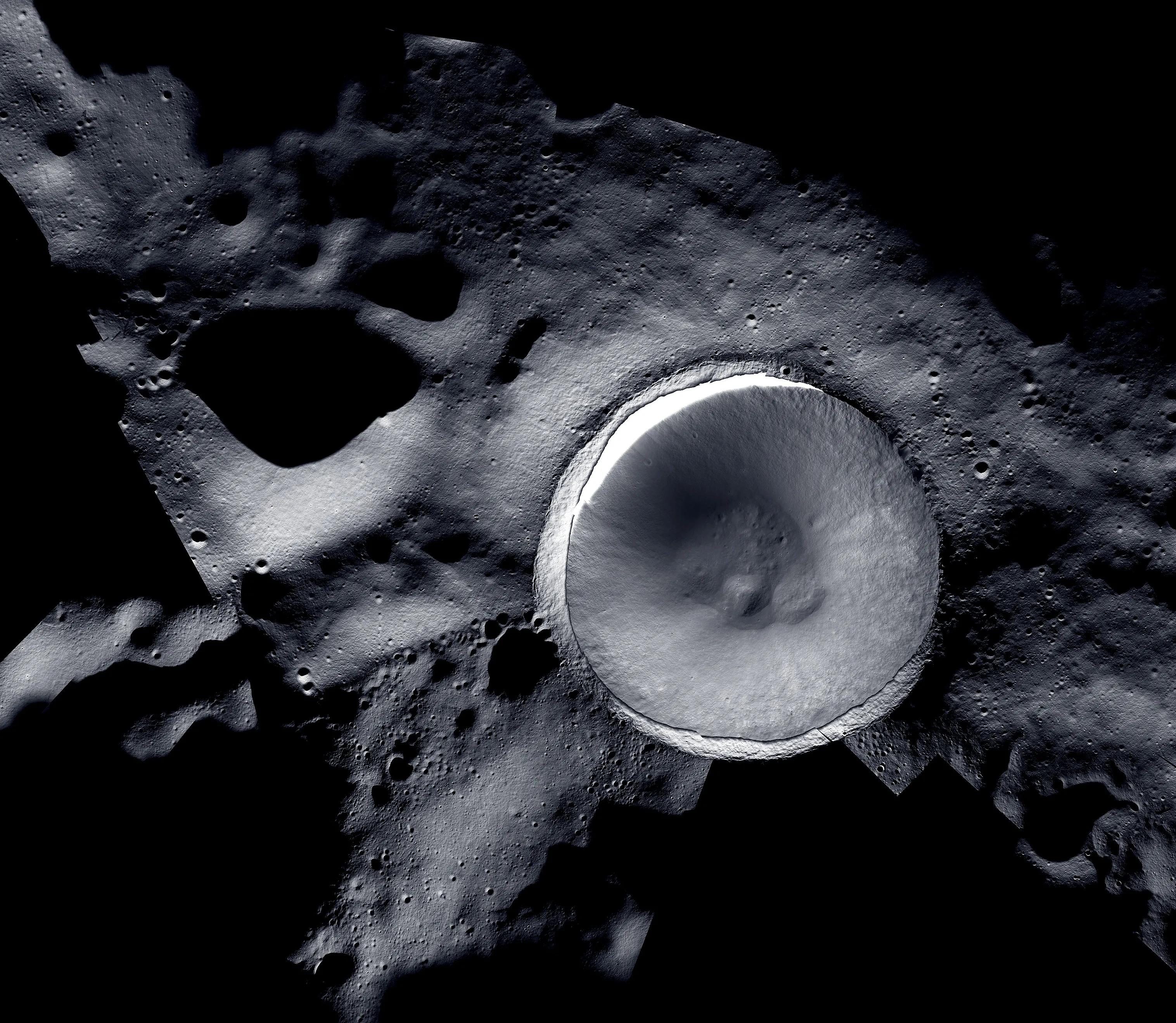
Danuri Lunar Orbiter and NASA ShadowCam (KASA)
Korea's first lunar orbiter, Danuri, launched in August 2022 and now carries NASA's ShadowCam in a mission extended through 2027 (KASA).
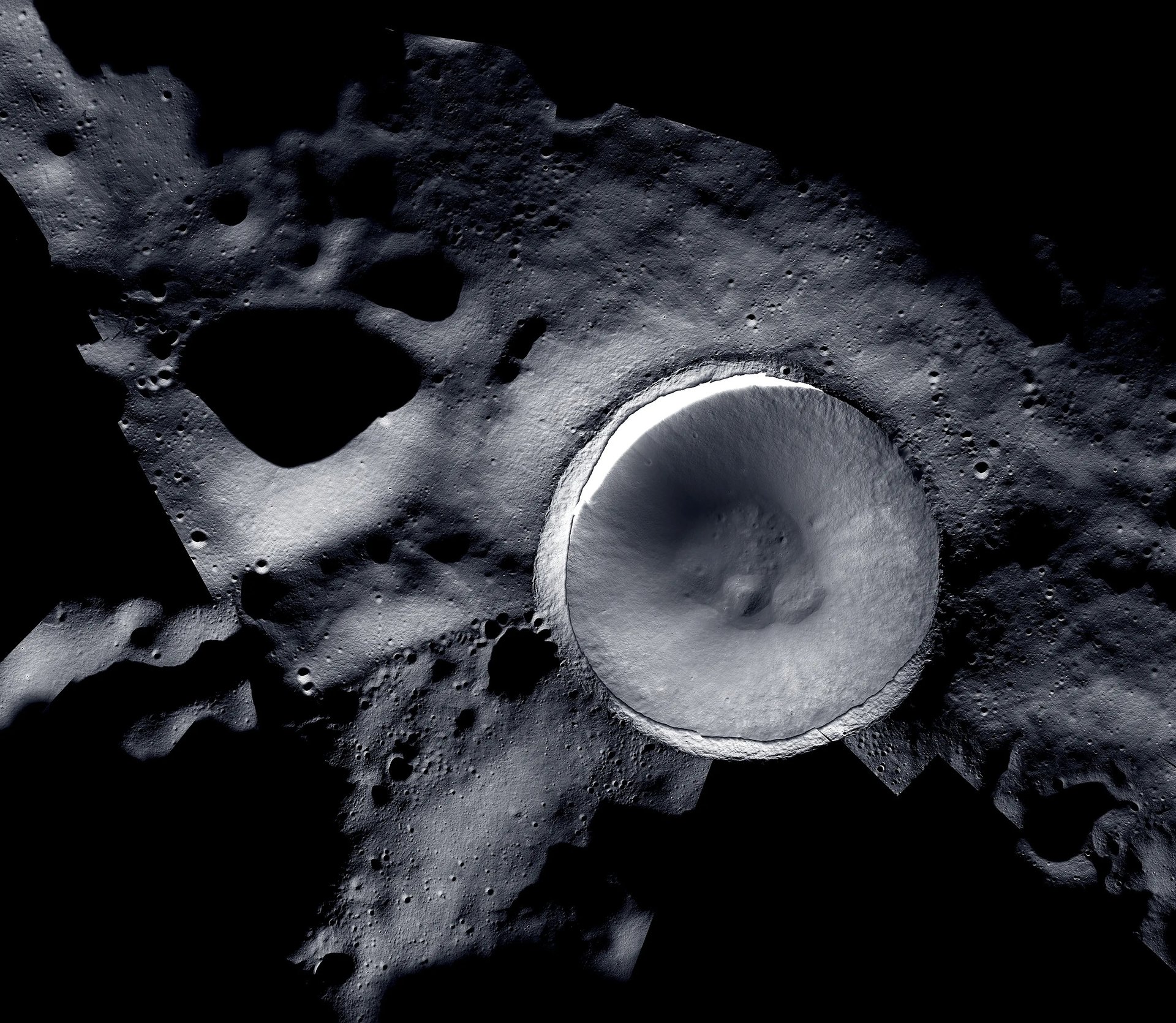
Image: LROC and ShadowCam teams, NASA/KARI/ASU (Shackleton Crater mosaic, public domain).
Last reviewed: 2 sources cited
A camera 200 times more sensitive is seeing into craters where the Sun never shines.
ShadowCam on Korea's Danuri is 200 times more light-sensitive than earlier lunar cameras, so it can image permanently shadowed craters (NASA).
Source: NASA, ShadowCam images permanently shadowed regions from lunar orbit (Feb. 2023)
Explain Like I'm 10
- Some craters near the Moon's poles are always dark.
- Scientists think frozen water may be hiding inside them.
- A super-sensitive camera on a Korean spacecraft takes pictures inside those dark craters.
The Five W's of Danuri
Who
The Korea AeroSpace Administration (KASA) and KARI, with NASA providing ShadowCam.
Source: Korea AeroSpace Administration, Danuri mission extended until 2027 (11 Feb. 2025)
What
A lunar orbiter with six instruments, including ShadowCam, which images permanently shadowed regions.
Source: NASA, ShadowCam images permanently shadowed regions from lunar orbit (Feb. 2023)
When
Launched in August 2022; extended through the end of 2027, with a planned lunar impact in March 2028.
Source: Korea AeroSpace Administration, Danuri mission extended until 2027 (11 Feb. 2025)
Where
In lunar The curved path an object takes as it travels around a planet, moon or star, like a satellite circling Earth. Glossary; for the extension KASA planned a stable 60 by 200 km frozen orbit.
Source: Korea AeroSpace Administration, Danuri mission extended until 2027 (11 Feb. 2025)
Why
Dark polar craters may hold water ice, a key resource for future explorers.
Source: NASA, ShadowCam images permanently shadowed regions from lunar orbit (Feb. 2023)
Connected Solutions
- Chandrayaan-5 / LUPEX A rover going to look for Moon ice.
- Artemis Program NASA's return to the Moon with crew.
Impact Statement
Agency solution · active, extended to end of 2027
It took the world's first optical images inside the Moon's permanently shadowed craters. Those pictures help plan Artemis landing sites and rover routes (KASA).
Source: Korea AeroSpace Administration, Danuri mission extended until 2027 (11 Feb. 2025)
ShadowCam sees in the dark by using light reflected off nearby mountains and crater walls (NASA).
How This Saves People & the Planet
For People
Its images help choose safe landing sites for Artemis astronauts and Korea's planned 2032 lunar lander (KASA).
Source: Korea AeroSpace Administration, Danuri mission extended until 2027 (11 Feb. 2025)
For Nature
Learning how water is trapped in shadowed craters helps scientists understand how the Moon evolved (NASA).
Source: NASA, ShadowCam images permanently shadowed regions from lunar orbit (Feb. 2023)
Learn More About Danuri
Want to go deeper? NASA explains ShadowCam.
 For Further Information
Related Solutions
More solutions like this one, matched by meaning.



Help This Work
Links go straight to the organization. Saving Planets doesn't receive any of the money.