OCO-2 Orbiting Carbon Observatory (NASA)
NASA's OCO-2 satellite has measured carbon dioxide around the planet since 2014, showing where carbon is released and where forests and oceans absorb it (NASA JPL).
Image: NASA/JPL-Caltech.
Last reviewed: 5 sources cited
Explain Like I'm 10
- OCO-2 is a satellite that measures A gas that people and animals breathe out and that burning fuel releases. Plants take it in, and too much of it in the air warms the planet. Glossary in the air.
- It shows where the gas comes from and where plants and oceans soak it up.
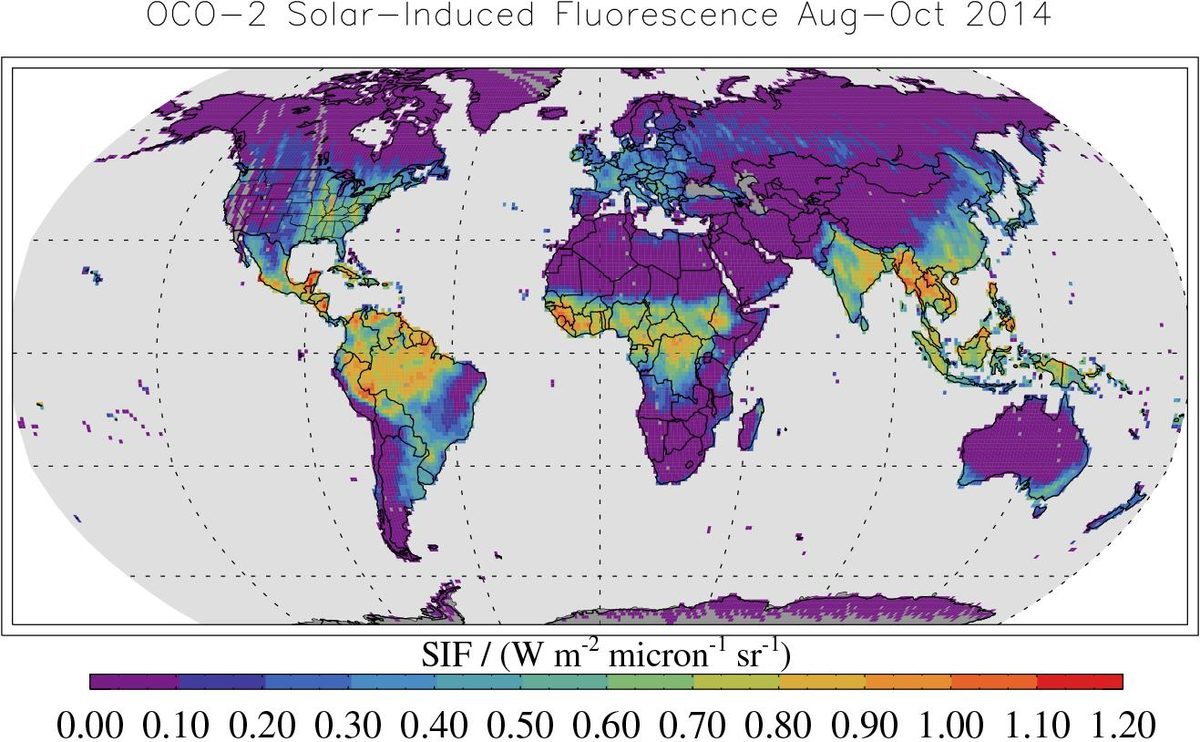
- It can even see plants glow faintly, which shows how healthy they are.
The Five W's of OCO-2
Who
NASA built OCO-2. Since fall 2026, Caltech and its Jet Propulsion Laboratory operate it under a partnership of up to five years, with NASA keeping ownership.
Source: NASA, NASA and Caltech partner on two Earth science missions (Aug 24, 2026)
What
A satellite that measures carbon dioxide in the atmosphere, collecting around 100,000 measurements every day.
When
OCO-2 launched on July 2, 2014, with a two-year prime mission. It has long outlasted that and keeps collecting data.
Source: NASA, NASA and Caltech partner on two Earth science missions (Aug 24, 2026)
Where
In The curved path an object takes as it travels around a planet, moon or star, like a satellite circling Earth. Glossary around Earth. It launched from Vandenberg Air Force Base in California.
Why
To find out precisely where carbon comes from and where it is stored, so scientists better understand how carbon is changing the climate.
Impact Statement
Agency solution · active
OCO-2 and its sister instrument OCO-3 on the space station show where carbon is emitted and where forests and oceans absorb it. Their data stay publicly available (Caltech).
Source: Caltech, NASA selects Caltech to operate the OCO missions (Aug 24, 2026)
For Further Information: NASA, NASA and Caltech partner on two Earth science missions (Aug 24, 2026)
OCO-2 makes around 100,000 measurements of Earth's carbon dioxide every day.
How This Saves People & the Planet
For People
OCO data help monitor crop health and plant productivity from farmlands to forests, aiding farmers and scientists (Caltech).
Source: Caltech, NASA selects Caltech to operate the OCO missions (Aug 24, 2026)
For Nature
By finding natural carbon sinks such as forests and oceans, OCO-2 shows which A community of living things and the place they live, like a reef or a forest, all depending on each other. Glossary are soaking up carbon (Caltech).
Source: Caltech, NASA selects Caltech to operate the OCO missions (Aug 24, 2026)
Get Involved With OCO-2
Want to go deeper? NASA and Caltech has the full OCO-2 story.
 For Further Information
Related Solutions
More solutions like this one, matched by meaning.

Help This Work
This is a public mission, so there is nothing to donate. You can explore its free data or join a citizen science project.