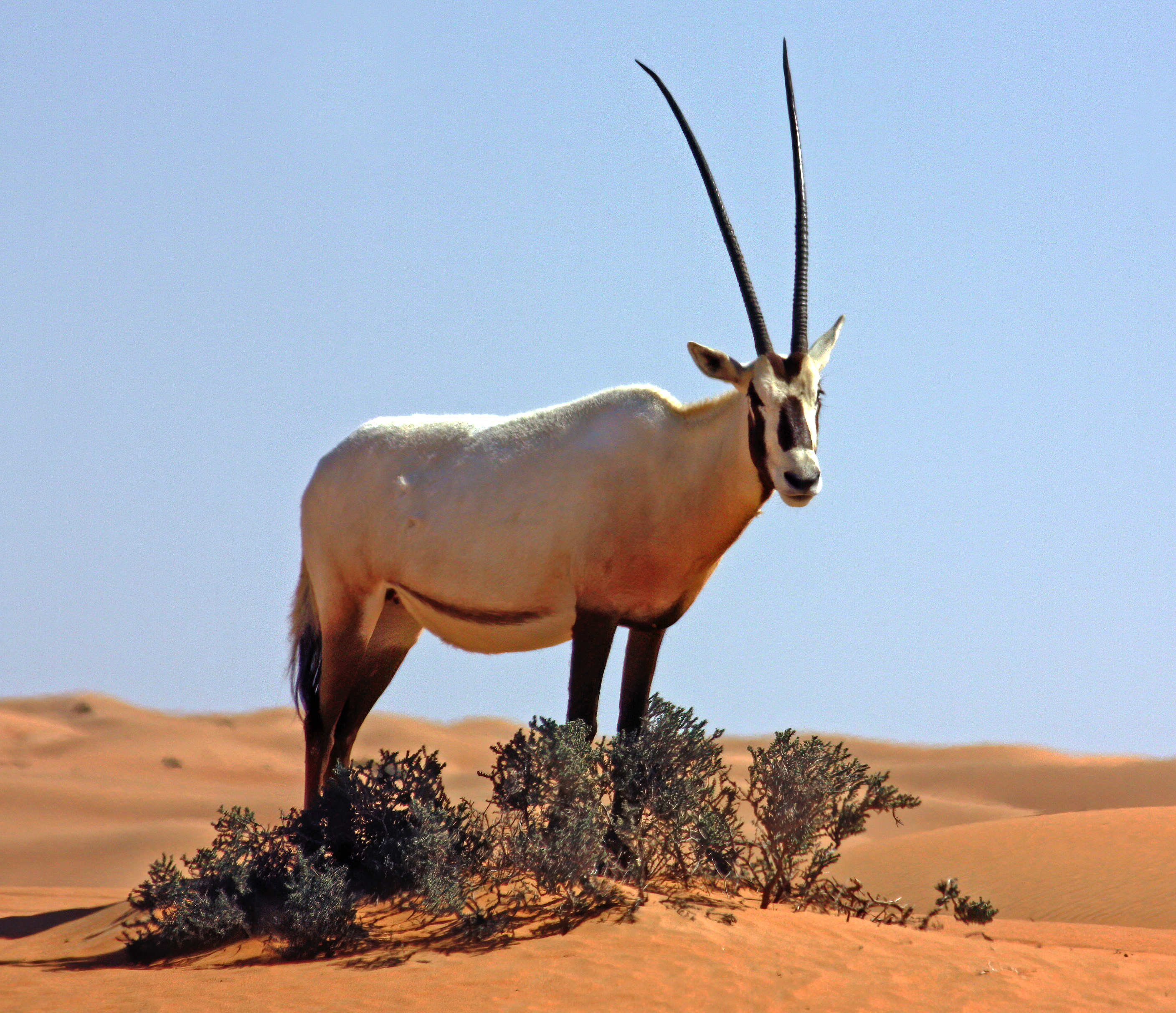
The Arabian Oryx Comeback
Captive breeding and reintroductions brought the Arabian oryx back, with about 1,000 in the wild by 2011 (IUCN).
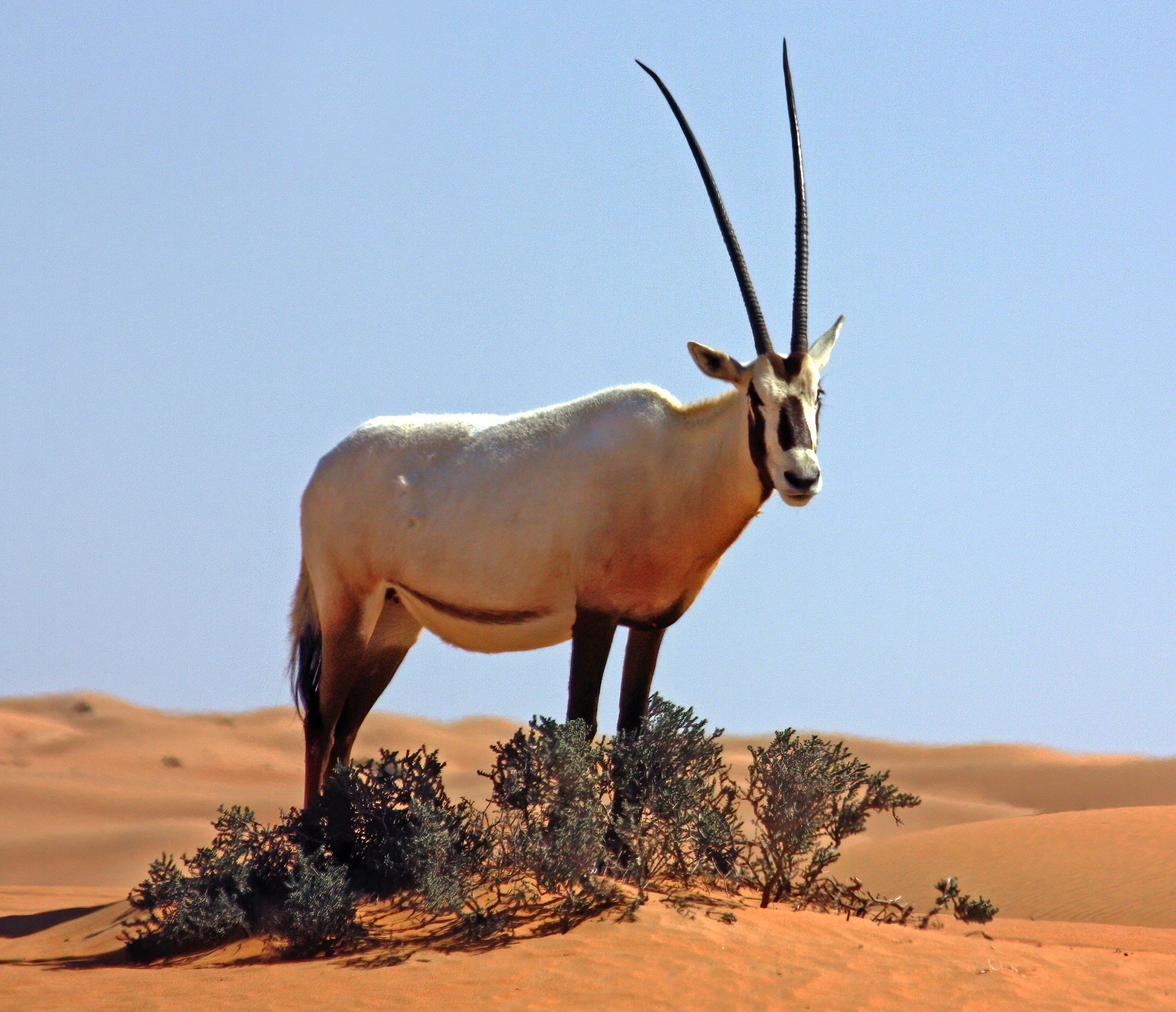
Image: Charles J. Sharp via Wikimedia Commons (Arabian oryx, Dubai Desert Conservation Area, CC BY-SA 3.0).
Last reviewed: 1 source cited
Gone from the wild in 1972, the Arabian oryx came back to roam the desert again.
The Arabian oryx was the first species once Extinct in the Wild to improve by three Red List categories (IUCN).
Explain Like I'm 10
- The Arabian oryx is a white desert antelope with long, straight horns.
- Hunters shot the last wild one in 1972.
- Zoos bred them and set them free again, and now about 1,000 live in the wild.
The Five W's of the oryx comeback
Who
Captive-breeding and reintroduction programmes on the Arabian Peninsula, including the Environment Agency-Abu Dhabi.
What
Captive breeding and reintroduction of the oryx into the wild.
When
The last wild oryx was believed shot in 1972; it moved to Vulnerable in 2011.
Where
The Arabian Peninsula, the only place the oryx is found.
Why
The oryx had been hunted to near extinction.
Connected Solutions
- Saiga Recovery on the Kazakh Steppe Another antelope back from the brink.
Impact Statement
Government solution · active
From zero in the wild to about 1,000. The oryx moved from Endangered to Vulnerable in 2011, a first for a species once Extinct in the Wild (IUCN).
Source: IUCN, A grain of hope in the desert (June 2011)
For Further Information: IUCN, A grain of hope in the desert (June 2011)
Locally, the Arabian oryx is known as Al Maha (IUCN).
How This Saves People & the Planet
For People
Known locally as Al Maha, the oryx is part of Arabian heritage, and its return shows conservation can deliver real results (IUCN).
Source: IUCN, A grain of hope in the desert (June 2011)
For Nature
The oryx is roaming its native desert again after being wiped out in the wild (IUCN).
Learn More About the Arabian Oryx
Want to go deeper? IUCN tells the story.
 For Further Information
Related Solutions
More solutions like this one, matched by meaning.
Help This Work
Links go straight to the organization. Saving Planets doesn't receive any of the money.