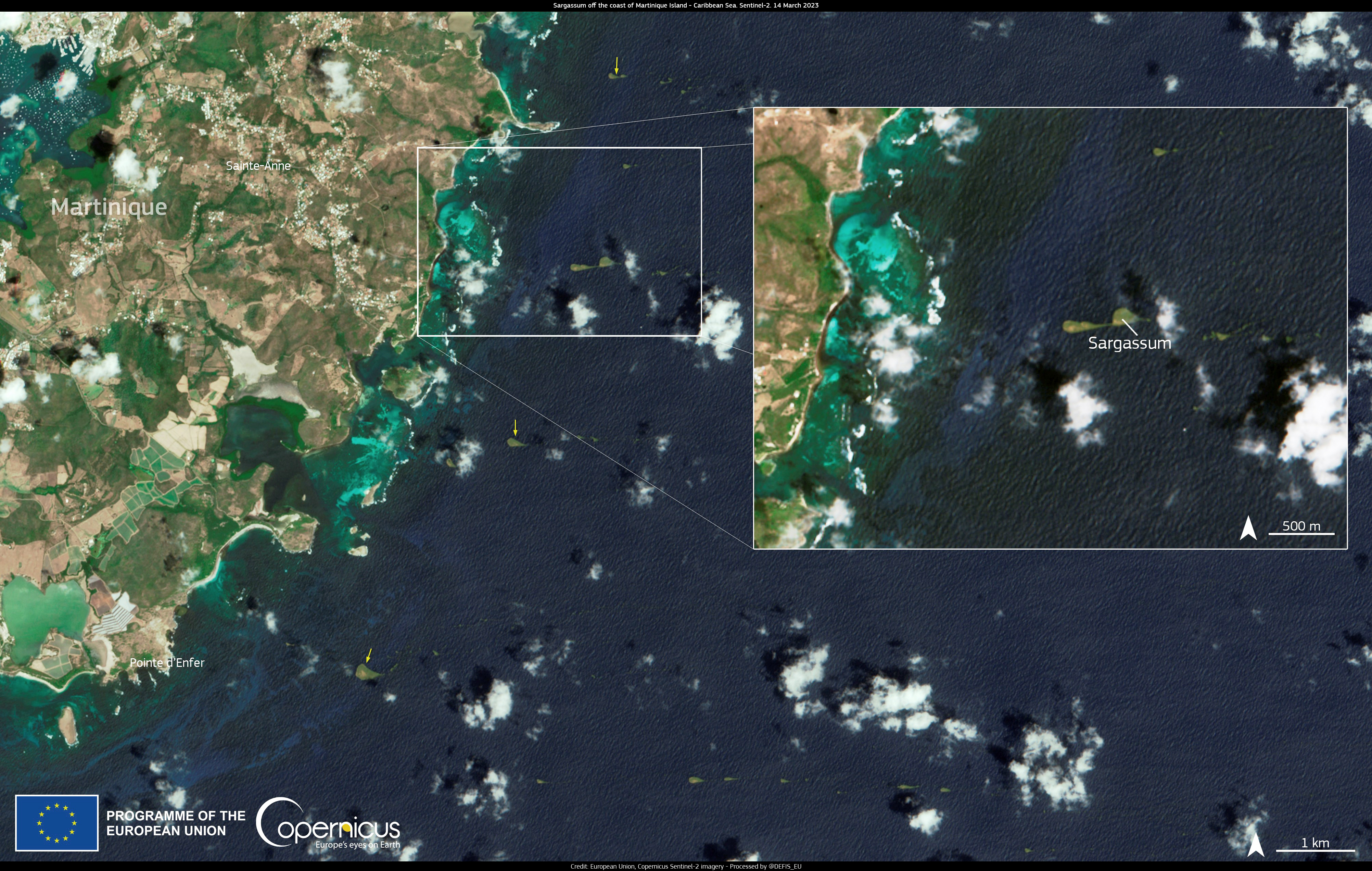
Sargassum Watch System (USF)
The University of South Florida uses NASA satellite data to track the Great Atlantic Sargassum Belt and warn coasts about seaweed blooms (USF).
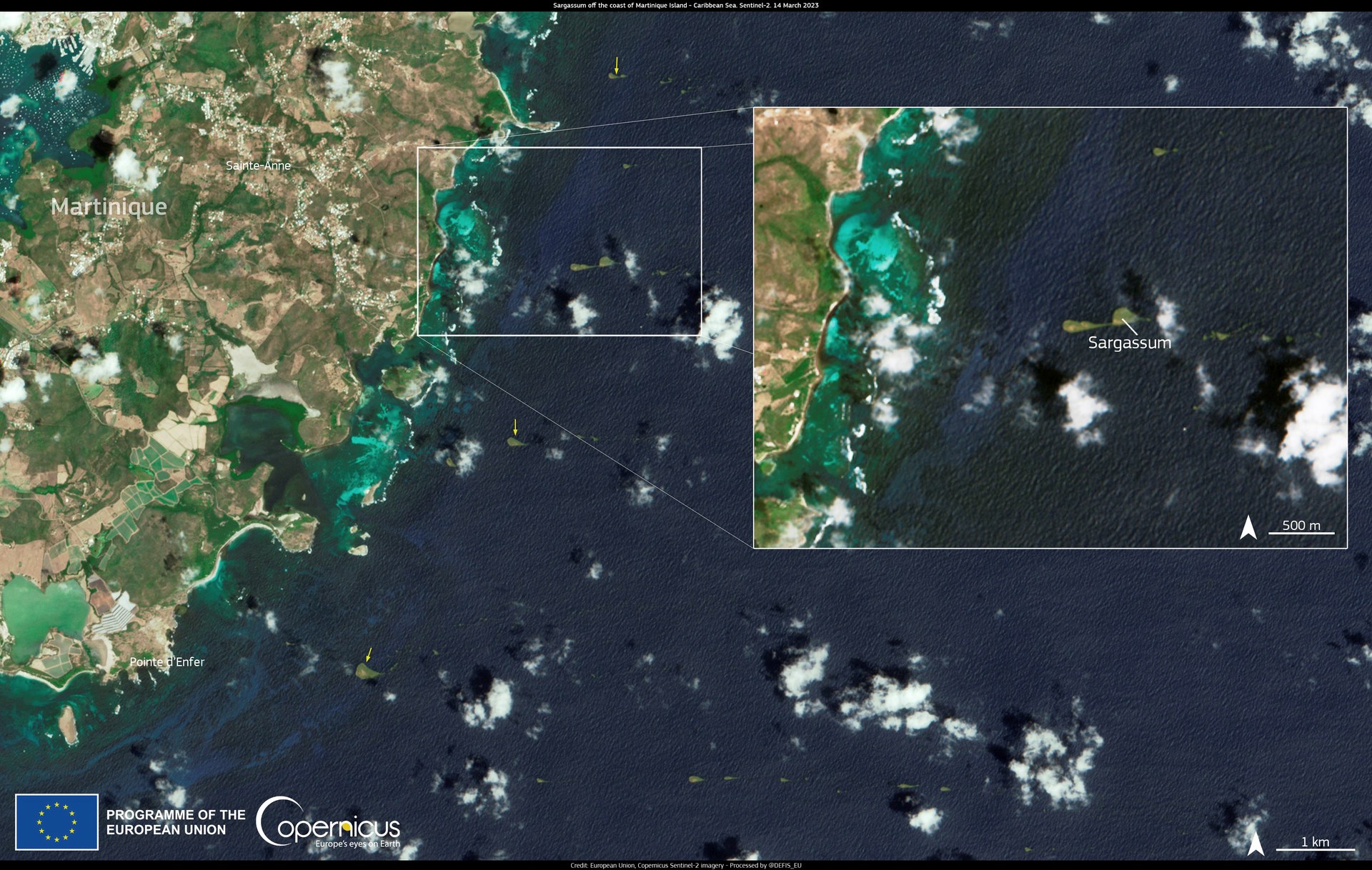
Image: Contains modified Copernicus Sentinel-2 data, processed by ESA (sargassum off Martinique).
Last reviewed: 2 sources cited
Satellites spotted a seaweed belt stretching from Africa to the Gulf of Mexico.
In 2018, more than 20 million tons of sargassum floated in the tropical Atlantic, heavier than 200 fully loaded aircraft carriers (USF).
Source: USF College of Marine Science, Scientists discover the biggest seaweed bloom in the world (2019)
Explain Like I'm 10
- Sargassum is a brown seaweed that floats in big mats on the ocean.
- Some years so much of it washes onto beaches that it piles up on the shore.
- Scientists use satellites to see where it is, so coastal towns can get ready.
The Five W's of Sargassum Watch
Who
The Optical Oceanography Lab at the University of South Florida College of Marine Science.
Source: USF Optical Oceanography Lab, Sargassum Watch System
What
The Sargassum Watch System, which uses satellite images to track floating sargassum.
Source: USF Optical Oceanography Lab, Sargassum Watch System
When
USF scientists reported the Great Atlantic Sargassum Belt in Science in 2019; it began in 2011.
Source: USF College of Marine Science, Scientists discover the biggest seaweed bloom in the world (2019)
Where
The tropical Atlantic, Caribbean Sea and Gulf of Mexico.
Source: USF College of Marine Science, Scientists discover the biggest seaweed bloom in the world (2019)
Why
Huge blooms can wreak havoc on shorelines across the Caribbean, Gulf of Mexico and Florida.
Source: USF College of Marine Science, Scientists discover the biggest seaweed bloom in the world (2019)
Connected Solutions
- PACE (NASA) Sees ocean colour in more detail than ever before.
Impact Statement
University service · active
Scientists used NASA's MODIS sensors on the Terra and Aqua satellites to discover the belt (USF).
Source: USF College of Marine Science, Scientists discover the biggest seaweed bloom in the world (2019)
Simulations confirmed the belt forms its shape in response to ocean currents (USF).
How This Saves People & the Planet
For People
Tracking the seaweed helps coastal communities and tourism prepare for blooms (USF).
Source: USF College of Marine Science, Scientists discover the biggest seaweed bloom in the world (2019)
For Nature
In the open ocean, sargassum is habitat for marine life; on beaches, large piles cause problems (USF).
Source: USF College of Marine Science, Scientists discover the biggest seaweed bloom in the world (2019)
Learn More About Sargassum Watch
Want to go deeper? USF explains the discovery.
 For Further Information
Related Solutions
More solutions like this one, matched by meaning.


Help This Work
Links go straight to the organization. Saving Planets doesn't receive any of the money.