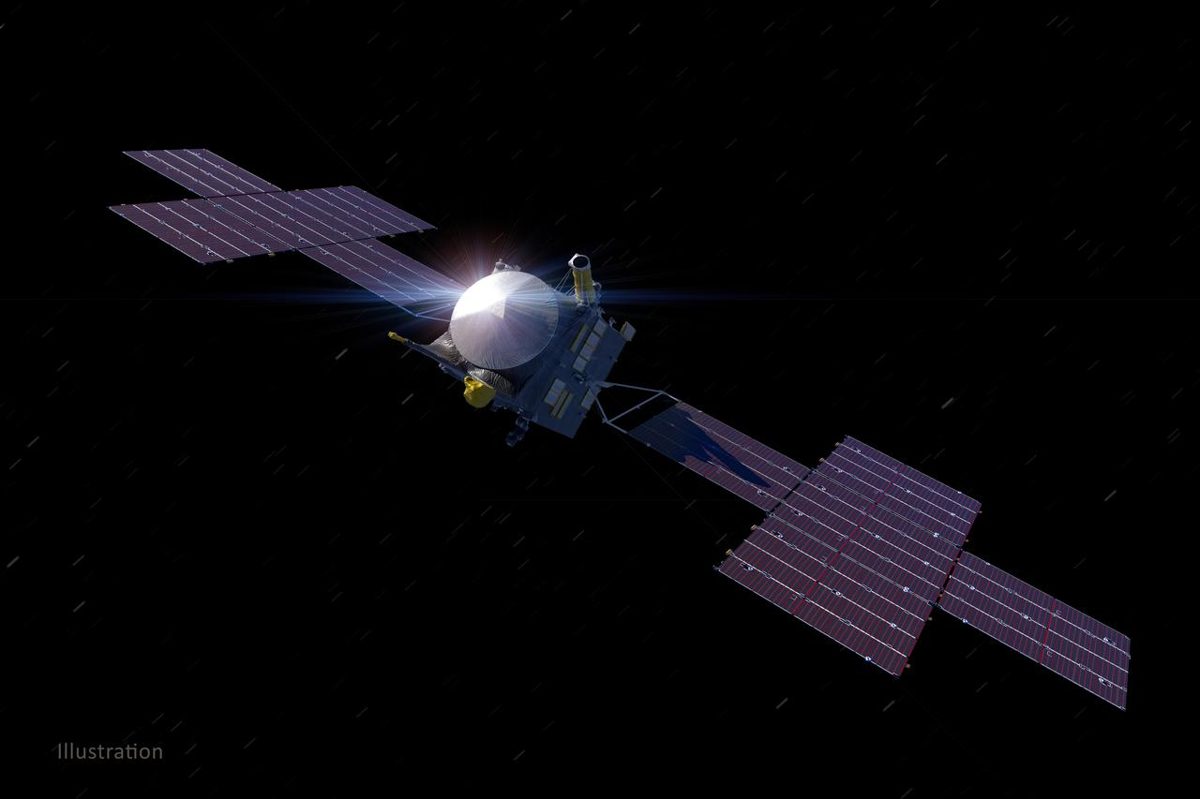
Lucy (NASA)
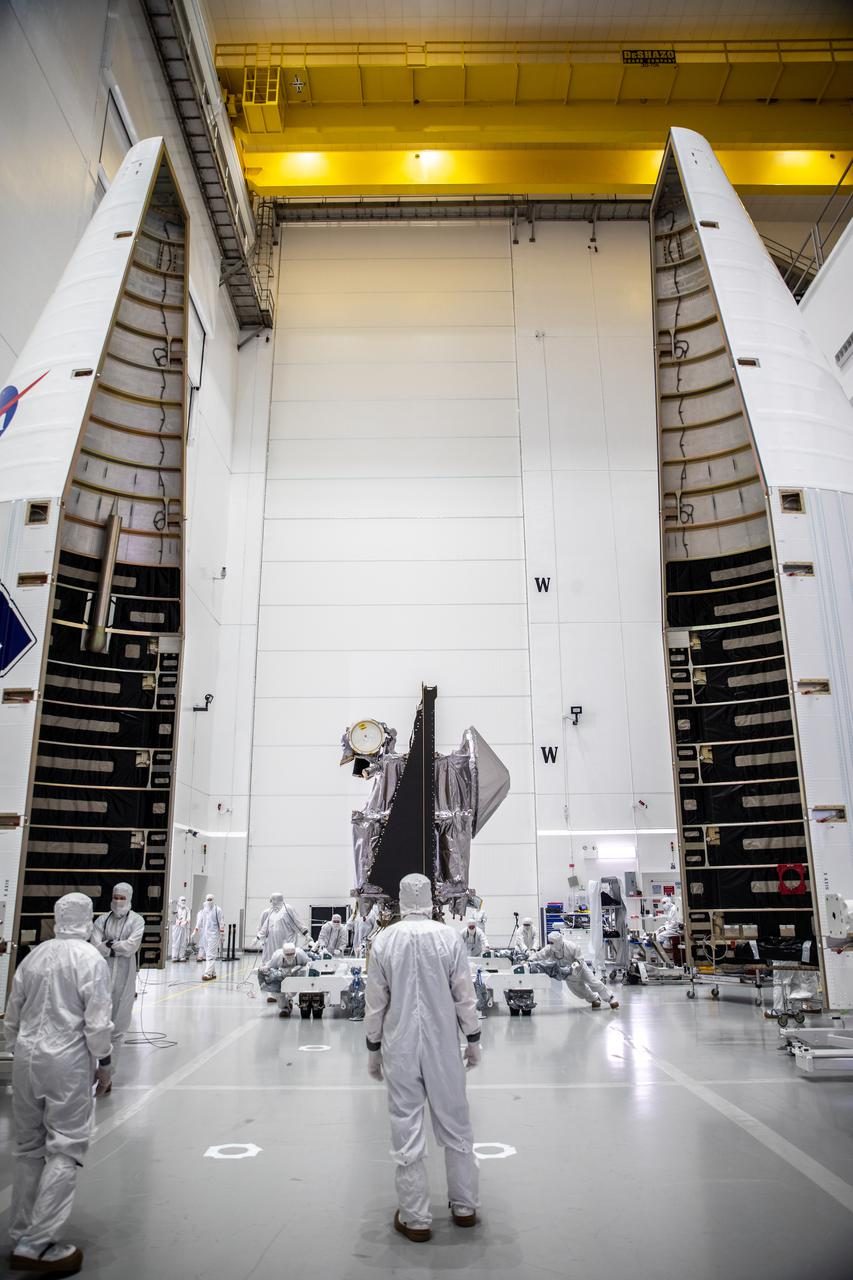
NASA's Lucy is touring asteroids; after Dinkinesh and Donaldjohanson, it reaches its first Trojan asteroid, Eurybates, on 11 August 2027 (NASA).
Image: NASA/KSC.
Last reviewed: 1 source cited
Explain Like I'm 10
- Lucy is a NASA spacecraft that visits many A rocky object that orbits the Sun, much smaller than a planet. Most are in a belt between Mars and Jupiter. Glossary, one after another.
- Some asteroids travel with Jupiter around the Sun. They are very old.
- Studying them is like reading fossils of how the planets were made.
The Five W's of Lucy (NASA)
What
A spacecraft visiting a record number of asteroids, including the Trojans that share Jupiter's The curved path an object takes as it travels around a planet, moon or star, like a satellite circling Earth. Glossary.
Source: NASA Science, Lucy
When
Flybys of Dinkinesh (2023) and Donaldjohanson (2025); Eurybates on 11 August 2027.
Source: NASA Science, Lucy
Why
Trojan asteroids are leftovers from the formation of the outer planets.
Source: NASA Science, Lucy
Impact Statement
Agency solution · active
Lucy's main-belt flybys tested its tracking and imaging before the Trojan science phase begins with Eurybates and its small moon Queta.
Source: NASA Science, Lucy
For Further Information: NASA Science, Lucy
NASA's Lucy will visit Trojan asteroids, leftovers from when the planets formed.
How This Saves People & the Planet
For People
Knowing the shapes and makeup of many kinds of asteroids helps scientists plan how to respond to any that could threaten Earth.
Source: NASA Science, Lucy
For Nature
These ancient rocks preserve clues to how our Solar System, and the materials for life, came together.
Source: NASA Science, Lucy
Want to go deeper? NASA has the full Lucy story.
 For Further Information
Related Solutions
More solutions like this one, matched by meaning.
For Teachers
Discussion questions
- What is Lucy (NASA), and what problem does it help solve?
- Who is behind Lucy (NASA), and where does the work happen?
- How does Lucy (NASA) help both people and nature? Use one fact from this page.
Sources are listed with each fact in the Five W's above.
Cite This Page
APA
Saving Planets. (n.d.). Lucy (NASA). https://www.savingplanets.com/Lucy.html
MLA
"Lucy (NASA)." Saving Planets, https://www.savingplanets.com/Lucy.html.