Mission Blue Hope Spots
Founded by ocean scientist Dr. Sylvia Earle, Mission Blue backs a community-led network of 168 Hope Spots, ocean places local champions work to protect (Mission Blue).
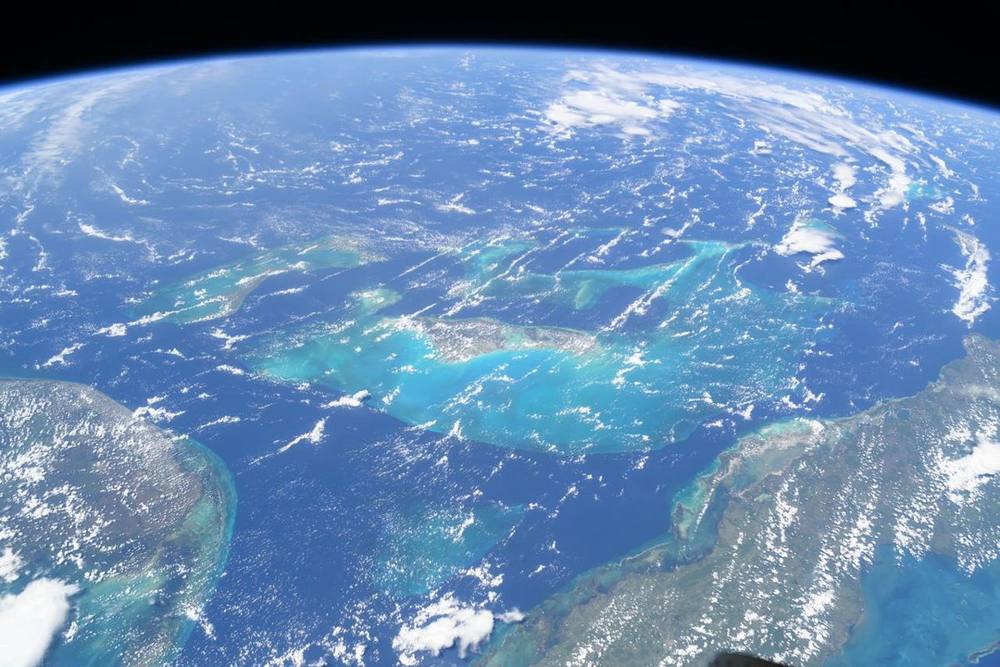
Image: NASA, International Space Station.
Last reviewed: 2 sources cited
Explain Like I'm 10
- A Hope Spot is a special place in the ocean that needs protecting.
- People who live nearby pick it and help take care of it.
- There are now 168 Hope Spots in 115 countries.
The Five W's of Mission Blue Hope Spots
Who
Mission Blue, a US nonprofit founded by marine scientist Dr. Sylvia Earle in 2009, working with local Hope Spot Champions around the world.
Source: Mission Blue, 2025 Annual Report
What
A Hope Spot is a place in the ocean critical to its health, The variety of all living things in a place: plants, animals, fungi and tiny microbes. Glossary or connectivity, from coral reefs and Large brown seaweed that grows in cool ocean water and forms underwater forests full of sea life. Glossary forests to seamounts. Local leaders nominate each one, and a Hope Spot Council of experts reviews nominations.
Source: Mission Blue, Hope Spots
When
Since 2009. The network grew to 168 Hope Spots by its 2025 annual report (organization figure).
Source: Mission Blue, 2025 Annual Report
Where
168 Hope Spots across 115 countries and the High Seas, influencing more than 57 million square kilometers of ocean (organization figures).
Source: Mission Blue, 2025 Annual Report
Why
Hope Spots help reach the global goal of protecting at least 30% of the ocean by 2030, by strengthening existing marine protected areas and building momentum for new ones.
Source: Mission Blue, Hope Spots
Impact Statement
Nonprofit solution · active
From 50 Hope Spots to 168, the network has more than tripled, and now spans 115 countries and the High Seas (organization figures).
Source: Mission Blue, 2025 Annual Report
For Further Information: Mission Blue, Hope Spots
Mission Blue's Hope Spots span 115 countries and the High Seas, influencing more than 57 million square kilometers of ocean.
How This Saves People & the Planet
For People
Hope Spots are championed by local communities, so the people who live by and depend on the sea help decide how their waters are protected.
Source: Mission Blue, Hope Spots
For Nature
Each Hope Spot protects ocean places that matter for biodiversity, like coral reefs, kelp forests and seamounts, toward protecting 30% of the ocean by 2030.
Source: Mission Blue, Hope Spots
Support Mission Blue Hope Spots
Support Mission Blue directly.
 Donate
Related Solutions
More solutions like this one, matched by meaning.


Help This Work
Links go straight to the organization. Saving Planets doesn't receive any of the money.