Parker Solar Probe (NASA)
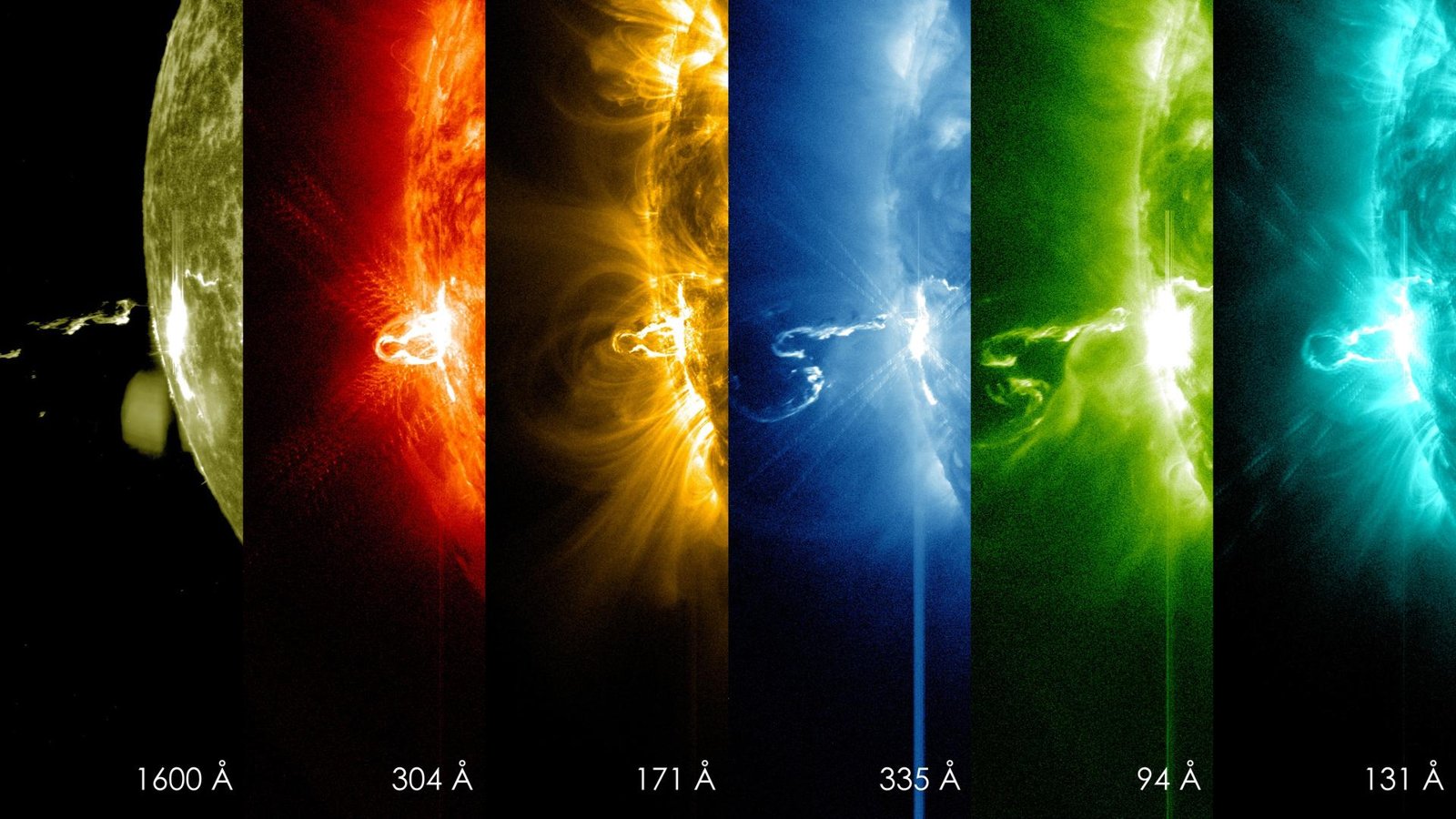
The first spacecraft to fly through the Sun's outer atmosphere, helping scientists understand the space weather that affects life and technology on Earth (NASA).
Image: NASA/SDO.
Last reviewed: 2 sources cited
Explain Like I'm 10
- Parker Solar Probe is a spacecraft that flies closer to the Sun than any other.
- A thick heat shield keeps it safe from the Sun's heat.
- It helps scientists learn about solar storms that can affect satellites on Earth.
The Five W's of Parker Solar Probe
Who
NASA's Goddard Space Flight Center and the Johns Hopkins University Applied Physics Laboratory run the mission. It is named for Dr. Eugene N. Parker, who predicted the A steady stream of charged particles flowing out from the Sun in every direction. Glossary in the 1950s.
Source: NASA, Parker Solar Probe
What
A spacecraft with four instrument suites that study magnetic fields, plasma and energetic particles, and take images of the solar wind.
Source: NASA, Parker Solar Probe
When
It launched in 2018. In 2021 it became the first spacecraft to fly through the corona, the Sun's upper atmosphere.
Source: NASA, Parker Solar Probe
Where
In The curved path an object takes as it travels around a planet, moon or star, like a satellite circling Earth. Glossary around the Sun, well inside the orbit of Mercury. At its closest it comes within about 3.9 million miles (6.2 million km) of the Sun.
Source: NASA, Parker Solar Probe
Why
Space weather can change the orbits of satellites, shorten their lifetimes or interfere with their electronics. Parker's data are key to understanding and forecasting it.
Source: NASA, Parker Solar Probe
Impact Statement
Agency solution · active
At closest approach, Parker Solar Probe moves at about 430,000 mph (700,000 km/h), fast enough to get from Philadelphia to Washington, D.C., in one second (NASA).
Source: NASA, Parker Solar Probe
For Further Information: NASA, Parker Solar Probe
Parker's 4.5-inch-thick carbon-composite shield can withstand temperatures of nearly 2,500 degrees Fahrenheit (1,377 Celsius).
How This Saves People & the Planet
For People
Parker's data help forecast space weather that can disrupt the satellites people depend on (NASA).
Source: NASA, Parker Solar Probe
For Nature
We live in the Sun's atmosphere, and Parker helps scientists understand the Sun's impact on Earth (NASA).
Source: NASA, Parker Solar Probe
Get Involved With Parker Solar Probe
Want to go deeper? NASA has the full Parker Solar Probe story.
 For Further Information
Related Solutions
More solutions like this one, matched by meaning.

Help This Work
Links go straight to the organization. Saving Planets doesn't receive any of the money.