SCISAT Ozone Watch (Canadian Space Agency)
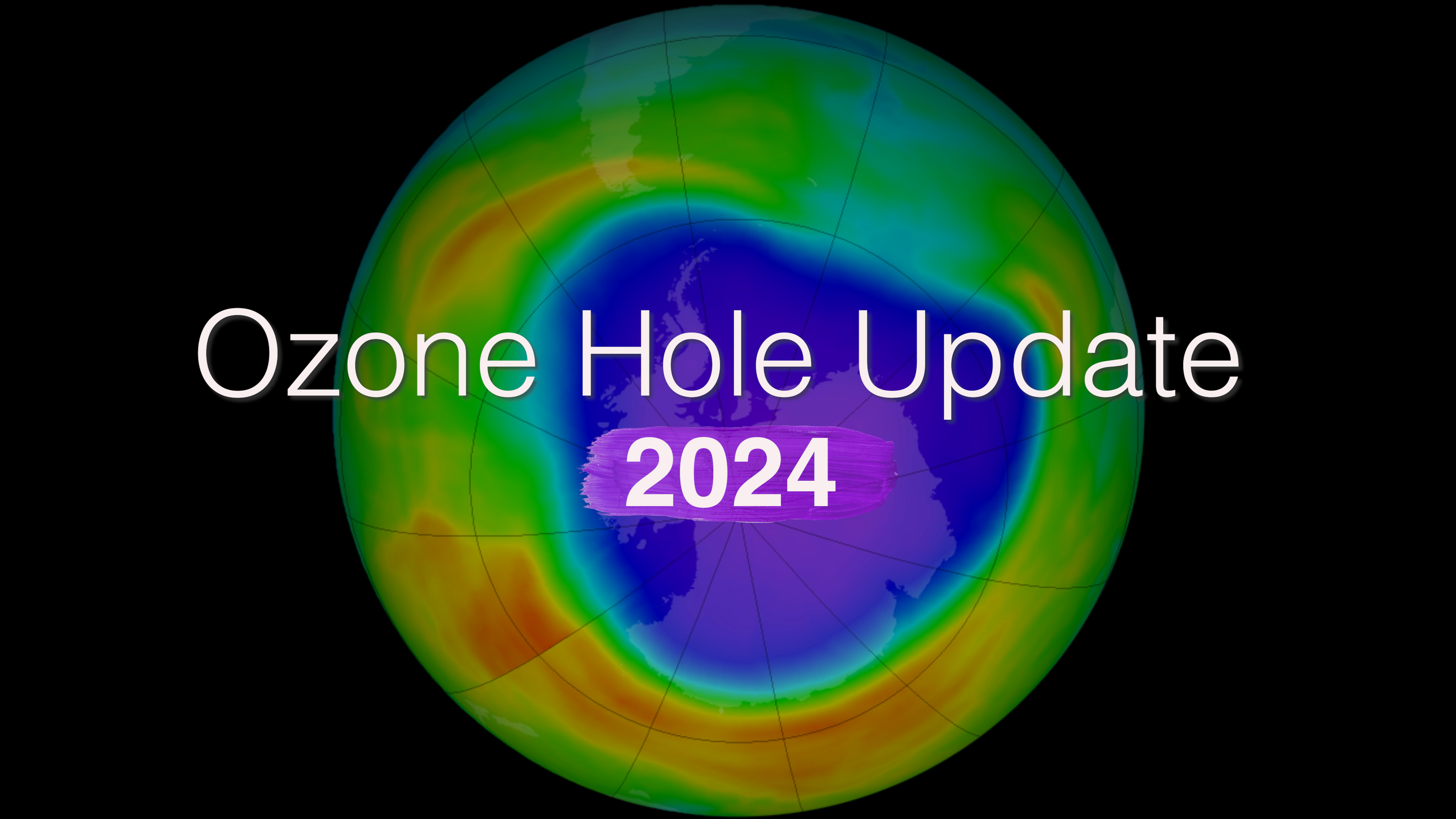
Canada's 150 kg SCISAT has measured the chemistry of the ozone layer since 2003, with a special focus on Canada and the Arctic (CSA).
Image: NASA Scientific Visualization Studio (2024 Ozone Hole Update, SVS 14711).
Last reviewed: 2 sources cited
Built to last two years, a tiny Canadian satellite is still watching the ozone layer more than 20 years later.
SCISAT measures 70 different trace gases in the atmosphere (CSA).
Explain Like I'm 10
- High in the sky, a layer of A gas high in the sky that blocks harmful ultraviolet rays from the Sun. Near the ground, ozone is a pollutant. Glossary gas blocks most of the Sun's harmful ultraviolet rays.
- Some human-made chemicals were eating holes in that layer.
- SCISAT watches sunlight shine through the air at sunrise and sunset to find out which gases are there.
The Five W's of SCISAT
Who
The Canadian Space Agency, with a science team led from the University of Waterloo.
What
A small satellite with two instruments, ACE-FTS and MAESTRO, that measure gases and particles that affect ozone.
When
Launched on 12 August 2003. In its 2026-27 plan, CSA says SCISAT is entering its 22nd year in The curved path an object takes as it travels around a planet, moon or star, like a satellite circling Earth. Glossary.
Where
A 650 km high-inclination orbit that passes over the polar regions as well as the tropics.
Why
Ozone protects us from the Sun's ultraviolet radiation, and Arctic spring ozone has seen severe declines.
Connected Solutions
- Sentinel-5P Maps ozone and air pollution across the globe every day.
Impact Statement
Agency solution · active
SCISAT data make an important contribution to policies that protect the ozone layer, such as the Montreal Protocol (CSA).
Source: Canadian Space Agency, About SCISAT
For Further Information: Canadian Space Agency, About SCISAT
After the 2022 Hunga Tonga eruption, SCISAT helped estimate how much water vapour reached the stratosphere (CSA).
How This Saves People & the Planet
For People
A healthy ozone layer prevents most of the Sun's ultraviolet radiation from reaching people on the ground (CSA).
Source: Canadian Space Agency, About SCISAT
For Nature
SCISAT also tracks pollution and wildfire smoke, and helped explain ozone loss after the 2019-20 Australian bushfires (CSA).
Learn More About SCISAT
Want to go deeper? The Canadian Space Agency has the full mission story.
 For Further Information
Related Solutions
More solutions like this one, matched by meaning.
Help This Work
Links go straight to the organization. Saving Planets doesn't receive any of the money.