GEDI Forest Lidar (NASA)
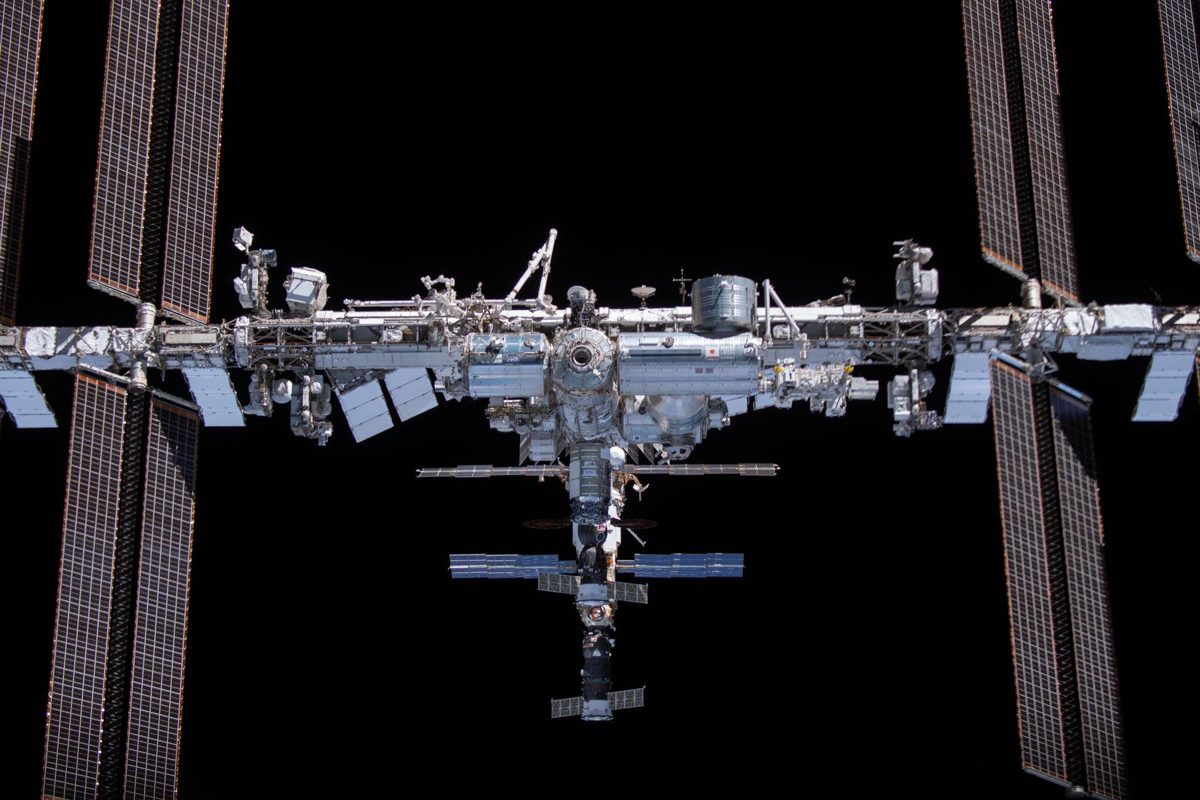
GEDI fires lasers from the International Space Station to measure the height and 3D shape of Earth's forests (University of Maryland).
Image: NASA.
Last reviewed: 4 sources cited
Explain Like I'm 10
- GEDI is a laser tool on the International Space Station.
- It shines light down on forests and times how long it takes to bounce back.
- That tells scientists how tall trees are and how much carbon forests hold.
The Five W's of GEDI
Who
The University of Maryland leads GEDI with NASA's Goddard Space Flight Center. NASA selected it as an Earth Venture Instrument mission in 2014.
What
A lidar with 3 lasers that make 8 parallel tracks of measurements. Each laser spot is 25 meters wide, and GEDI measures canopy height, canopy structure and ground elevation.
When
GEDI was stored on the station from March 2023, reinstalled in April 2024 and returned to forest monitoring that spring.
Where
On the International Space Station, observing nearly all of Earth's tropical and temperate forests.
Why
Forests are changing fast. GEDI's 3D measurements help track forest carbon, The total amount of living material, like the wood and leaves in a forest. Measuring it shows how much carbon plants store. Glossary and habitat.
Impact Statement
Agency solution · active
GEDI has produced more than 10 billion high-quality observations of forest structure (University of Maryland).
Source: University of Maryland, GEDI mission overview
For Further Information: University of Maryland, GEDI mission overview
Each GEDI laser spot on the ground is 25 meters wide, and spots are 60 meters apart.
How This Saves People & the Planet
For People
GEDI data help with forest inventories and with resilience to hazards such as wildfires, floods, hurricanes and landslides.
Source: University of Maryland, GEDI mission overview
For Nature
Measurements of forest height and structure support wildlife habitat conservation.
Get Involved With GEDI
Want to go deeper? NASA and the University of Maryland has the full GEDI story.
 For Further Information
Related Solutions
More solutions like this one, matched by meaning.


Help This Work
This is a public mission, so there is nothing to donate. You can explore its free data or join a citizen science project.