Carbfix: Turning CO2 Into Stone
Carbfix dissolves carbon dioxide in water and injects it into basalt rock, where it turns into stone (company).
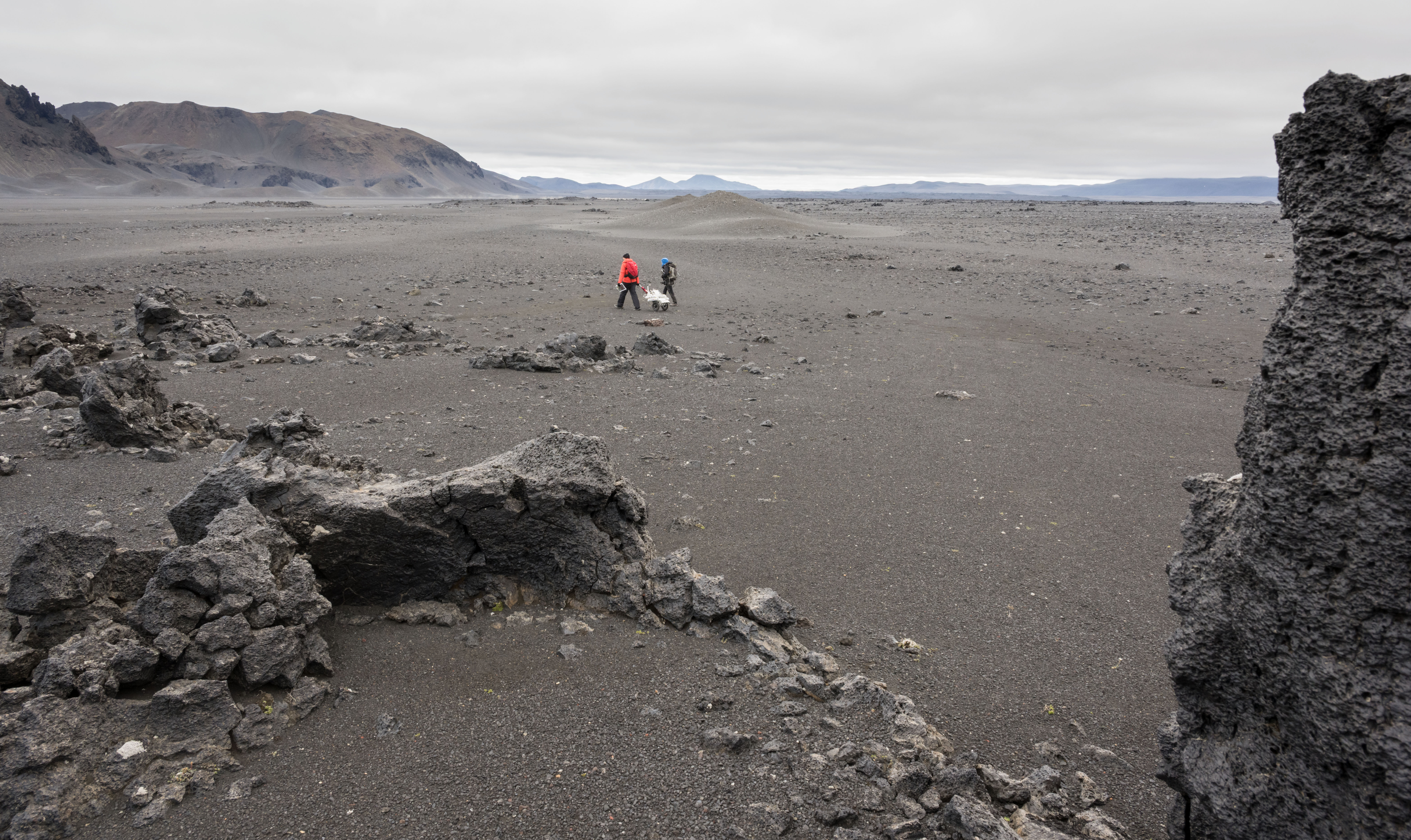
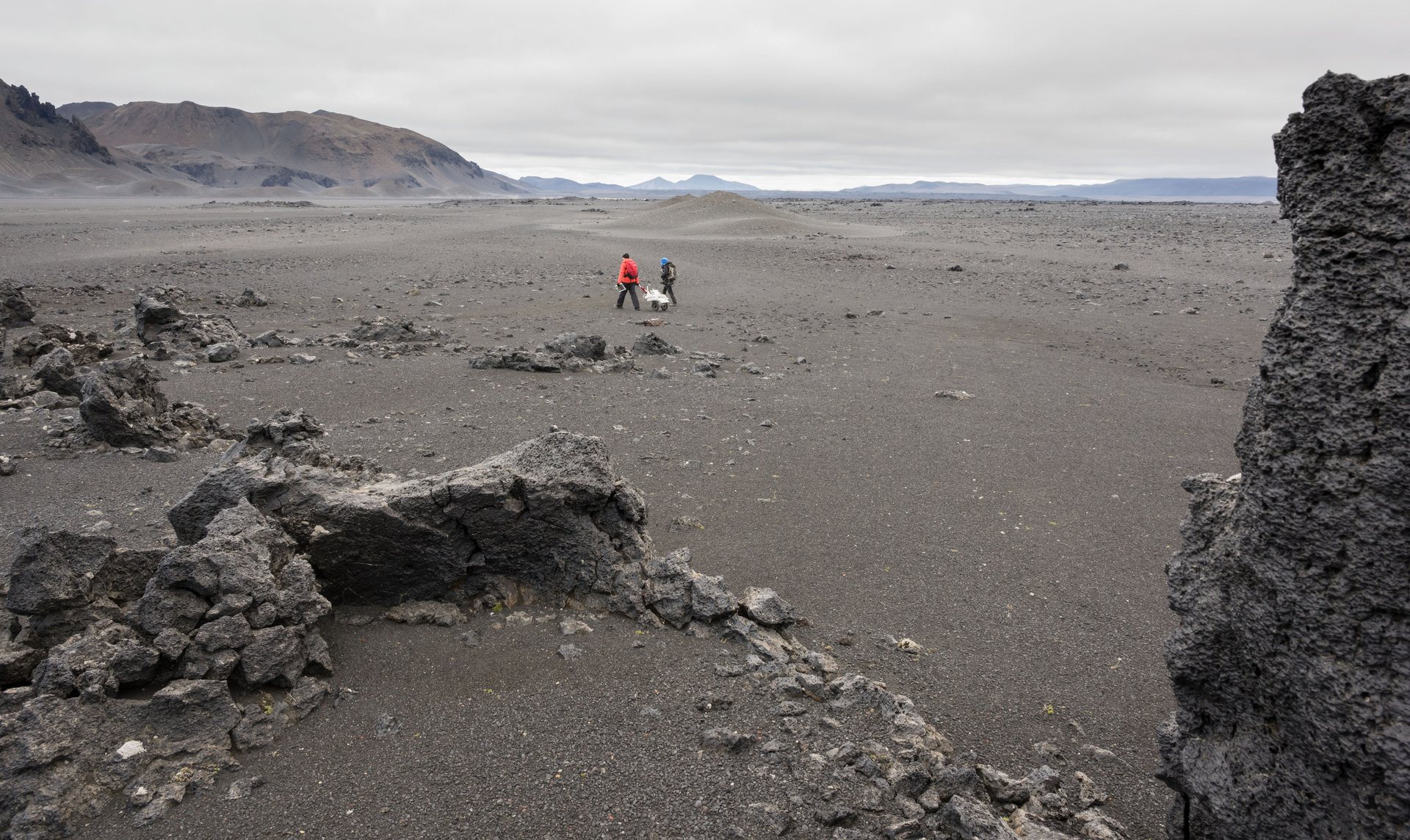
Image: NASA/James Blair (jsc2026e406058, volcanic landscape in Iceland).
Last reviewed: 2 sources cited
In Iceland, carbon dioxide is being turned into rock.
In a 2012 test, over 95% of the injected CO2 turned to stone in less than two years (Science, 2016).
Source: Matter et al., Science (2016)
Explain Like I'm 10
- A gas that people and animals breathe out and that burning fuel releases. Plants take it in, and too much of it in the air warms the planet. Glossary is a gas that warms the planet.
- Carbfix mixes it with water, like fizzy water, and pumps it deep into volcanic rock.
- There the gas reacts with the rock and becomes solid stone that stays put.
The Five W's of Carbfix
Who
Carbfix, a subsidiary of Reykjavík Energy (OR) that began operating as its own company on Jan. 1, 2020. It began as a project of Reykjavík Energy, the University of Iceland, CNRS and Columbia University's Earth Institute.
Source: Carbfix, Our story
What
CO2 is dissolved in water and injected underground, where it reacts with basalt and turns into carbonate minerals.
Source: Carbfix, Our story
When
Started in 2006 and formalized in 2007. Injection at industrial scale at Hellisheiði has run since 2014.
Source: Carbfix, Our story
Where
At the Hellisheiði geothermal power plant in Iceland, in basalt rock.
Source: Carbfix, Our story
Why
Rock storage keeps CO2 out of the atmosphere for good. The company's goal is to store 1 billion tonnes of CO2.
Source: Carbfix, Our story
Impact Statement
Company solution · active
In the 2012 pilot, 175 tonnes of CO2 were injected at about 500 m depth, and over 95% mineralized in less than two years (Science, 2016).
Source: Matter et al., Science (2016)
For Further Information: Matter et al., Science (2016)
Carbfix puts its on-site cost at about US $24.8 per tonne of CO2 (company figure).
How This Saves People & the Planet
For People
At Hellisheiði, CO2 and hydrogen sulphide are captured from a geothermal power plant's emissions and stored as rock (Carbfix).
Source: Carbfix, Our story
For Nature
Carbfix copies a natural process: CO2 and rock form stable carbonate minerals, a permanent and environmentally benign store (Carbfix).
Source: Carbfix, Our story
Learn More About Carbfix
Want to go deeper? Carbfix explains how CO2 turns to stone.
 For Further Information
Related Solutions
More solutions like this one, matched by meaning.

Help This Work
Links go straight to the organization. Saving Planets doesn't receive any of the money.