
Propulsion
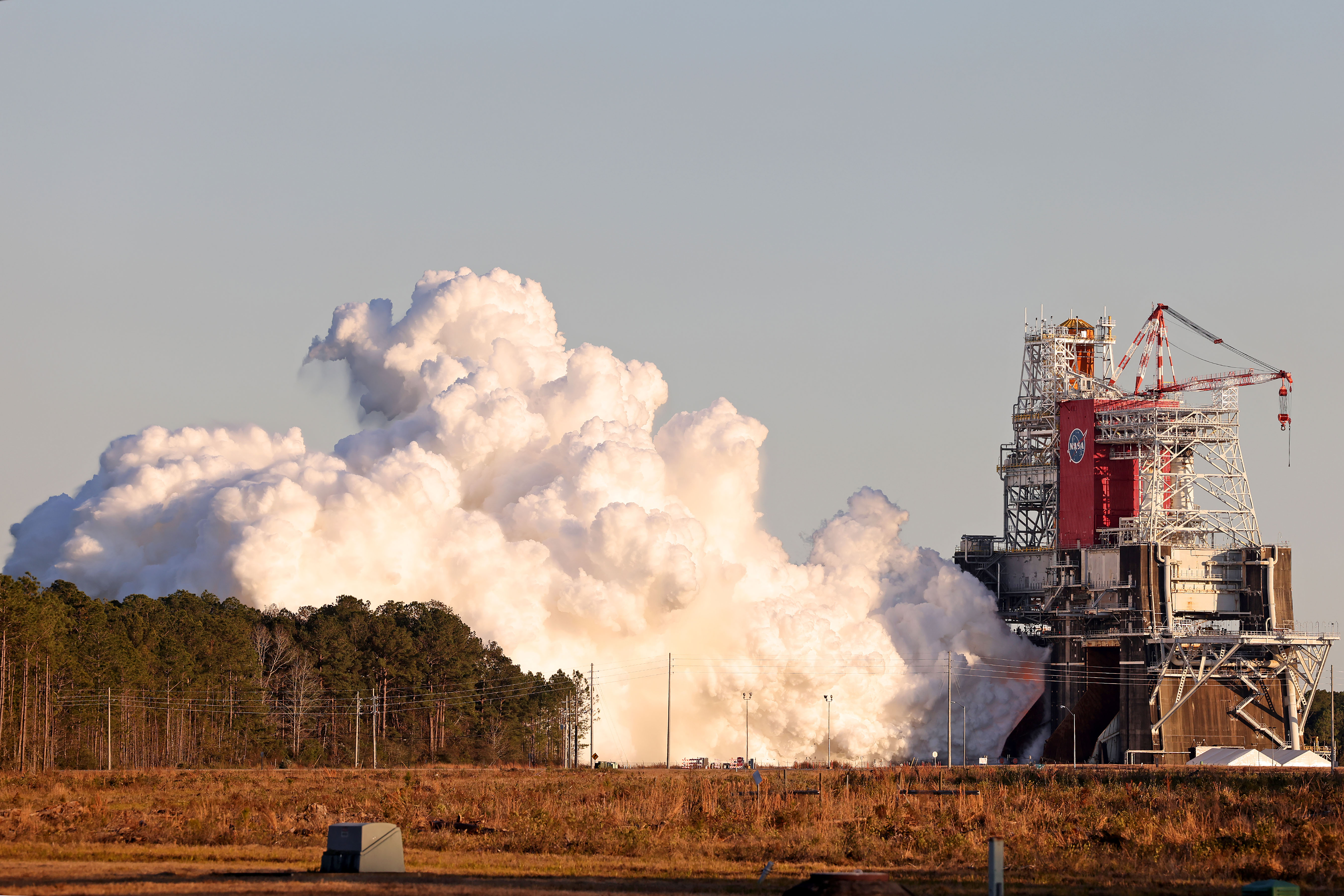
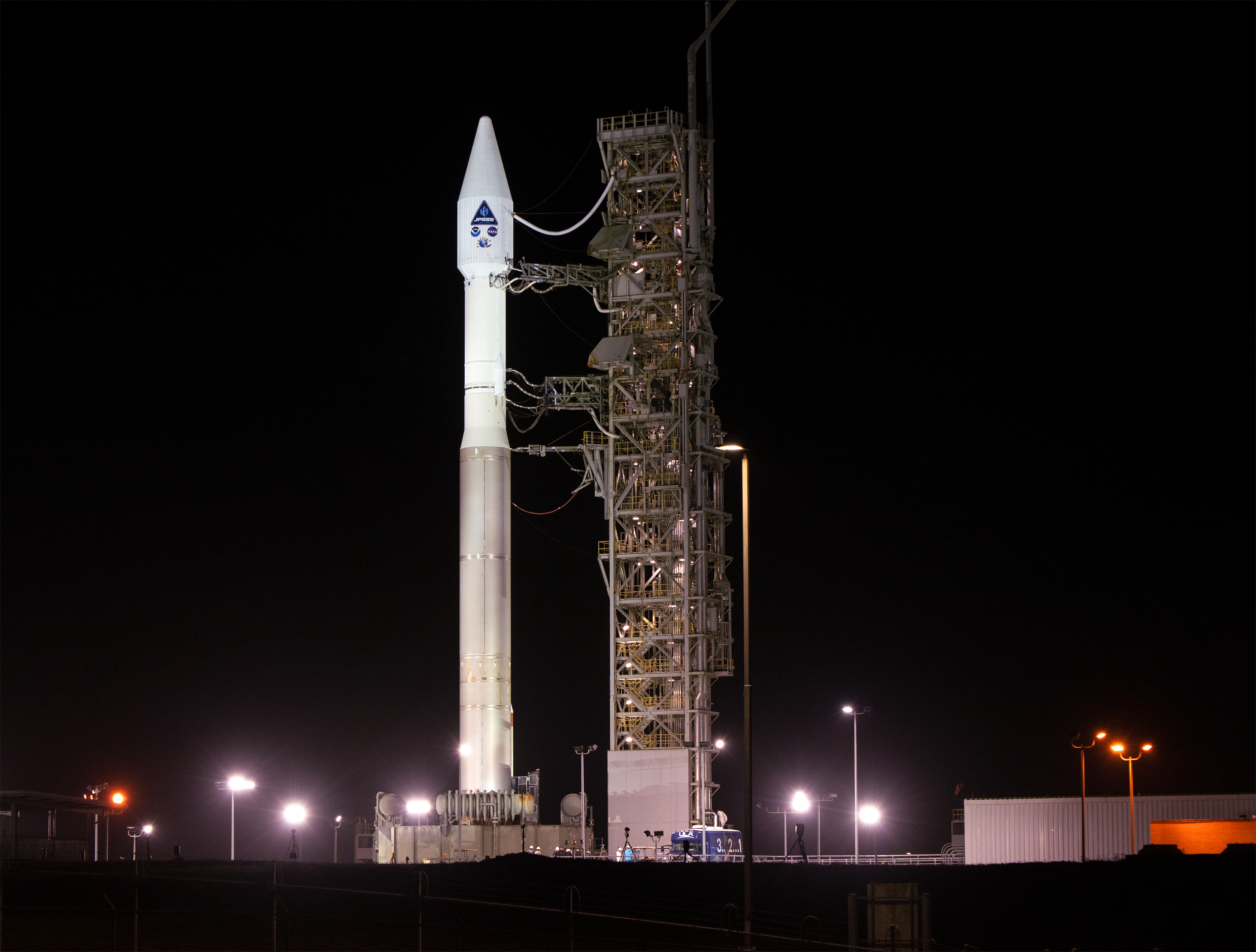
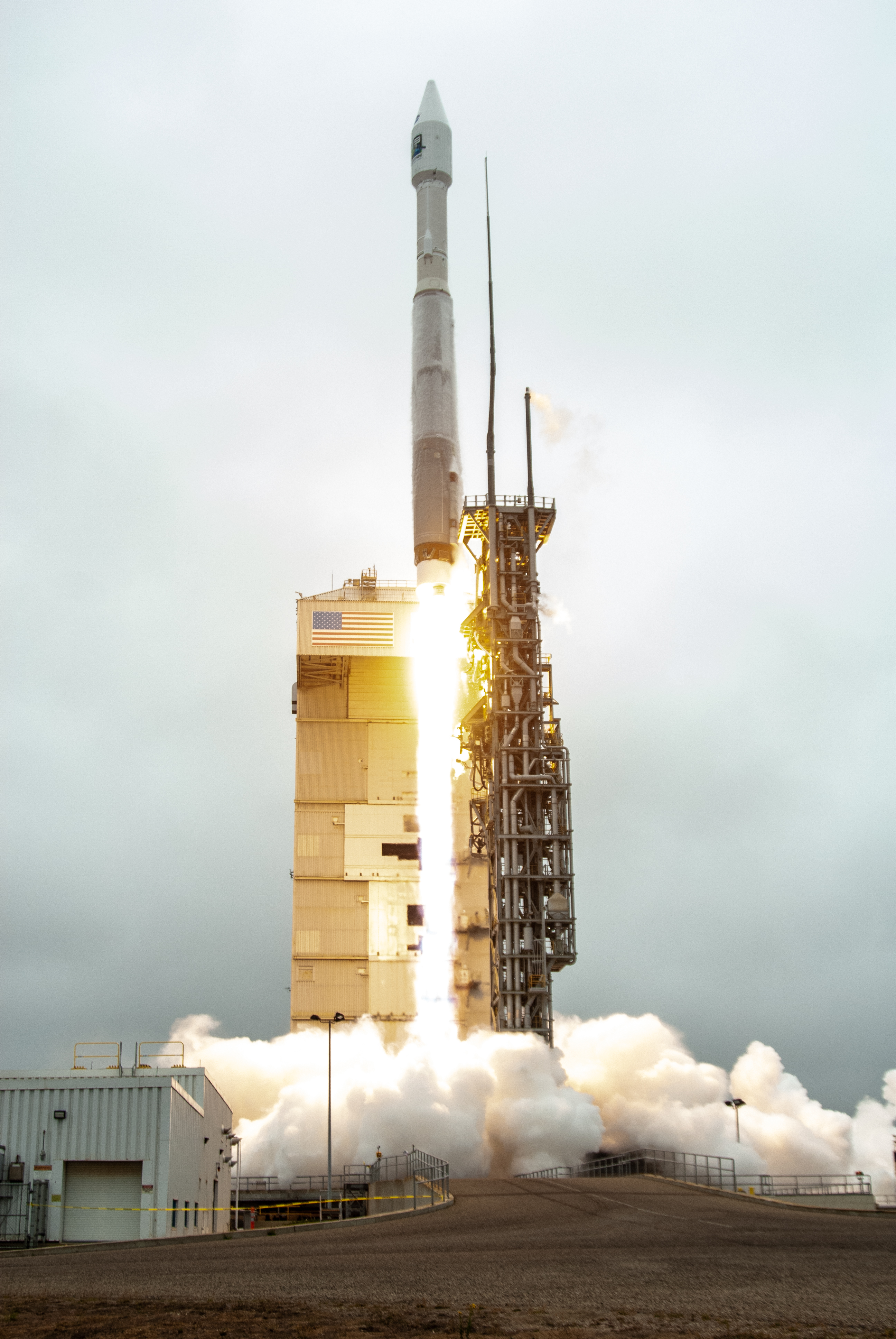
Jet engines and rockets: the thrust equation, propulsive and thermal efficiency, the Brayton cycle, inlets and nozzles, turbojets and turbofans, fuel burn and emissions, rocket engines and propellants, electric thrusters, and cleaner fuels, with six labs. Free, self-paced, and tied to NASA’s RS-25 engines, NASA engine-core research and sustainable aviation fuel.
Courses › AERO 410
About this course
This is a free self-study course outline written by Saving Planets. It is not a university course, it carries no academic credit, and no school is involved.
Its scope follows a one-semester senior propulsion course for aerospace engineers. It is modeled on the topics and depth of MIT 16.50 Introduction to Propulsion Systems and MIT 16.512 Rocket Propulsion (free on MIT OpenCourseWare), using NASA Glenn’s free Beginner’s Guide to Propulsion, which we link where it helps. None of those authors, schools or agencies endorses this page.
What we add: every unit ties to real work with a cited public source (NASA’s RS-25 engines, NASA engine-core research and the U.S. Department of Energy’s sustainable aviation fuel work), every number on the page is re-computed by a checking script before it goes live, and every lab has a free simulation or a spreadsheet.
Work through it in order. Each unit has goals, key ideas, equations, step-by-step examples, practice with full answers, common mistakes, flashcards and a quiz. Your progress is saved only in this browser.
How this course helps save the planet
Propulsion is where aviation’s fuel burn and emissions are decided: every point of engine efficiency is fuel not burned, and new fuels can cut the carbon in what is burned.
Rockets carry Earth-observing satellites to orbit, and cleaner, more efficient engines make that access more sustainable. Each unit ends with a short, sourced section. Values that are not from a source are labeled as sample or textbook values.
Before you start
Prerequisites
- Thermodynamics: the first and second laws, ideal gases and cycles.
- Fluid Mechanics: control volumes, compressible flow basics.
- Aerodynamics I and Aircraft Performance: drag, thrust required and range.
- Orbital Mechanics: the rocket equation and Δv.
How to study
- Draw a control volume around the engine and mark inflow and outflow before writing any equation.
- Keep temperatures in kelvin and use stagnation (total) values where the flow is fast.
- Separate thermal efficiency (heat to kinetic energy) from propulsive efficiency (kinetic energy to useful thrust power).
- Check every answer against a real engine’s order of magnitude.
- Track units: thrust in newtons, mass flow in kg/s, specific impulse in seconds.
- Do every practice problem on paper before opening the answer, and retake the quizzes a few days later.
Lab equipment (for the wet labs)
- A computer or tablet for the free PhET Gas Properties and Energy Skate Park simulations.
- Spreadsheet software (any free one works), or Python.
- NASA Glenn’s Beginner’s Guide to Propulsion pages in a web browser.
- A calculator.
Suggested 15-week schedule
About 6 to 9 hours a week: reading, practice problems and, in lab weeks, the lab.
| Week | Unit | Topics | Reading |
|---|---|---|---|
| 1 | Thrust, Momentum and Propulsive Efficiency | Thrust and propulsive efficiency; Lab A | NASA Glenn |
| 2 | The Brayton Cycle and Thermal Efficiency | Brayton cycle; Lab B | NASA Glenn |
| 3 | Compressible Flow: Inlets and Nozzles | Stagnation properties and choking | MIT 16.50 |
| 4 | Compressible Flow: Inlets and Nozzles | Nozzles and inlets; Lab C | MIT 16.50 |
| 5 | Turbojets: Components and Cycle Analysis | Turbojet stations and work balance | MIT 16.50 |
| 6 | Turbojets: Components and Cycle Analysis | Component efficiency and afterburners | NASA Glenn |
| 7 | Turbofans and Turboprops | Turbofans; Lab D; midterm practice | NASA Glenn |
| 8 | Fuel Burn, TSFC and Emissions | Fuel burn, TSFC and CO₂ | NASA HyTEC |
| 9 | Rocket Fundamentals and Specific Impulse | Rocket thrust and Isp | NASA Glenn |
| 10 | Rocket Fundamentals and Specific Impulse | RS-25 case study | NASA RS-25 |
| 11 | Rocket Nozzles, Propellants and Throttling | Rocket nozzles and throttling; Lab E | MIT 16.512 |
| 12 | The Rocket Equation and Electric Propulsion | Rocket equation and electric propulsion | MIT 16.512 |
| 13 | Sustainable Propulsion: SAF, Hydrogen and Electric Flight | SAF, hydrogen and batteries; Lab F | DOE SAF |
| 14 | Sustainable Propulsion: SAF, Hydrogen and Electric Flight | Electric aircraft and review | DOE SAF |
| 15 | Sustainable Propulsion: SAF, Hydrogen and Electric Flight | Review; final practice | MIT 16.50 |
Your progress
Tick units and labs as you finish them, and take the quizzes. Progress and quiz scores are saved only in this browser, never sent to us.
Turn on JavaScript to track progress.
Unit 1 · Week 1
Thrust, Momentum and Propulsive Efficiency
The control-volume thrust equation, pressure thrust, specific thrust, thrust power, jet power, propulsive efficiency, and why big slow jets are efficient.
Learning objectives
By the end of this unit you can:
- Derive thrust from momentum flux.
- Compute specific thrust and thrust power.
- Compute propulsive efficiency.
- Explain why high bypass saves fuel.
Key concepts
- Thrust is the net momentum flux out of the engine plus a pressure term: F = ṁ_eV_e − ṁ_0V_0 + (p_e − p_0)A_e.
- For an air-breathing engine with small fuel flow and a matched nozzle, F ≈ ṁ(V_e − V_0).
- Specific thrust F/ṁ (N·s/kg) tells you how much thrust each kilogram per second of air gives.
- Propulsive efficiency η_p = 2/(1 + V_e/V_0) is the share of jet kinetic power that becomes useful thrust power F·V_0.
- Accelerating a lot of air a little (V_e close to V_0) is efficient but needs a big engine; that is the turbofan’s trade.
Key equations
Worked examples, step by step
Example 1.1 An engine moves 100 kg/s of air from 250 m/s to 600 m/s (sample values). Find the thrust.
Show the steps
- F = 100 × (600 − 250).
Answer: F = 35 kN.
Example 1.2 Find its propulsive efficiency.
Show the steps
- η_p = 2/(1 + 600/250).
Answer: η_p = 0.588.
Example 1.3 Check that efficiency with powers.
Show the steps
- Thrust power = 35,000 × 250 = 8.75 MW.
- Jet power = ½ × 100 × (600² − 250²) = 14.875 MW.
Answer: 8.75/14.875 = 0.588.
Practice problems
Work each on paper first, then check.
Specific thrust of that engine?
Show answer
350 N·s/kg.
η_p if V_e = 300 m/s at V₀ = 250 m/s?
Show answer
0.909.
Why do fighters use small, fast jets?
Show answer
High specific thrust at the cost of efficiency.
When does pressure thrust matter?
Show answer
When the nozzle exit pressure differs from ambient, as in many rockets.
Common misconceptions
Myth: More exhaust speed always means more efficiency.
Actually: Propulsive efficiency falls as V_e/V₀ grows.
Myth: Thrust pushes on the air behind.
Actually: It is the reaction to accelerating the flow.
Myth: Pressure thrust is always zero.
Actually: Only for a perfectly expanded nozzle.
Flashcards
Thrust
Net momentum flux + pressure term.
Specific thrust
F/ṁ.
η_p
2/(1 + V_e/V₀).
Thrust power
F·V₀.
Jet power
½ṁ(V_e² − V₀²).
Matched nozzle
p_e = p₀.
Self-check quiz
How this helps save the planet
NASA Glenn’s guide explains that most modern airliners use turbofans because of their high thrust and good fuel efficiency, and that high-bypass turbofans are nearly as fuel efficient as turboprops.
That efficiency comes straight from this unit’s equation: moving more air at a speed closer to flight speed raises propulsive efficiency, which means less fuel burned and less CO₂ for the same trip.
On Saving Planets: Aircraft Performance · Solutions
Free learning resources
- MIT OpenCourseWare 16.50 Introduction to Propulsion Systems (Spring 2012): Free MIT lectures.
- NASA Glenn Beginner’s Guide: Specific impulse: Free NASA explainer.
Unit 2 · Week 2
The Brayton Cycle and Thermal Efficiency
The ideal Brayton cycle, isentropic compression and expansion, thermal efficiency versus pressure ratio, compressor and turbine work, component efficiencies, and overall efficiency.
Learning objectives
By the end of this unit you can:
- Compute ideal Brayton efficiency from pressure ratio.
- Find temperatures after isentropic compression.
- Compute compressor work.
- Combine thermal and propulsive efficiency.
Key concepts
- A gas turbine runs the Brayton cycle: isentropic compression, constant-pressure heat addition, isentropic expansion and heat rejection.
- Ideal thermal efficiency depends only on the pressure ratio: η_th = 1 − π^(−(γ−1)/γ).
- Isentropic compression raises temperature by T₂/T₁ = π^((γ−1)/γ).
- Compressor work per kg is c_p(T₂ − T₁); the turbine must supply it before any is left for the jet.
- Overall efficiency η₀ = η_th × η_p: heat to useful thrust power.
Key equations
Worked examples, step by step
Example 2.1 Find the ideal Brayton efficiency for pressure ratios 10 and 30 (γ = 1.4).
Show the steps
- 1 − 10^(−0.2857); 1 − 30^(−0.2857).
Answer: 48.2% and 62.2%.
Example 2.2 Air at 288 K is compressed by a ratio of 30. Find T₂.
Show the steps
- T₂ = 288 × 30^0.2857 = 288 × 2.643.
Answer: T₂ = 761 K.
Example 2.3 Find the compressor work per kg.
Show the steps
- 1005 × (761 − 288).
Answer: w_c = 475 kJ/kg.
Practice problems
Work each on paper first, then check.
Efficiency at π = 20?
Show answer
57.5%.
Efficiency at π = 40?
Show answer
65.1%.
Overall efficiency for η_th = 0.5 and η_p = 0.8?
Show answer
0.40.
Why not raise π forever?
Show answer
Compressor exit gets too hot and heavy; turbine limits.
Common misconceptions
Myth: Brayton efficiency depends on peak temperature.
Actually: Ideal efficiency depends only on π.
Myth: All compressor work is lost.
Actually: The turbine recovers it from the hot gas.
Myth: Thermal efficiency is the whole story.
Actually: Multiply by propulsive efficiency.
Flashcards
Brayton cycle
Compress, burn, expand.
Pressure ratio π
p₂/p₁.
η_th
1 − π^(−0.2857).
Compressor work
c_pΔT.
Overall efficiency
η_th η_p.
Isentropic
Reversible and adiabatic.
Self-check quiz
How this helps save the planet
NASA’s Hybrid Thermally Efficient Core (HyTEC) project worked with industry to develop small-core engine technologies that enable fuel-burn reductions, more electric power extraction for aircraft systems, and better compatibility with sustainable aviation fuels. NASA notes the project has concluded.
Smaller, hotter, higher-pressure cores are this unit’s efficiency formula in hardware: raising the pressure ratio raises thermal efficiency, and every percent saves fuel on every flight.
On Saving Planets: Thermodynamics · Solutions
Sources: NASA Aeronautics: Hybrid Thermally Efficient Core (HyTEC) project
Free learning resources
- NASA Glenn Beginner’s Guide: Brayton cycle: Free NASA explainer.
- PhET: Gas Properties: Compression heating interactively.
Unit 3 · Weeks 3–4
Compressible Flow: Inlets and Nozzles
Stagnation temperature and pressure, isentropic relations with Mach number, choked flow, area–Mach relations, converging and converging-diverging nozzles, and inlet pressure recovery.
Learning objectives
By the end of this unit you can:
- Use stagnation-to-static ratios.
- Find the critical (sonic) conditions.
- Use the area–Mach relation.
- Compute ideal nozzle exit velocity.
Key concepts
- Stagnation temperature T₀ = T(1 + (γ − 1)M²/2); stagnation pressure follows by the isentropic power γ/(γ − 1).
- At the throat of a choked nozzle M = 1, with T*/T₀ = 0.833 and p*/p₀ = 0.528 for air.
- Subsonic flow speeds up in a converging duct; supersonic flow speeds up in a diverging one. A/A* gives the area needed for each Mach number.
- Ideal exit velocity: V_e = √(2c_pT₀(1 − (p_e/p₀)^((γ−1)/γ))).
- Inlets slow air to subsonic speed for the compressor; losses in stagnation pressure cut thrust and efficiency.
Key equations
Worked examples, step by step
Example 3.1 Find T₀/T and p₀/p at Mach 0.8.
Show the steps
- T₀/T = 1 + 0.2 × 0.64.
- p₀/p = 1.128^3.5.
Answer: T₀/T = 1.128; p₀/p = 1.524.
Example 3.2 Find A/A* for Mach 2.
Show the steps
- Area–Mach relation with γ = 1.4.
Answer: A/A* = 1.6875.
Example 3.3 Gas at T₀ = 1000 K expands to half its stagnation pressure (sample values). Find V_e.
Show the steps
- V_e = √(2 × 1005 × 1000 × (1 − 0.5^0.2857)).
Answer: V_e = 601 m/s.
Practice problems
Work each on paper first, then check.
Critical pressure ratio for air?
Show answer
p*/p₀ = 0.528.
T*/T₀?
Show answer
0.833.
A/A* at Mach 1.5?
Show answer
1.176.
A/A* at Mach 3?
Show answer
4.235.
Common misconceptions
Myth: Nozzles always converge.
Actually: Supersonic exits need a diverging section.
Myth: Static and stagnation values are the same.
Actually: They differ at speed.
Myth: Choking stops all flow.
Actually: It caps the mass flow for given upstream conditions.
Flashcards
Stagnation temperature
T(1 + 0.2M²) for air.
Choked
M = 1 at the throat.
A/A*
Area for a Mach number.
p*/p₀
0.528.
Converging–diverging
For supersonic exits.
Pressure recovery
Inlet p₀ kept.
Self-check quiz
How this helps save the planet
NASA’s RS-25 page notes that during Artemis I, engine thrust and mixture-ratio control valves were within 0.5 percent of pre-flight predicted values and internal pressures and temperatures were within two percent.
Predictions that close come from the isentropic-flow relations in this unit, refined by test data: getting nozzle and chamber conditions right is what makes an engine perform as designed.
On Saving Planets: Fluid Mechanics · Artemis II
Sources: NASA: SLS (Space Launch System) RS-25 Core Stage Engine
Free learning resources
- MIT OpenCourseWare 16.50 Introduction to Propulsion Systems (Spring 2012): Free MIT lectures.
- NASA Glenn Beginner’s Guide: Rocket thrust summary: Free NASA explainer.
Unit 4 · Weeks 5–6
Turbojets: Components and Cycle Analysis
Inlet, compressor, burner, turbine and nozzle; work balance between compressor and turbine; turbine inlet temperature limits; afterburners; and real component efficiencies.
Learning objectives
By the end of this unit you can:
- Trace stations through a turbojet.
- Balance compressor and turbine work.
- Explain turbine temperature limits.
- Describe how afterburning trades fuel for thrust.
Key concepts
- Stations: free stream, inlet, compressor exit, burner exit (turbine inlet), turbine exit and nozzle exit.
- The turbine drives the compressor on a shared shaft: c_p(T₄ − T₅) = c_p(T₃ − T₂) for ideal flow with equal c_p.
- Higher turbine inlet temperature gives more specific thrust and efficiency, limited by blade materials and cooling.
- Real compressors and turbines have isentropic efficiencies below 1, so more work is needed and less is recovered.
- Afterburners add fuel after the turbine for extra thrust at a large fuel cost.
Key equations
Worked examples, step by step
Example 4.1 With a 475 kJ/kg compressor (Unit 2) and turbine inlet 1600 K (sample value), find the turbine exit temperature.
Show the steps
- ΔT = 475,440/1005 = 473 K.
Answer: T₅ = 1127 K.
Example 4.2 A real compressor with η_c = 0.85 needs how much work for the same pressure ratio?
Show the steps
- 475/0.85.
Answer: 559 kJ/kg.
Example 4.3 Find the thrust of a turbojet moving 100 kg/s from 250 to 450 m/s.
Show the steps
- 100 × 200.
Answer: 20 kN.
Practice problems
Work each on paper first, then check.
Temperature rise of that real compressor?
Show answer
559,341/1005 = 557 K.
Why cool turbine blades?
Show answer
Gas is hotter than the metal can survive.
What does an afterburner raise?
Show answer
V_e and thrust.
What does it lower?
Show answer
Propulsive efficiency and range.
Common misconceptions
Myth: The turbine makes the thrust.
Actually: It mainly drives the compressor; the nozzle makes thrust.
Myth: Hotter is always possible.
Actually: Materials limit T₄.
Myth: Afterburners are efficient.
Actually: They burn fuel at low pressure.
Flashcards
Turbojet
Compressor–burner–turbine–nozzle.
T₄
Turbine inlet temperature.
Work balance
Turbine = compressor.
η_c
Ideal/actual ΔT.
Afterburner
Burn after the turbine.
Station numbers
0 free stream to 9 nozzle exit.
Self-check quiz
How this helps save the planet
NASA Glenn’s guide notes that low-bypass turbofans are still more fuel efficient than basic turbojets, and that many modern fighters use low-bypass turbofans with afterburners so they can cruise efficiently but still have high thrust when needed.
The pure turbojet survives mainly as a teaching model: its simple work balance shows why later engines added a fan to cut fuel burn.
On Saving Planets: Aerodynamics I · Thermodynamics
Free learning resources
- MIT OpenCourseWare 16.50 Introduction to Propulsion Systems (Spring 2012): Free MIT lectures.
- NASA Glenn Beginner’s Guide: Brayton cycle: Free NASA explainer.
Unit 5 · Week 7
Turbofans and Turboprops
Bypass ratio, core and fan streams, the turbofan thrust equation, propulsive efficiency of the fan stream, turboprops and open rotors, and the size and weight trade.
Learning objectives
By the end of this unit you can:
- Apply the turbofan thrust equation.
- Compute bypass ratio and total flow.
- Compare turbofan and turbojet thrust for the same core.
- Explain the limits of very high bypass.
Key concepts
- Bypass ratio bpr = ṁ_fan/ṁ_core; total flow ṁ₀ = ṁ_fan + ṁ_core.
- NASA Glenn’s turbofan thrust: F = (ṁV)_e + bpr·ṁ_c·V_f − ṁ₀V₀.
- The fan accelerates lots of air a little, so its stream has high propulsive efficiency.
- Turboprops and open rotors push bypass even higher, efficient at lower speeds.
- Bigger fans add weight, drag and noise and need slower fan speeds, often with a gearbox.
Key equations
Worked examples, step by step
Example 5.1 A turbofan has core flow 100 kg/s and bpr = 10, with V_e = 450 m/s, V_f = 300 m/s and V₀ = 250 m/s (sample values). Find the total flow and thrust.
Show the steps
- ṁ₀ = 100 + 1000 = 1100 kg/s.
- F = 100 × 450 + 1000 × 300 − 1100 × 250.
Answer: F = 70 kN.
Example 5.2 Compare with a turbojet using the same core flow and exit speed.
Show the steps
- F = 100 × (450 − 250).
Answer: 20 kN: the fan multiplies thrust by 3.5.
Example 5.3 Find the fan stream’s propulsive efficiency.
Show the steps
- 2/(1 + 300/250).
Answer: η_p = 0.909.
Practice problems
Work each on paper first, then check.
Core-stream η_p (450 at 250 m/s)?
Show answer
0.714.
Thrust ratio turbofan/turbojet?
Show answer
3.5.
Why gear the fan?
Show answer
So the fan turns slower than the low-pressure turbine.
Why are props used on slow aircraft?
Show answer
Efficient at low speed; tips go supersonic at high speed.
Common misconceptions
Myth: The fan makes little thrust.
Actually: In high-bypass engines it makes most of it.
Myth: Higher bypass is always better.
Actually: Weight and drag grow with fan size.
Myth: Turbofans burn more fuel than turbojets.
Actually: They burn less for the same thrust.
Flashcards
Bypass ratio
Fan flow/core flow.
Turbofan thrust
Core + fan − inlet momentum.
Fan stream
High η_p.
Turboprop
Very high bypass via propeller.
Geared fan
Slower fan, faster turbine.
Open rotor
Unducted fan.
Self-check quiz
How this helps save the planet
NASA Glenn explains that because the core’s fuel flow changes only a small amount when a fan is added, a turbofan generates more thrust for nearly the same fuel, which is why it is very fuel efficient.
This unit’s example shows the effect: the same 100 kg/s core makes 20 kN as a turbojet and 70 kN with a bypass-ratio-10 fan, for nearly the same core fuel flow.
On Saving Planets: Aircraft Performance · Solutions
Free learning resources
- NASA Glenn Beginner’s Guide: Turbofan thrust: Free NASA explainer.
- MIT OpenCourseWare 16.50 Introduction to Propulsion Systems (Spring 2012): Free MIT lectures.
Unit 6 · Week 8
Fuel Burn, TSFC and Emissions
Fuel heating value, overall efficiency, thrust-specific fuel consumption, CO₂ from burning jet fuel, and how engine efficiency links to range and climate impact.
Learning objectives
By the end of this unit you can:
- Compute overall efficiency from fuel flow.
- Compute TSFC.
- Estimate CO₂ emissions from fuel burn.
- Link TSFC to range.
Key concepts
- Fuel power is ṁ_f × LHV; jet fuel’s lower heating value is about 43 MJ/kg (textbook value).
- Overall efficiency η₀ = F·V₀/(ṁ_f·LHV).
- Thrust-specific fuel consumption TSFC = ṁ_f/F; lower is better.
- Burning 1 kg of jet fuel makes about 3.16 kg of CO₂ (textbook value), since carbon picks up oxygen from the air.
- In the Breguet range equation, range grows with η₀ × LHV, so a better engine flies farther or burns less fuel.
Key equations
Worked examples, step by step
Example 6.1 The Unit 5 turbofan (70 kN at 250 m/s) burns 1.2 kg/s of fuel with LHV 43 MJ/kg (sample values). Find η₀.
Show the steps
- η₀ = 70,000 × 250/(1.2 × 43 × 10⁶).
Answer: η₀ = 0.339.
Example 6.2 Find its TSFC.
Show the steps
- 1.2/70,000 kg/(N·s).
Answer: TSFC = 17.14 mg/(N·s).
Example 6.3 Find CO₂ per hour.
Show the steps
- Fuel = 1.2 × 3600 = 4320 kg.
- CO₂ = 4320 × 3.16.
Answer: 13,651 kg of CO₂ per hour.
Practice problems
Work each on paper first, then check.
CO₂ rate per second?
Show answer
3.792 kg/s.
Thermal efficiency if η₀ = 0.339 and η_p = 0.8?
Show answer
0.424.
Fuel saved per hour by a 10% lower TSFC at the same thrust?
Show answer
432 kg.
Does cutting fuel cut CO₂ in proportion?
Show answer
Yes, for the same fuel.
Common misconceptions
Myth: Fuel weighs more than its CO₂.
Actually: CO₂ is about 3.16 times the fuel mass.
Myth: TSFC higher is better.
Actually: Lower is better.
Myth: Efficiency only affects cost.
Actually: It cuts emissions too.
Flashcards
LHV
Fuel energy per kg.
η₀
FV₀/(ṁ_f LHV).
TSFC
Fuel per thrust.
CO₂ factor
≈3.16 (textbook).
Breguet
Range equation.
Fuel power
ṁ_f × LHV.
Self-check quiz
How this helps save the planet
NASA’s HyTEC project aimed at small-core engine technologies to enable fuel-burn reductions and better compatibility with sustainable aviation fuels.
This unit’s numbers show why that matters: one large engine at cruise in our example emits about 13.7 tonnes of CO₂ per hour, so even small TSFC gains add up across a fleet.
On Saving Planets: Solutions · Earth Observation
Sources: NASA Aeronautics: Hybrid Thermally Efficient Core (HyTEC) project
Free learning resources
- MIT OpenCourseWare 16.50 Introduction to Propulsion Systems (Spring 2012): Free MIT lectures.
- NASA Aeronautics: Hybrid Thermally Efficient Core (HyTEC) project: NASA project page.
Unit 7 · Weeks 9–10
Rocket Fundamentals and Specific Impulse
Rocket thrust, effective exhaust velocity, specific impulse, total impulse, mass flow, and real numbers from NASA’s RS-25 engine.
Learning objectives
By the end of this unit you can:
- Use F = ṁV_eq.
- Convert between Isp and exhaust velocity.
- Compute total impulse.
- Work with RS-25 thrust data.
Key concepts
- A rocket carries all its propellant, so thrust is F = ṁV_e + (p_e − p₀)A_e = ṁV_eq.
- NASA Glenn defines specific impulse Isp = F/(ṁg₀), in seconds; V_eq = Isp × g₀.
- Total impulse I = F × Δt measures what a motor delivers overall.
- Higher Isp means less propellant for the same impulse.
- Thrust is often quoted as a percent of a rated level, as with the RS-25.
Key equations
Worked examples, step by step
Example 7.1 NASA says shuttle RS-25s ran at 104.5% of rated thrust, about 491,000 lbf. Convert to newtons and find 100% thrust.
Show the steps
- 491,000 × 4.448 N.
- 491,000/1.045.
Answer: 2.184 MN; about 469,856 lbf.
Example 7.2 Using a textbook vacuum Isp of 452 s, find V_eq.
Show the steps
- 452 × 9.80665.
Answer: V_eq = 4433 m/s.
Example 7.3 Find the propellant flow at 2.184 MN.
Show the steps
- ṁ = 2.184 × 10⁶/4433.
Answer: ṁ = 492.7 kg/s (textbook-based).
Practice problems
Work each on paper first, then check.
Four engines at 491,000 lbf?
Show answer
1.964 million lbf.
Four at 109% of rated?
Show answer
About 2.049 million lbf.
Total impulse of a 1000 N motor for 20 s?
Show answer
20,000 N·s.
V_eq for Isp 300 s?
Show answer
2942 m/s.
Common misconceptions
Myth: Isp is a time the engine runs.
Actually: It is thrust per weight flow of propellant.
Myth: Rockets need air to push on.
Actually: They work best in vacuum.
Myth: Percent thrust above 100 is impossible.
Actually: It is relative to a historic rated level.
Flashcards
Isp
F/(ṁg₀), seconds.
V_eq
Isp × g₀.
Total impulse
F × Δt.
RS-25
SLS core stage engine.
Rated thrust
100% reference level.
g₀
9.80665 m/s².
Self-check quiz
How this helps save the planet
NASA’s RS-25 page reports that the engines flew 135 Space Shuttle missions, with more than 3,000 starts and over 1 million seconds of total ground and flight firing; the SLS Block 1 rocket uses four RS-25s and two solid rocket boosters to send 27 metric tons to the Moon.
The same page notes that during Artemis I in November 2022 the engines produced over 2 million pounds of vacuum thrust. Reusing proven engines is one way NASA builds Earth-observing and exploration capability.
On Saving Planets: Artemis II · Orbital Mechanics
Sources: NASA: SLS (Space Launch System) RS-25 Core Stage Engine · NASA Glenn Beginner’s Guide: Specific impulse
Free learning resources
- NASA Glenn Beginner’s Guide: Specific impulse: Free NASA explainer.
- MIT OpenCourseWare 16.512 Rocket Propulsion (Fall 2005): Free MIT rocket course.
Unit 8 · Week 11
Rocket Nozzles, Propellants and Throttling
Chamber conditions, nozzle expansion, exit velocity from the isentropic relations, expansion ratio and altitude, propellant choices and throttling.
Learning objectives
By the end of this unit you can:
- Compute ideal rocket exhaust velocity.
- Explain over- and under-expansion.
- Compare propellant properties.
- Relate throttle settings to thrust.
Key concepts
- Ideal exit velocity: V_e = √(2γRT₀/(γ − 1) × (1 − (p_e/p₀)^((γ−1)/γ))), with R the gas constant per kg of exhaust.
- Hot, light exhaust (high T₀/M) gives high V_e: hydrogen–oxygen engines lead chemical Isp.
- Bigger expansion ratios lower p_e and raise V_e, but a nozzle sized for vacuum overexpands at sea level.
- Thrust coefficient and chamber pressure link nozzle size to thrust.
- Throttling varies propellant flow and chamber pressure; NASA quotes RS-25 power levels as percent of rated thrust.
Key equations
Worked examples, step by step
Example 8.1 Exhaust with γ = 1.2, molar mass 13 g/mol and T₀ = 3500 K (sample values) expands to p_e/p₀ = 0.001. Find V_e and Isp.
Show the steps
- V_e = √(12 × 8.314 × 3500/0.013 × (1 − 0.001^0.1667)).
Answer: V_e = 4286 m/s; Isp = 437 s.
Example 8.2 Repeat for p_e/p₀ = 0.01.
Show the steps
- Smaller expansion.
Answer: V_e = 3794 m/s.
Example 8.3 NASA says new RS-25s run at 111% and were tested up to 113%. Find 113% in lbf from 469,856 lbf rated.
Show the steps
- 469,856 × 1.13.
Answer: 530,937 lbf.
Practice problems
Work each on paper first, then check.
111% of rated?
Show answer
About 521,540 lbf (NASA: about 522,000).
Isp at p_e/p₀ = 0.01?
Show answer
387 s.
Why does T₀/M matter?
Show answer
V_e scales with √(T₀/M).
What happens to a vacuum nozzle at sea level?
Show answer
Overexpansion; lower thrust and flow separation risk.
Common misconceptions
Myth: Heavier exhaust is better.
Actually: Lighter exhaust gives higher V_e.
Myth: Bigger nozzles always help.
Actually: Not at sea level.
Myth: Throttle only changes flow.
Actually: Chamber pressure changes too.
Flashcards
Expansion ratio
A_e/A*.
Overexpanded
p_e < p_a.
Underexpanded
p_e > p_a.
Molar mass
Lighter exhaust, faster jet.
Power level
Percent of rated thrust.
Chamber pressure
Sets thrust for a nozzle size.
Self-check quiz
How this helps save the planet
NASA reports that RS-25s flew at 104.5% on the shuttle and were tested to 111%; SLS uses 109% for its first four flights, new production engines operate at 111%, and testing has reached 113%. L3Harris is building 24 new engines with modern methods such as selective laser melting.
Each added percent of thrust follows from chamber and nozzle physics in this unit, and lets the same engine lift more mass to orbit.
On Saving Planets: Artemis II · GOES-19
Sources: NASA: SLS (Space Launch System) RS-25 Core Stage Engine
Free learning resources
- MIT OpenCourseWare 16.512 Rocket Propulsion (Fall 2005): Free MIT rocket course.
- NASA Glenn Beginner’s Guide: Rocket thrust summary: Free NASA explainer.
Unit 9 · Week 12
The Rocket Equation and Electric Propulsion
The Tsiolkovsky equation, mass ratio, staging, electric thrusters, power-limited thrust, and the trade between Isp and thrust.
Learning objectives
By the end of this unit you can:
- Use the rocket equation.
- Compare chemical and electric Δv for the same propellant.
- Compute power-limited thrust.
- Explain why electric thrusters are low thrust.
Key concepts
- Tsiolkovsky: Δv = V_e ln(m₀/m_f).
- Staging drops empty mass so later stages see better mass ratios.
- Electric thrusters (ion, Hall) reach very high Isp but are limited by power.
- Jet power ½ṁV_e² = ηP, so thrust F = 2ηP/V_e: higher V_e means less thrust for the same power.
- Electric propulsion suits long, patient missions; chemical rockets suit launch and quick maneuvers.
Key equations
Worked examples, step by step
Example 9.1 A Hall thruster has Isp 1800 s (sample value). Find V_e.
Show the steps
- 1800 × 9.80665.
Answer: V_e = 17,652 m/s.
Example 9.2 With 4.5 kW and efficiency 0.5 (sample values), find thrust.
Show the steps
- F = 2 × 0.5 × 4500/17,652.
Answer: F = 0.255 N.
Example 9.3 A 1000 kg craft uses 100 kg of propellant. Compare Δv with this thruster and with a 300 s chemical engine.
Show the steps
- 17,652 ln(1000/900); 2942 ln(1000/900).
Answer: About 1860 m/s versus 310 m/s.
Practice problems
Work each on paper first, then check.
Mass ratio for Δv = V_e?
Show answer
e = 2.718.
Thrust if power doubles?
Show answer
0.51 N.
Why not launch with Hall thrusters?
Show answer
Thrust is far below weight.
Why stage?
Show answer
Drop dead mass.
Common misconceptions
Myth: High Isp means high thrust.
Actually: Power limits thrust.
Myth: Δv is linear in propellant.
Actually: It is logarithmic.
Myth: Electric engines need no propellant.
Actually: They still expel mass.
Flashcards
Rocket equation
Δv = V_e ln(m₀/m_f).
Mass ratio
m₀/m_f.
Staging
Discard empty tanks.
Hall thruster
Electric, high Isp.
Power-limited
F = 2ηP/V_e.
Δv
Velocity change budget.
Self-check quiz
How this helps save the planet
NASA’s DART mission, a planetary-defense test, launched on November 24, 2021 aboard a Falcon 9 from Vandenberg Space Force Base and impacted the asteroid moonlet Dimorphos, about 160 meters across, on September 26, 2022.
Getting there took the rocket-equation budgeting of this unit: launch Δv from a chemical rocket, then precise in-space propulsion to steer into a small target.
On Saving Planets: Orbital Mechanics · Solutions
Sources: NASA Science: Double Asteroid Redirection Test (DART)
Free learning resources
- MIT OpenCourseWare 16.512 Rocket Propulsion (Fall 2005): Free MIT rocket course.
- NASA Glenn Beginner’s Guide: Specific impulse: Free NASA explainer.
Unit 10 · Week 13
Sustainable Propulsion: SAF, Hydrogen and Electric Flight
Sustainable aviation fuels, energy density per kilogram, hydrogen and batteries compared with jet fuel, and what the numbers mean for future aircraft.
Learning objectives
By the end of this unit you can:
- Compare specific energies of fuels and batteries.
- Describe SAF feedstocks and pathways.
- Estimate fuel energy changes.
- Weigh hydrogen’s mass and volume trade.
Key concepts
- Specific energy (MJ/kg) sets how far an aircraft can fly per kilogram carried; jet fuel ≈ 43 MJ/kg, liquid hydrogen ≈ 120 MJ/kg and good batteries ≈ 0.25 MJ/kg (textbook values).
- SAF is made from biomass, wastes or captured carbon and can drop into existing engines with blending limits.
- Hydrogen has high energy per kilogram but very low density, so tanks are large and heavy.
- Batteries suit short flights and small aircraft; their low specific energy limits range.
- Life-cycle emissions depend on how the fuel is made, not just what comes out of the engine.
Key equations
Worked examples, step by step
Example 10.1 How many times more energy per kg does jet fuel hold than a battery (textbook values)?
Show the steps
- 43/0.25.
Answer: 172 times.
Example 10.2 How does liquid hydrogen compare with jet fuel per kg?
Show the steps
- 120/43.
Answer: 2.79 times.
Example 10.3 DOE says a LANL bio-acetone SAF has 12% more energy than conventional jet fuel. Using 43 MJ/kg as the base (textbook value), estimate its energy.
Show the steps
- 1.12 × 43.
Answer: About 48.2 MJ/kg.
Practice problems
Work each on paper first, then check.
Battery mass to store the energy in 1 kg of jet fuel?
Show answer
172 kg.
Hydrogen mass for the energy of 1000 kg of jet fuel?
Show answer
358 kg.
Name a SAF feedstock.
Show answer
Biomass, wet waste or waste CO.
Why is hydrogen hard to store?
Show answer
Very low density; cryogenic tanks.
Common misconceptions
Myth: Hydrogen is energy-poor.
Actually: Per kilogram it beats jet fuel; per liter it does not.
Myth: Batteries will soon match jet fuel.
Actually: The gap is over 100×.
Myth: SAF needs new engines.
Actually: It is designed to work in existing ones.
Flashcards
SAF
Sustainable aviation fuel.
Specific energy
MJ/kg.
LH₂
Liquid hydrogen.
Drop-in fuel
Works in current engines.
Life cycle
Production to combustion.
Billion-Ton Report
DOE biomass study.
Self-check quiz
How this helps save the planet
The U.S. Department of Energy says its 2023 Billion-Ton Report found the United States could produce more than 1 billion tons of biomass a year, enough for about 60 billion gallons of biofuels, and that a LANL bio-acetone SAF has 12% more energy than conventional jet fuel.
DOE also describes SAF from wet waste and from waste CO through alcohol-to-jet routes. Combined with efficient engines from earlier units, cleaner fuel is a direct route to lower aviation emissions.
On Saving Planets: Solutions · Earth Observation
Sources: U.S. Department of Energy: Sustainable Aviation Fuels
Free learning resources
- U.S. Department of Energy: Sustainable Aviation Fuels: DOE explainer.
- NASA Aeronautics: Hybrid Thermally Efficient Core (HyTEC) project: NASA project page.
The lab (Propulsion lab)
The lab is the hands-on part of the course. Here it is free and for practice only, with no credit.
Every lab runs in a free simulation or a spreadsheet, so there are no physical hazards. Do not mix, make or burn propellants or build engines for this course. Take screen breaks, sit with good posture, and keep cables out of walkways.
Safety reference: OSHA: Walking-working surfaces (slip, trip and fall hazards)
Lab A: Thrust and propulsive efficiency sweep
Week 1
Goal: Build a spreadsheet that sweeps exhaust velocity at fixed flight speed and finds thrust, specific thrust and propulsive efficiency.
Procedure
- Set ṁ = 100 kg/s and V₀ = 250 m/s.
- Sweep V_e from 300 to 900 m/s.
- Compute F, F/ṁ and η_p in each row.
- Plot η_p against specific thrust and describe the trade.
Data table
| V_e (m/s) | F (kN) | η_p |
|---|---|---|
| 300 | 5 | 0.909 |
| 450 | 20 | 0.714 |
| 600 | 35 | 0.588 |
| 900 | 65 | 0.435 |
Computed sample values.
Sample calculation
- F = 100 × (600 − 250) = 35 kN.
- η_p = 2/(1 + 900/250) = 0.435.
Safety
- Computer only.
Home or virtual alternative
- Any spreadsheet works.
NASA Glenn Beginner’s Guide: Turbofan thrust
Planet link: NASA Glenn notes high-bypass turbofans are nearly as fuel efficient as turboprops. NASA Glenn Beginner’s Guide: Turbofan thrust
Lab B: Compression heating and Brayton efficiency
Week 2
Goal: Watch gas heat when compressed in PhET Gas Properties, then tabulate ideal Brayton efficiency versus pressure ratio.
Procedure
- In PhET Gas Properties, insulate the box (hold heat constant) and push the wall in quickly; note the temperature rise.
- In a spreadsheet, list π = 10, 20, 30, 40.
- Compute η_th and T₂ from 288 K.
- Plot η_th against π and note diminishing returns.
Data table
| π | η_th | T₂ (K) |
|---|---|---|
| 10 | 0.482 | 556 |
| 20 | 0.575 | 678 |
| 30 | 0.622 | 761 |
| 40 | 0.651 | 825 |
Computed ideal values.
Sample calculation
- η = 1 − 30^(−0.2857) = 0.622.
- T₂ = 288 × 40^0.2857 = 825 K.
Safety
- Computer only.
Home or virtual alternative
- Any browser and spreadsheet work.
PhET: Gas Properties · NASA Glenn Beginner’s Guide: Brayton cycle
Planet link: NASA’s HyTEC project developed small-core engine technologies for fuel-burn reductions. NASA Aeronautics: Hybrid Thermally Efficient Core (HyTEC) project
Lab C: Building isentropic flow tables
Week 4
Goal: Compute T₀/T, p₀/p and A/A* versus Mach number for air and find where the area is smallest.
Procedure
- List M from 0.2 to 3 in steps of 0.1.
- Compute T₀/T, p₀/p and A/A*.
- Plot A/A* and confirm its minimum of 1 at M = 1.
- Read off the area ratio a Mach 2 nozzle needs.
Data table
| M | p₀/p | A/A* |
|---|---|---|
| 0.8 | 1.524 | 1.038 |
| 1.0 | 1.893 | 1.000 |
| 2.0 | 7.824 | 1.688 |
| 3.0 | 36.73 | 4.235 |
Computed values for γ = 1.4.
Sample calculation
- p₀/p at M = 2: 1.8^3.5 = 7.824.
- A/A* at M = 0.8: (1/0.8)(1.128/1.2)³ = 1.038.
Safety
- Computer only.
Home or virtual alternative
- Any spreadsheet works.
MIT OpenCourseWare 16.50 Introduction to Propulsion Systems (Spring 2012)
Planet link: NASA reports Artemis I RS-25 valves within 0.5% of predicted values. NASA: SLS (Space Launch System) RS-25 Core Stage Engine
Lab D: The turbofan bypass trade
Week 7
Goal: Sweep bypass ratio for a fixed core and fan speed and compare thrust and fan-stream efficiency.
Procedure
- Fix ṁ_c = 100 kg/s, V_e = 450, V_f = 300, V₀ = 250 m/s.
- Sweep bpr from 0 to 12.
- Compute F and the thrust ratio to bpr = 0.
- Discuss why real engines stop near today’s bypass ratios.
Data table
| bpr | F (kN) | Ratio |
|---|---|---|
| 0 | 20 | 1.0 |
| 5 | 45 | 2.25 |
| 10 | 70 | 3.5 |
| 12 | 80 | 4.0 |
Computed sample values.
Sample calculation
- F(5) = 45,000 + 150,000 − 150,000 = 45 kN.
- Each unit of bpr adds 100 × 50 = 5 kN.
Safety
- Computer only.
Home or virtual alternative
- Any spreadsheet works.
NASA Glenn Beginner’s Guide: Turbofan thrust
Planet link: NASA Glenn: a turbofan makes more thrust for nearly the same core fuel flow. NASA Glenn Beginner’s Guide: Turbofan thrust
Lab E: Rocket nozzle expansion and Isp
Week 11
Goal: Compute ideal rocket exhaust velocity and Isp as the nozzle pressure ratio changes, then relate RS-25 power levels to thrust.
Procedure
- Use γ = 1.2, molar mass 13 g/mol and T₀ = 3500 K (sample values).
- Sweep p_e/p₀ from 0.1 to 0.0001.
- Compute V_e and Isp.
- Tabulate RS-25 thrust at 104.5%, 109%, 111% and 113% of 469,856 lbf.
Data table
| p_e/p₀ | V_e (m/s) | Isp (s) |
|---|---|---|
| 0.01 | 3794 | 387 |
| 0.001 | 4286 | 437 |
Computed sample values; RS-25 levels from NASA.
Sample calculation
- V_e = √(12 × 639.5 × 3500 × (1 − 0.001^0.1667)) = 4286 m/s.
- 109% × 469,856 = 512,143 lbf.
Safety
- Computer only.
Home or virtual alternative
- Any spreadsheet works.
NASA Glenn Beginner’s Guide: Rocket thrust summary · NASA Glenn Beginner’s Guide: Specific impulse
Planet link: NASA says new RS-25s operate at 111% and testing reached 113%. NASA: SLS (Space Launch System) RS-25 Core Stage Engine
Lab F: Energy density and the SAF question
Week 13
Goal: Compare the mass needed to carry the same energy as jet fuel, liquid hydrogen, a battery and a higher-energy SAF.
Procedure
- Set E = 43,000 MJ (1000 kg of jet fuel, textbook value).
- Compute mass for each energy carrier.
- Plot the masses on a log axis.
- Write a paragraph on where each option fits.
Data table
| Carrier | MJ/kg | Mass (kg) |
|---|---|---|
| Jet fuel | 43 | 1000 |
| Liquid hydrogen | 120 | 358 |
| Battery | 0.25 | 172,000 |
| SAF (+12%) | 48.16 | 893 |
Textbook specific energies; SAF energy gain from DOE.
Sample calculation
- 43,000/0.25 = 172,000 kg.
- 43,000/48.16 = 893 kg.
Safety
- Computer only.
Home or virtual alternative
- Any spreadsheet works.
U.S. Department of Energy: Sustainable Aviation Fuels
Planet link: DOE says the US could produce more than 1 billion tons of biomass a year. U.S. Department of Energy: Sustainable Aviation Fuels
Exam prep practice sets
Time yourself: about 10 minutes per problem. Then compare with the full solutions.
Midterm practice set (Units 1–5)
An engine moves 80 kg/s from 200 to 500 m/s. Find thrust and η_p.
Show full solution
- F = 80 × 300.
- η_p = 2/(1 + 2.5).
Answer: 24 kN; 0.571.
Find ideal Brayton efficiency at π = 25.
Show full solution
- 1 − 25^(−0.2857).
Answer: 60.1%.
Find T₀/T at Mach 2.
Show full solution
- 1 + 0.2 × 4.
Answer: 1.8.
Find the compressor exit temperature for π = 20 from 288 K.
Show full solution
- 288 × 20^0.2857.
Answer: 678 K.
A turbofan has ṁ_c = 50 kg/s, bpr = 8, V_e = 400, V_f = 280, V₀ = 240 m/s. Find thrust.
Show full solution
- 50 × 400 + 400 × 280 − 450 × 240.
Answer: 24 kN.
Final practice set (Units 1–10)
An engine makes 50 kN at 240 m/s burning 0.9 kg/s of 43 MJ/kg fuel. Find η₀ and TSFC.
Show full solution
- 50,000 × 240/(0.9 × 43 × 10⁶).
- 0.9/50,000.
Answer: 0.310; 18 mg/(N·s).
Find CO₂ per hour for 0.9 kg/s of fuel (3.16 kg/kg, textbook).
Show full solution
- 0.9 × 3600 × 3.16.
Answer: 10,238 kg.
Find V_eq for Isp 350 s.
Show full solution
- 350 × 9.80665.
Answer: 3432 m/s.
Find Δv for V_e = 3432 m/s and mass ratio 5.
Show full solution
- 3432 ln 5.
Answer: 5524 m/s.
A 2 kW ion thruster (η = 0.6) has V_e = 30 km/s. Find thrust.
Show full solution
- 2 × 0.6 × 2000/30,000.
Answer: 0.08 N.
How much liquid hydrogen (120 MJ/kg) matches 500 kg of jet fuel (43 MJ/kg)?
Show full solution
- 500 × 43/120.
Answer: 179 kg.
Formula sheet
Constants
| Constant | Value |
|---|---|
| Air (textbook values) | γ = 1.4, c_p = 1005 J/(kg·K) |
| Standard gravity | g₀ = 9.80665 m/s² |
| 1 lbf | 4.44822 N |
| Jet fuel (textbook values) | heating value 43 MJ/kg; 3.16 kg CO₂ per kg burned |
| Liquid hydrogen (textbook value) | heating value 120 MJ/kg |
| Universal gas constant | 8314 J/(kmol·K) |
Source: NIST Guide to the SI, Appendix B.9: conversion factors
Free texts and simulations
Use these free lectures, NASA guides and simulations alongside the course.
- MIT OpenCourseWare 16.50 Introduction to Propulsion Systems (Spring 2012): Free MIT propulsion lectures and problem sets.
- MIT OpenCourseWare 16.512 Rocket Propulsion (Fall 2005): Free MIT rocket propulsion course.
- NASA Glenn Beginner’s Guide: Turbofan thrust: Free NASA explainer.
- NASA Glenn Beginner’s Guide: Specific impulse: Free NASA explainer.
- NASA Glenn Beginner’s Guide: Brayton cycle: Free NASA explainer.
- PhET: Gas Properties: Gas laws interactively.
Glossary
- Afterburner
- Burner after the turbine for extra thrust.
- Area ratio
- A/A*, nozzle area over throat area.
- Brayton cycle
- Gas-turbine thermodynamic cycle.
- Bypass ratio
- Fan flow over core flow.
- Choked flow
- Sonic flow at a throat that caps mass flow.
- Compressor
- Raises air pressure.
- Hall thruster
- Electric thruster using crossed fields.
- Isentropic
- Reversible and adiabatic.
- Mach number
- Speed over sound speed.
- Overall efficiency
- Thrust power over fuel power.
- Pressure ratio
- Compressor exit over inlet pressure.
- Propulsive efficiency
- Thrust power over jet power.
- Rocket equation
- Δv = V_e ln(m₀/m_f).
- SAF
- Sustainable aviation fuel.
- Specific impulse
- Thrust per weight flow of propellant.
- Specific thrust
- Thrust per unit air flow.
- Stagnation temperature
- Temperature if flow is brought to rest adiabatically.
- TSFC
- Fuel flow per thrust.
- Turbine
- Extracts work to drive the compressor.
- Turbofan
- Gas turbine with a bypass fan.
Self-assessment rubric
No grade or credit is given. Use this to judge honestly where you are in each unit.
| Level | What it looks like |
|---|---|
| 4 · Mastery | Sets up control volumes and stations, picks the right relations, checks units and explains efficiency and emissions trades in plain words. |
| 3 · Proficient | Solves the practice problems with occasional slips in units or stations. |
| 2 · Developing | Follows worked examples but mixes stagnation and static values or Isp and exhaust velocity. |
| 1 · Beginning | Plugs numbers into formulas without a station diagram; needs to revisit the unit. |
Suggested weighting if you want a score
| Part | Weight |
|---|---|
| Practice problems | 20% |
| Labs | 25% |
| Midterm practice set | 25% |
| Final practice set | 30% |
Aim for level 3 or better in every unit before moving to the next course.