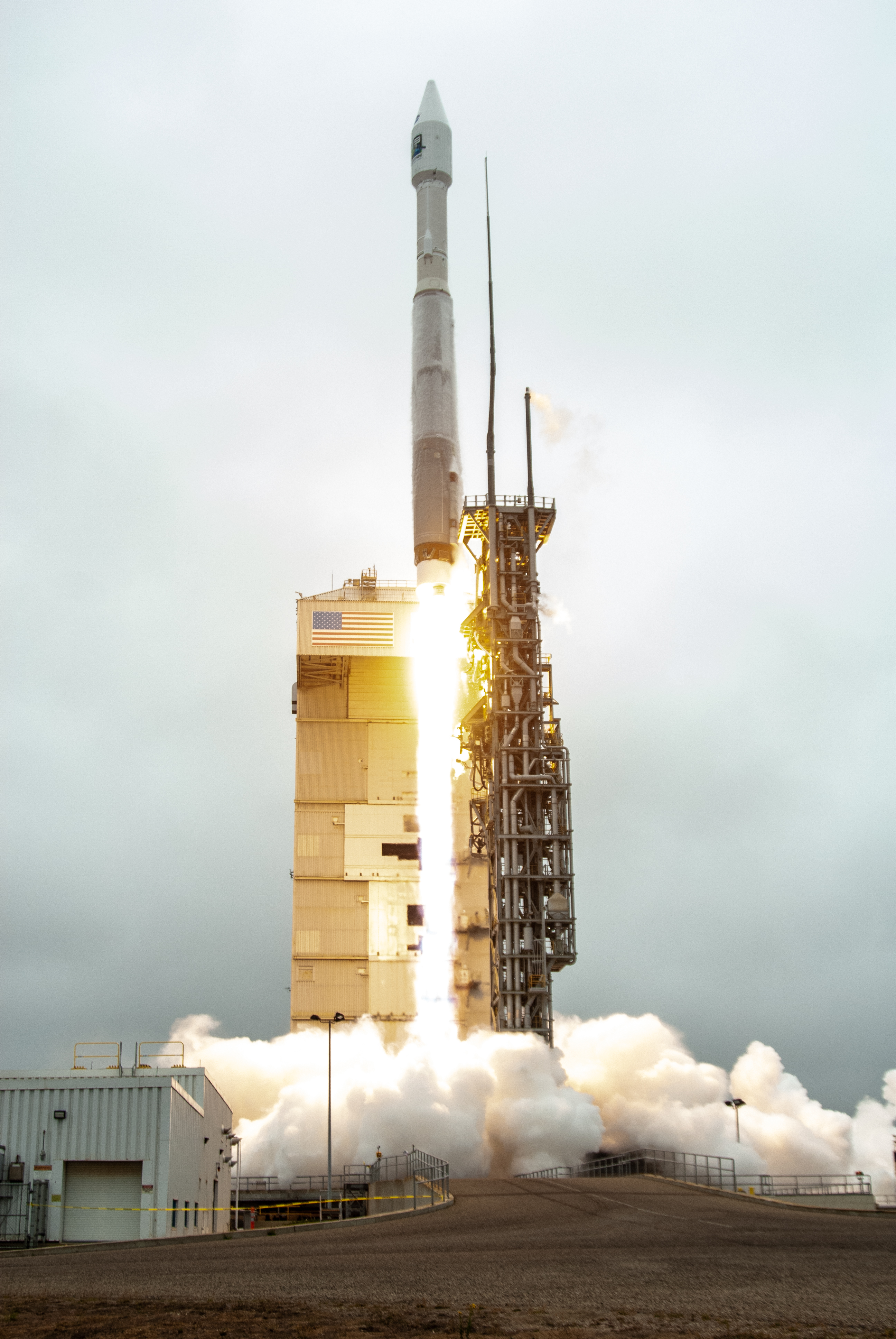
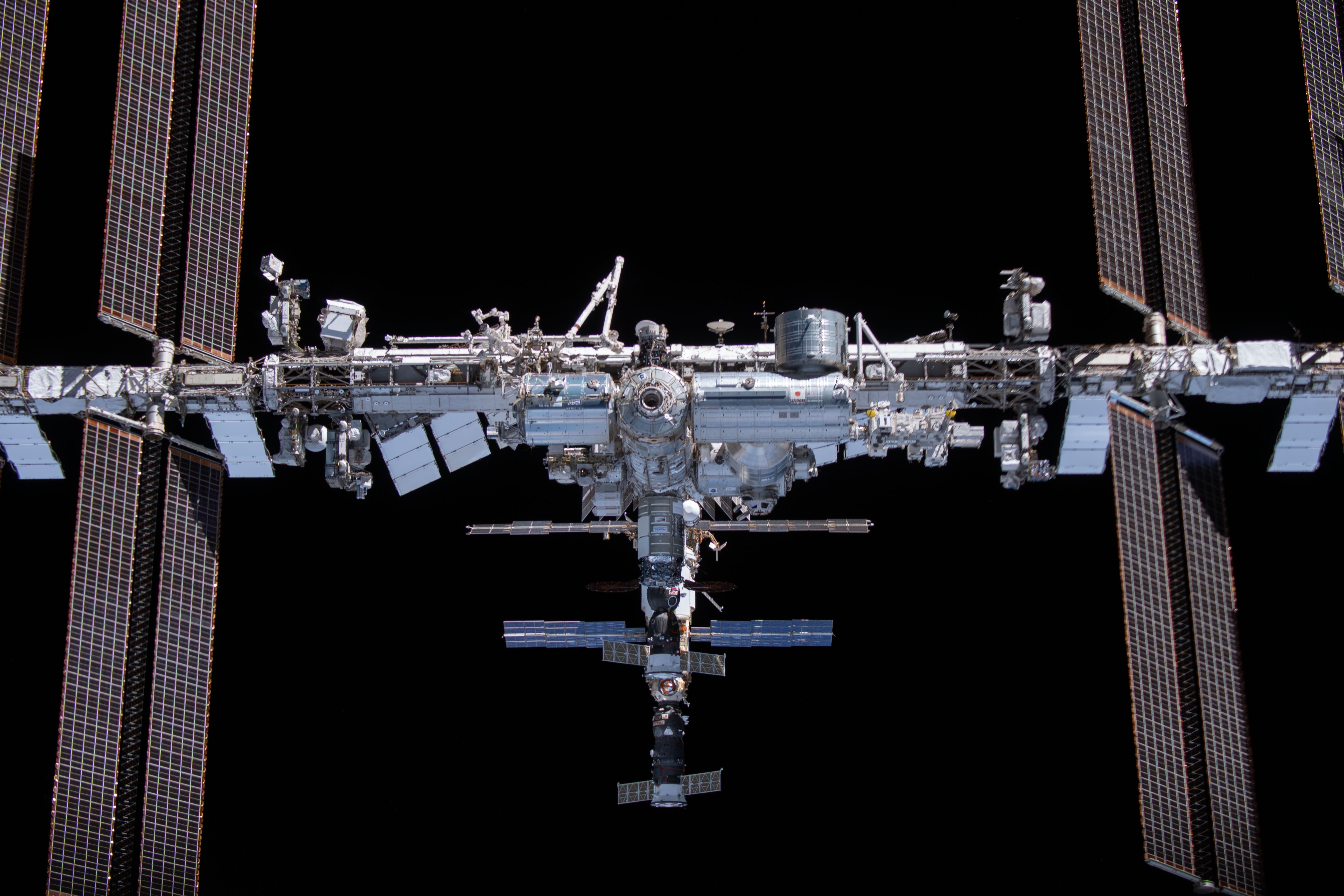
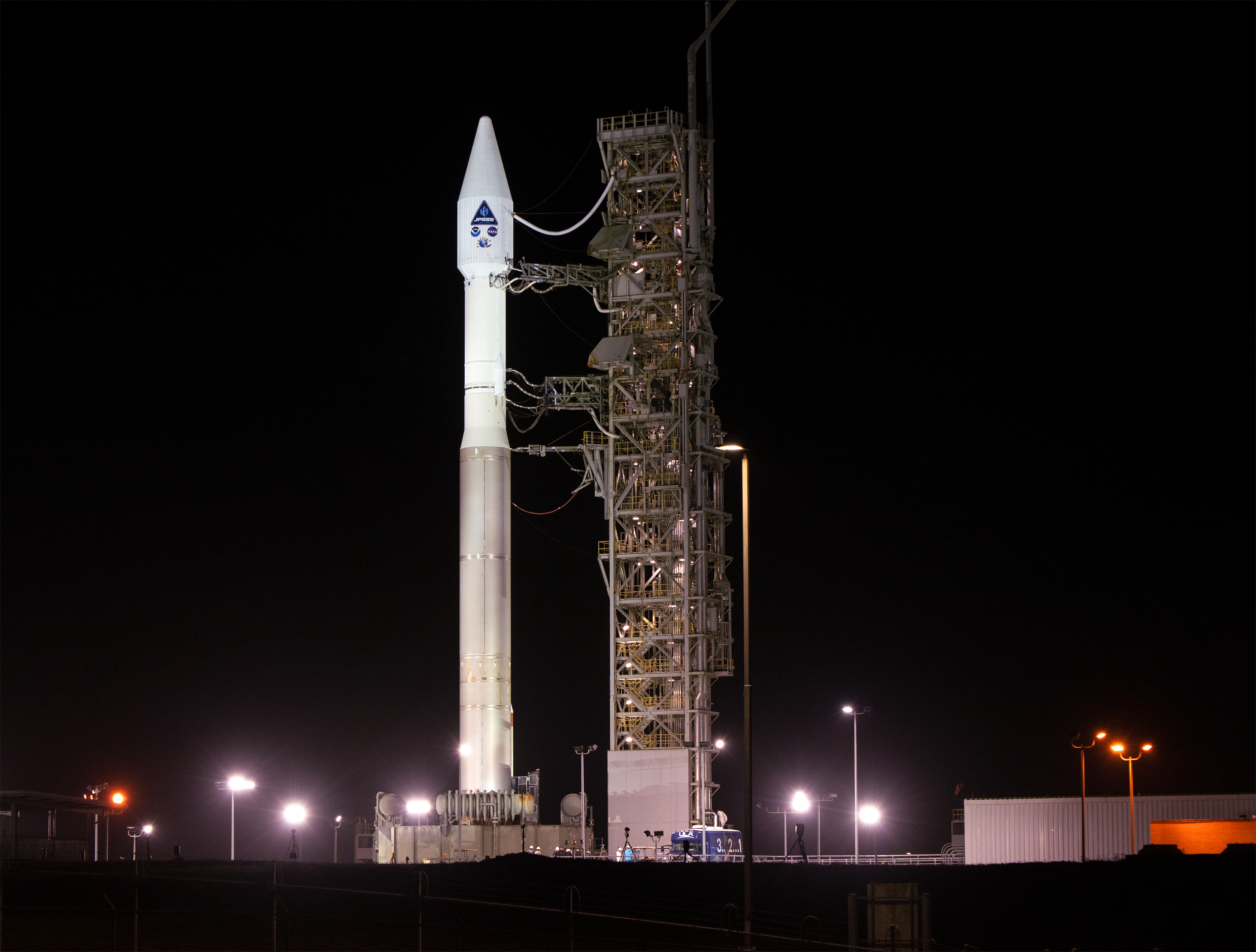

Orbital Mechanics
Orbits, transfers and mission design: Newton’s gravity and the two-body problem, ellipses and orbital elements, Kepler’s equation, Hohmann transfers, plane changes, the rocket equation, the Earth’s bulge and sun-synchronous orbits, ground tracks, trips to Mars, and keeping orbits clean of debris, with six labs. Free, self-paced, and tied to Landsat, GOES weather satellites, NASA’s DART asteroid test and orbital-debris rules.
Courses › AERO 340
About this course
This is a free self-study course outline written by Saving Planets. It is not a university course, it carries no academic credit, and no school is involved.
Its scope follows a one-semester junior orbital mechanics course. It is modeled on the topics and depth of MIT 16.346 Astrodynamics and the orbital parts of MIT 16.07 Dynamics (free on MIT OpenCourseWare), and on courses such as Purdue AAE 340 and Georgia Tech AE 3330, using NASA’s free Basics of Space Flight and OpenStax University Physics, which we link where they help. None of those authors, schools or agencies endorses this page.
What we add: every unit ties to real work with a cited public source (Landsat, GOES weather satellites, NASA’s DART planetary-defense test and orbital-debris rules), every number on the page is re-computed by a checking script before it goes live, and every lab has a free simulation or a spreadsheet.
Work through it in order. Each unit has goals, key ideas, equations, step-by-step examples, practice with full answers, common mistakes, flashcards and a quiz. Your progress is saved only in this browser.
How this course helps save the planet
Orbits are how we watch our planet: Earth-observing satellites in low orbits map forests, crops and water, and geostationary weather satellites watch storms around the clock. Choosing those orbits is pure orbital mechanics.
Orbits are also a shared, limited resource. Debris left in space threatens the satellites we rely on, so responsible mission design now includes a plan to leave orbit. Each unit ends with a short, sourced section. Values that are not from a source are labeled as sample or textbook values.
Before you start
Prerequisites
- Dynamics: Newton’s laws, angular momentum and energy.
- Calculus III and Differential Equations: vectors, gradients and ODEs.
- Linear Algebra: vectors, rotations and coordinate frames.
- Physics I: universal gravitation.
How to study
- Start every problem with a sketch of the orbit: central body, periapsis, apoapsis and the spacecraft’s position.
- Write the vis-viva equation first; it answers most speed questions.
- Keep units in metres and seconds, and μ in m³/s²; convert to km only at the end.
- Draw each maneuver as a velocity triangle before computing Δv.
- Check limits: a circular orbit has e = 0; escape has zero total energy.
- Do every practice problem on paper before opening the answer, and retake the quizzes a few days later.
Lab equipment (for the wet labs)
- A computer or tablet for the free PhET Gravity and Orbits, Kepler’s Laws and My Solar System simulations.
- NASA’s Eyes on the Solar System in a web browser.
- Spreadsheet software for the transfer, rocket-equation and ground-track labs.
- A calculator with trigonometric functions.
Suggested 15-week schedule
About 6 to 9 hours a week: reading, practice problems and, in lab weeks, the lab.
| Week | Unit | Topics | Reading |
|---|---|---|---|
| 1 | Gravity, the Two-Body Problem and Circular Orbits | Gravity, two-body problem, circular orbits; Lab A | OpenStax UP1 13.4–13.5 |
| 2 | Conic Sections, Energy and Orbital Elements | Energy, angular momentum, conics | MIT 16.346 |
| 3 | Conic Sections, Energy and Orbital Elements | Vis-viva and orbital elements; Lab B | NASA Basics of Space Flight |
| 4 | Kepler’s Equation and Time of Flight | Kepler’s equation and time of flight | MIT 16.346 |
| 5 | Orbit Transfers: Hohmann and Beyond | Impulsive maneuvers and Hohmann transfers | MIT 16.346 |
| 6 | Orbit Transfers: Hohmann and Beyond | Bi-elliptic, phasing, deorbit; Lab C | MIT 16.346 |
| 7 | Plane Changes and Combined Maneuvers | Plane changes and combined burns; midterm practice | MIT 16.346 |
| 8 | Rockets, Δv Budgets and Staging | Rocket equation, staging, Δv budgets; Lab D | OpenStax UP1 9.7 |
| 9 | Perturbations: Earth’s Bulge, Drag and Sun-Synchronous Orbits | J₂ and nodal regression | MIT 16.346 |
| 10 | Perturbations: Earth’s Bulge, Drag and Sun-Synchronous Orbits | Sun-synchronous orbits and drag; Lab E | NASA Landsat 9 |
| 11 | Ground Tracks, Coverage and Constellations | Ground tracks, coverage, constellations; Lab F | NASA Eyes |
| 12 | Interplanetary Transfers and Patched Conics | Heliocentric transfers and patched conics | NASA Basics of Space Flight |
| 13 | Interplanetary Transfers and Patched Conics | Launch windows and gravity assists | NASA Basics of Space Flight |
| 14 | Space Sustainability: Debris, Disposal and Planetary Defense | Debris, disposal and collision avoidance | NASA ODPO; FCC |
| 15 | Space Sustainability: Debris, Disposal and Planetary Defense | Planetary defense; final practice | NASA DART |
Your progress
Tick units and labs as you finish them, and take the quizzes. Progress and quiz scores are saved only in this browser, never sent to us.
Turn on JavaScript to track progress.
Unit 1 · Week 1
Gravity, the Two-Body Problem and Circular Orbits
Newton’s law of gravitation, the gravitational parameter μ, the two-body equation of motion, circular orbit speed and period, escape speed, Kepler’s three laws, and low, medium and geostationary orbits.
Learning objectives
By the end of this unit you can:
- Write the two-body equation of motion.
- Compute circular orbit speed and period.
- Compute escape speed.
- Find the geostationary radius.
Key concepts
- Newton’s gravity gives the two-body equation r̈ = −μr/r³, with μ = GM. For Earth μ = 3.986 × 10¹⁴ m³/s².
- A circular orbit has speed v = √(μ/r) and period T = 2π√(r³/μ): higher orbits are slower and take longer.
- Escape speed is √2 times circular speed at the same radius: v_esc = √(2μ/r).
- Kepler’s laws: orbits are ellipses with the central body at a focus; the radius sweeps equal areas in equal times; and T² is proportional to a³.
- A geostationary orbit has a period of one sidereal day (86,164.1 s) and lies over the equator, so the satellite stays over the same spot.
Key equations
Worked examples, step by step
Example 1.1 Find the speed and period of a circular orbit 400 km up.
Show the steps
- r = 6378 + 400 = 6778 km.
- v = √(3.986 × 10¹⁴/6.778 × 10⁶).
- T = 2π√(r³/μ).
Answer: v = 7.67 km/s; T = 92.6 min.
Example 1.2 Find escape speed from that altitude.
Show the steps
- v_esc = √2 × 7.669.
Answer: v_esc = 10.85 km/s.
Example 1.3 Find the geostationary radius and altitude.
Show the steps
- r = (μT²/(4π²))^(1/3) with T = 86,164.1 s.
- Altitude = 42,164 − 6378.
Answer: r = 42,164 km; altitude 35,786 km (22,236 miles); v = 3.07 km/s.
Practice problems
Work each on paper first, then check.
Find the period of a circular orbit 705 km up.
Show answer
98.9 min.
Find the speed there.
Show answer
7.50 km/s.
How many orbits a day is that?
Show answer
1440/98.87 = 14.56.
Convert 7.67 km/s to mph.
Show answer
17,154 mph.
Common misconceptions
Myth: Higher orbits are faster.
Actually: They are slower.
Myth: Astronauts float because there is no gravity.
Actually: They are in free fall around Earth.
Myth: A geostationary orbit can be over any city.
Actually: It must be over the equator.
Flashcards
μ
GM = 3.986 × 10¹⁴ m³/s².
Circular speed
√(μ/r).
Period
2π√(a³/μ).
Escape
√(2μ/r).
Kepler 3
T² ∝ a³.
GEO
42,164 km radius.
Self-check quiz
How this helps save the planet
NOAA explains that GOES weather satellites orbit 22,236 miles above Earth’s equator at speeds equal to Earth’s rotation, so they stay over the same regions and give continuous coverage. Together, GOES East and GOES West watch over more than half the globe, from the west coast of Africa to New Zealand.
The GOES-R series imager can image storms as often as every 30 seconds, and the series carries the first operational lightning mapper in geostationary orbit. The 22,236-mile altitude is exactly this unit’s geostationary radius minus Earth’s radius.
On Saving Planets: Earth Observation · Physics I
Sources: NOAA NESDIS: GOES-R Series mission
Free learning resources
- OpenStax UP1, 13.5 Kepler’s laws of planetary motion: Free textbook section.
- OpenStax UP1, 13.4 Satellite orbits and energy: Free textbook section.
- NASA Basics of Space Flight, Chapter 5: Planetary orbits: Free NASA chapter.
- PhET: Gravity and Orbits: Orbits interactively.
Unit 2 · Weeks 2–3
Conic Sections, Energy and Orbital Elements
Conservation of energy and angular momentum, the orbit equation, ellipses, parabolas and hyperbolas, eccentricity, the vis-viva equation, periapsis and apoapsis speeds, and the six classical orbital elements.
Learning objectives
By the end of this unit you can:
- Use vis-viva to find speeds.
- Relate eccentricity to periapsis and apoapsis.
- Compute specific energy and angular momentum.
- Name and interpret the six orbital elements.
Key concepts
- Specific energy ε = v²/2 − μ/r = −μ/(2a) is constant: negative for ellipses, zero for parabolas and positive for hyperbolas.
- Specific angular momentum h = r × v is constant, so the orbit lies in a fixed plane.
- The orbit equation r = (h²/μ)/(1 + e cos ν) gives the radius at true anomaly ν. Eccentricity e = (r_a − r_p)/(r_a + r_p) for an ellipse.
- The vis-viva equation v² = μ(2/r − 1/a) gives the speed anywhere on any orbit.
- Six classical elements fix an orbit: semi-major axis a, eccentricity e, inclination i, right ascension of the ascending node Ω, argument of periapsis ω and true anomaly ν.
Key equations
Worked examples, step by step
Example 2.1 An orbit has perigee radius 6778 km and apogee radius 42,164 km. Find a and e.
Show the steps
- a = (6778 + 42,164)/2 = 24,471 km.
- e = (42,164 − 6778)/(42,164 + 6778).
Answer: a = 24,471 km; e = 0.723.
Example 2.2 Find its specific energy.
Show the steps
- ε = −3.986 × 10¹⁴/(2 × 2.4471 × 10⁷).
Answer: ε = −8.14 MJ/kg.
Example 2.3 Find the speeds at perigee and apogee.
Show the steps
- v_p = √(μ(2/r_p − 1/a)).
- v_a = √(μ(2/r_a − 1/a)).
Answer: v_p = 10.07 km/s; v_a = 1.62 km/s.
Practice problems
Work each on paper first, then check.
Find h at perigee.
Show answer
r_p v_p = 6.778 × 10⁶ × 10,066 = 6.82 × 10¹⁰ m²/s.
What is e for a circle?
Show answer
0.
What sign is ε for an escape trajectory?
Show answer
Zero or positive.
Find the period of the orbit above.
Show answer
2π√(a³/μ) = 10.58 h.
Common misconceptions
Myth: The satellite moves at constant speed on an ellipse.
Actually: Fastest at periapsis, slowest at apoapsis.
Myth: Inclination is measured from the North Pole.
Actually: From the equator plane.
Myth: Energy depends on eccentricity.
Actually: Only on a.
Flashcards
Energy
−μ/(2a).
Vis-viva
v² = μ(2/r − 1/a).
Angular momentum
h = r × v.
Orbit equation
r = (h²/μ)/(1 + e cos ν).
Eccentricity
(r_a − r_p)/(r_a + r_p).
Elements
a, e, i, Ω, ω, ν.
Self-check quiz
How this helps save the planet
NASA lists Landsat 9’s orbit as near-polar and sun-synchronous, at 705 km altitude and 98.2° inclination, with a period of 99 minutes, about 14.5 orbits a day, and a nominal equator crossing at 10:12 a.m. local time on the descending pass.
Those few numbers are orbital elements: a from the altitude, e near zero, i = 98.2°, and a node chosen to fix the local crossing time. The steady geometry is what lets Landsat compare images across more than five decades of its record.
On Saving Planets: Earth Observation · Calculus III
Sources: NASA Science: Landsat 9
Free learning resources
- OpenStax UP1, 13.4 Satellite orbits and energy: Free textbook section.
- MIT OpenCourseWare 16.346 Astrodynamics (Fall 2008): MIT notes on conics.
- NASA Basics of Space Flight, Chapter 5: Planetary orbits: Free NASA chapter.
- PhET: Kepler’s Laws: Ellipses interactively.
Unit 3 · Week 4
Kepler’s Equation and Time of Flight
Mean motion, mean, eccentric and true anomaly, Kepler’s equation M = E − e sin E, solving it with Newton’s method, time of flight between two points, and position at a given time.
Learning objectives
By the end of this unit you can:
- Relate mean, eccentric and true anomaly.
- Solve Kepler’s equation iteratively.
- Find the time to fly between two true anomalies.
- Predict a satellite’s position at a later time.
Key concepts
- Mean motion n = √(μ/a³) is the average angular rate. Mean anomaly M = n(t − t_p) grows uniformly with time.
- Kepler’s equation links time to geometry: M = E − e sin E, where E is the eccentric anomaly.
- True anomaly follows from tan(ν/2) = √((1 + e)/(1 − e)) tan(E/2).
- Kepler’s equation has no closed-form solution for E; Newton’s method, E ← E − (E − e sin E − M)/(1 − e cos E), converges in a few steps.
- Time of flight from ν₁ to ν₂: find E₁, E₂, then M₁, M₂, and divide the difference by n.
Key equations
Worked examples, step by step
Example 3.1 For e = 0.3, find M when E = π/2.
Show the steps
- M = 1.5708 − 0.3 × 1.
Answer: M = 1.271 rad.
Example 3.2 For e = 0.3 and M = 1 rad, solve Kepler’s equation.
Show the steps
- Start E = 1; apply Newton’s method until it settles.
Answer: E = 1.288 rad.
Example 3.3 Find the true anomaly for that E.
Show the steps
- tan(ν/2) = √(1.3/0.7) × tan(0.644).
Answer: ν = 1.594 rad (91.3°).
Practice problems
Work each on paper first, then check.
How long does a LEO-to-GEO transfer take (half of a 10.58 h orbit)?
Show answer
5.29 h.
For a circle, how are M, E and ν related?
Show answer
They are equal.
Why can’t we solve for E directly?
Show answer
Kepler’s equation is transcendental.
What is the mean motion of a 92.6 min orbit in rev/day?
Show answer
1440/92.56 = 15.56.
Common misconceptions
Myth: True anomaly grows uniformly with time.
Actually: Mean anomaly does.
Myth: Kepler’s equation applies to hyperbolas unchanged.
Actually: Hyperbolas use a hyperbolic form.
Myth: Newton’s method needs many iterations.
Actually: Usually 3–5.
Flashcards
Mean motion
n = √(μ/a³).
Mean anomaly
M = n(t − t_p).
Kepler’s equation
M = E − e sin E.
True anomaly
From tan(ν/2).
Newton step
E − f/f′.
Time of flight
ΔM/n.
Self-check quiz
How this helps save the planet
NASA reports that before DART’s impact, the moonlet Dimorphos took 11 hours and 55 minutes to orbit its parent asteroid Didymos, and that after the impact on September 26, 2022 the period was 11 hours and 23 minutes, a change of 32 minutes (uncertainty about ±2 minutes).
Astronomers measured that change by timing the moonlet’s orbit from telescopes on Earth: Kepler’s laws turn a small timing shift into proof that the orbit had changed.
On Saving Planets: Calculus II · Earth Observation
Sources: NASA: NASA Confirms DART Mission Impact Changed Asteroid’s Motion in Space (Oct. 11, 2022)
Free learning resources
- MIT OpenCourseWare 16.346 Astrodynamics (Fall 2008): MIT notes on Kepler’s equation.
- OpenStax UP1, 13.5 Kepler’s laws of planetary motion: Free textbook section.
- NASA Basics of Space Flight, Chapter 5: Planetary orbits: Free NASA chapter.
- MIT OpenCourseWare 16.07 Dynamics (Fall 2009): MIT dynamics notes.
Unit 4 · Weeks 5–6
Orbit Transfers: Hohmann and Beyond
Impulsive maneuvers and Δv, the Hohmann transfer between circular orbits, transfer time, bi-elliptic transfers, phasing and rendezvous, and raising and lowering orbits.
Learning objectives
By the end of this unit you can:
- Compute Δv for a Hohmann transfer.
- Find the transfer time.
- Explain when bi-elliptic transfers save Δv.
- Plan a simple phasing maneuver.
Key concepts
- An impulsive burn changes velocity instantly by Δv; the orbit after the burn follows from vis-viva.
- The Hohmann transfer uses an ellipse tangent to both circles: burn at the inner orbit to enter the ellipse, and burn again at apoapsis to circularize.
- Transfer time is half the period of the transfer ellipse.
- For very large radius ratios (above about 11.9), a three-burn bi-elliptic transfer can use less Δv, at the cost of much more time.
- Phasing: to catch a target in the same orbit, enter a slightly smaller or larger orbit for one or more revolutions, then return.
Key equations
Worked examples, step by step
Example 4.1 Find the Δv for a Hohmann transfer from a 400 km circular orbit to GEO (in the same plane).
Show the steps
- Δv₁ = 10.066 − 7.669 = 2.398 km/s.
- Δv₂ = 3.075 − 1.618 = 1.456 km/s.
Answer: Total Δv = 3.85 km/s.
Example 4.2 Find the transfer time.
Show the steps
- t = π√(24,471,000³/μ).
Answer: t = 5.29 h.
Example 4.3 A deorbit burn at 700 km lowers perigee to 200 km. Find Δv.
Show the steps
- v_c = √(μ/7078 km).
- v_a on the 7078 × 6578 km ellipse from vis-viva.
Answer: Δv = 139 m/s.
Practice problems
Work each on paper first, then check.
Which burn is larger in the LEO-to-GEO Hohmann?
Show answer
The first, 2.40 km/s.
Above what radius ratio can bi-elliptic win?
Show answer
About 11.9.
To catch up to a target ahead in the same orbit, go higher or lower?
Show answer
Lower (shorter period).
Which way do you burn to lower an orbit?
Show answer
Retrograde.
Common misconceptions
Myth: To speed up in orbit, burn forward and stay faster.
Actually: Raising the orbit makes you slower overall.
Myth: Hohmann is always the cheapest.
Actually: Not for very large ratios.
Myth: Transfer time is a full period.
Actually: Half a period.
Flashcards
Δv
Velocity change.
Hohmann
Two tangent burns.
Transfer a
(r₁ + r₂)/2.
Transfer time
π√(a³/μ).
Bi-elliptic
Three burns, large ratios.
Phasing
Lower to catch up.
Self-check quiz
How this helps save the planet
The FCC adopted a rule in September 2022 requiring satellite operators in low Earth orbit to dispose of their satellites within 5 years of completing their missions (Report and Order FCC-22-74).
A deorbit burn is just a Hohmann-style half maneuver: lower the perigee into the upper atmosphere so drag finishes the job. From 700 km, lowering perigee to 200 km takes only about 139 m/s in this unit’s example.
On Saving Planets: Dynamics · Solutions
Sources: FCC: FCC Adopts New ‘5-Year Rule’ for Deorbiting Satellites (Report and Order FCC-22-74)
Free learning resources
- MIT OpenCourseWare 16.346 Astrodynamics (Fall 2008): MIT notes on transfers.
- NASA: Basics of Space Flight: Free NASA guide.
- OpenStax UP1, 13.4 Satellite orbits and energy: Free textbook section.
- NASA’s Eyes on the Solar System: Real trajectories.
Unit 5 · Week 7
Plane Changes and Combined Maneuvers
Inclination and node changes, the simple plane-change Δv, why plane changes are expensive in low orbit, combining a plane change with a Hohmann burn, and launch site latitude.
Learning objectives
By the end of this unit you can:
- Compute a simple plane-change Δv.
- Combine a plane change with a circularization burn.
- Explain why plane changes are done at high altitude.
- Relate launch latitude to the minimum inclination.
Key concepts
- Rotating the orbit plane by Δi at speed v costs Δv = 2v sin(Δi/2), with no change in speed.
- Because the cost scales with speed, plane changes are cheapest where the spacecraft is slowest: at apoapsis or in high orbits.
- Combining a plane change with a speed change in one burn uses the law of cosines: Δv = √(v₁² + v₂² − 2v₁v₂ cos Δi), which is cheaper than doing them separately.
- A direct launch reaches an inclination no lower than the launch site’s latitude, so GEO satellites launched from mid-latitudes must remove inclination later.
- Node changes and combined inclination-and-node changes use the same velocity-triangle idea with spherical trigonometry.
Key equations
Worked examples, step by step
Example 5.1 Find the Δv to remove 28.5° of inclination at GEO (v = 3.075 km/s).
Show the steps
- Δv = 2 × 3.075 × sin 14.25°.
Answer: Δv = 1.51 km/s.
Example 5.2 Combine that plane change with the GEO circularization burn (v_a = 1.618 km/s).
Show the steps
- Δv = √(1.618² + 3.075² − 2 × 1.618 × 3.075 × cos 28.5°).
Answer: Δv = 1.82 km/s, saving 1.15 km/s over separate burns (1.51 + 1.46).
Example 5.3 Find the cost of a 10° plane change in a 400 km orbit.
Show the steps
- Δv = 2 × 7.669 × sin 5°.
Answer: Δv = 1.34 km/s.
Practice problems
Work each on paper first, then check.
Total LEO-to-GEO Δv with the combined final burn?
Show answer
2.40 + 1.82 = 4.22 km/s.
Where is the cheapest place to change planes on an ellipse?
Show answer
Apoapsis.
A 60° plane change costs how many times v?
Show answer
2 sin 30° = 1 × v.
Can a direct launch from 28.5° latitude reach 0° inclination?
Show answer
No.
Common misconceptions
Myth: Plane changes are cheap.
Actually: In LEO, 10° costs 1.34 km/s.
Myth: Separate burns are as good as combined.
Actually: Combined burns save Δv.
Myth: Any launch site can reach any inclination directly.
Actually: Not below its latitude.
Flashcards
Plane change
2v sin(Δi/2).
Combined
Law of cosines.
Where
At low speed.
Launch latitude
Minimum inclination.
Node change
Spherical trig.
GEO
Remove inclination at apogee.
Self-check quiz
How this helps save the planet
NASA’s Landsat 9 page notes that the satellite was launched into Landsat 7’s orbit to keep 8-day repeat coverage together with Landsat 8, and that the spacecraft carries enough fuel to operate for at least 10 years against a 5-year design life.
Placing a satellite precisely in another’s orbit plane, and keeping it there, is plane-change and phasing work. Fuel saved by good maneuver planning becomes extra years of free Earth data.
On Saving Planets: Earth Observation · Linear Algebra
Sources: NASA Science: Landsat 9
Free learning resources
- MIT OpenCourseWare 16.346 Astrodynamics (Fall 2008): MIT notes on plane changes.
- NASA: Basics of Space Flight: Free NASA guide.
- MIT OpenCourseWare 16.07 Dynamics (Fall 2009): MIT dynamics.
- OpenStax UP1, 13.4 Satellite orbits and energy: Free textbook section.
Unit 6 · Week 8
Rockets, Δv Budgets and Staging
The Tsiolkovsky rocket equation, specific impulse and exhaust speed, mass ratio and propellant fraction, thrust, staging, gravity and drag losses on ascent, and building a mission Δv budget.
Learning objectives
By the end of this unit you can:
- Apply the rocket equation.
- Relate specific impulse, exhaust speed and thrust.
- Show why staging helps.
- Build a simple Δv budget.
Key concepts
- The rocket equation: Δv = I_sp g₀ ln(m₀/m_f), where m₀/m_f is the mass ratio. Exhaust speed v_e = I_sp g₀.
- Thrust F = ṁ v_e = ṁ I_sp g₀.
- Because Δv grows only with the log of the mass ratio, a single stage to orbit needs most of its mass to be propellant. Staging drops empty tanks and engines so later stages push less dead mass.
- Reaching low orbit takes about 9.3–10 km/s of Δv in practice (a textbook range): about 7.7–7.8 km/s of orbital speed plus gravity and drag losses, less a boost from Earth’s rotation for eastward launches.
- A mission Δv budget adds every maneuver: launch, transfers, plane changes, station-keeping and disposal, plus margin.
Key equations
Worked examples, step by step
Example 6.1 A stage with I_sp = 300 s has a mass ratio of 4. Find Δv.
Show the steps
- Δv = 300 × 9.80665 × ln 4.
Answer: Δv = 4.08 km/s.
Example 6.2 What mass ratio gives 9.4 km/s with I_sp = 350 s in one stage?
Show the steps
- m₀/m_f = exp(9400/(350 × 9.80665)).
Answer: 15.5, so 93.5% of liftoff mass is propellant.
Example 6.3 Two stages, each I_sp = 300 s and mass ratio 3. Total Δv?
Show the steps
- Δv = 2 × 300 × 9.80665 × ln 3.
Answer: Δv = 6.46 km/s.
Practice problems
Work each on paper first, then check.
Find the thrust for ṁ = 100 kg/s at I_sp = 300 s.
Show answer
294 kN.
Find v_e for I_sp = 450 s.
Show answer
4.41 km/s.
Double the mass ratio from 4 to 8. Δv?
Show answer
Rises by 300 × 9.807 × ln 2 = 2.04 km/s, not doubled.
Why does staging help?
Show answer
Later stages do not carry empty tanks.
Common misconceptions
Myth: Doubling propellant doubles Δv.
Actually: Δv grows with the log of mass ratio.
Myth: I_sp is measured in m/s.
Actually: In seconds; v_e = I_spg₀.
Myth: Orbit needs only 7.7 km/s.
Actually: Losses add 1.5–2 km/s.
Flashcards
Rocket equation
Δv = v_e ln(m₀/m_f).
I_sp
Seconds; v_e/g₀.
Thrust
ṁ v_e.
Mass ratio
m₀/m_f.
Staging
Drop empty mass.
Δv budget
Sum of all maneuvers + margin.
Self-check quiz
How this helps save the planet
NASA reports that DART launched on November 24, 2021 (EST) on a SpaceX Falcon 9 from Vandenberg Space Force Base in California, and struck Dimorphos, a moonlet just 160 meters across orbiting the 780-meter asteroid Didymos, on September 26, 2022.
NASA notes the collision happened at roughly 22,530 km/h. Getting a spacecraft there at that speed and on the right path started with this unit’s Δv budget.
On Saving Planets: Thermodynamics · Intro to Aerospace Engineering
Sources: NASA Science: Double Asteroid Redirection Test (DART) · NASA: NASA Confirms DART Mission Impact Changed Asteroid’s Motion in Space (Oct. 11, 2022)
Free learning resources
- OpenStax UP1, 9.7 Rocket propulsion: Free textbook section.
- NASA Glenn: Rocket thrust: Free NASA page.
- NASA: Basics of Space Flight: Free NASA guide.
- MIT OpenCourseWare 16.346 Astrodynamics (Fall 2008): MIT notes.
Unit 7 · Weeks 9–10
Perturbations: Earth’s Bulge, Drag and Sun-Synchronous Orbits
Why real orbits drift, Earth’s oblateness and J₂, regression of the node and rotation of periapsis, sun-synchronous orbits, frozen and critically inclined orbits, atmospheric drag and orbit decay, and third-body and solar pressure effects.
Learning objectives
By the end of this unit you can:
- Compute nodal regression from J₂.
- Find the inclination for a sun-synchronous orbit.
- Explain orbit decay from drag.
- Name other perturbations.
Key concepts
- Earth bulges at the equator. Its J₂ term (1.0826 × 10⁻³) makes the orbit plane precess: dΩ/dt = −1.5 n J₂ (R/p)² cos i, with p = a(1 − e²).
- Prograde orbits (i < 90°) regress westward; retrograde orbits (i > 90°) advance eastward.
- A sun-synchronous orbit picks i so the plane advances 360° per year, about 0.9856° per day, keeping the same local solar time at each pass.
- In low orbit, atmospheric drag slowly removes energy, lowering the orbit until the spacecraft reenters. Drag grows sharply when solar activity heats the upper atmosphere.
- Other perturbations: Moon and Sun gravity (important for GEO), solar radiation pressure, and higher gravity harmonics.
Key equations
Worked examples, step by step
Example 7.1 Find the inclination for a sun-synchronous circular orbit at 705 km.
Show the steps
- r = 7083 km; n = √(μ/r³).
- Required rate 0.9856°/day = 1.991 × 10⁻⁷ rad/s.
- cos i = −rate/(1.5nJ₂(R/r)²).
Answer: i = 98.2°, exactly Landsat 9’s inclination.
Example 7.2 Check the nodal rate for Landsat 9 (705 km, 98.2°).
Show the steps
- dΩ/dt = −1.5nJ₂(R/r)² cos 98.2°.
Answer: +0.985° per day, matching the 0.9856° per day the Sun moves.
Example 7.3 Find the nodal regression of a 400 km orbit at 51.6°.
Show the steps
- Same formula with r = 6778 km and cos 51.6°.
Answer: −5.00° per day (westward).
Practice problems
Work each on paper first, then check.
Is a sun-synchronous orbit prograde or retrograde?
Show answer
Slightly retrograde (i > 90°).
What does J₂ do to a polar orbit (i = 90°)?
Show answer
Nothing to the node: cos 90° = 0.
Why do low satellites need reboosts?
Show answer
Drag lowers them.
Which perturbation matters most for GEO inclination?
Show answer
Moon and Sun gravity.
Common misconceptions
Myth: Orbit planes are fixed in space.
Actually: J₂ makes them precess.
Myth: Sun-synchronous means the satellite sees the Sun all the time.
Actually: It means the same local solar time each pass.
Myth: Drag only matters below 100 km.
Actually: It shapes orbits up to several hundred km.
Flashcards
J₂
1.0826 × 10⁻³.
Nodal rate
−1.5nJ₂(R/p)² cos i.
Sun-synchronous
+0.9856°/day.
Retrograde node
Advances east.
Drag
Decay and reentry.
GEO perturbation
Sun and Moon.
Self-check quiz
How this helps save the planet
NASA lists Landsat 9 in a near-polar, sun-synchronous orbit at 705 km and 98.2° inclination, crossing the equator at about 10:12 a.m. local time. Landsat 9 and Landsat 8 together image the same place every 8 days, enabling near-weekly deforestation alerts, water-quality monitoring and crop reports.
NASA notes that Landsat’s free, public data contributed an estimated $25.6 billion to the U.S. economy in 2023. The steady morning light that makes those images comparable comes straight from J₂ and this unit’s sun-synchronous condition.
On Saving Planets: Earth Observation · Oceans
Sources: NASA Science: Landsat 9
Free learning resources
- MIT OpenCourseWare 16.346 Astrodynamics (Fall 2008): MIT notes on perturbations.
- NASA Basics of Space Flight, Chapter 5: Planetary orbits: Free NASA chapter.
- NASA Science: Landsat 9: Landsat 9 orbit facts.
- MIT OpenCourseWare 16.07 Dynamics (Fall 2009): MIT dynamics.
Unit 8 · Week 11
Ground Tracks, Coverage and Constellations
Ground tracks and the westward shift per orbit, repeat-ground-track orbits, swath width and revisit time, coverage from GEO, and designing constellations for revisit and coverage.
Learning objectives
By the end of this unit you can:
- Compute the ground-track shift per orbit.
- Find orbits per repeat cycle.
- Relate swath width to revisit.
- Explain why two satellites halve revisit time.
Key concepts
- As Earth turns beneath an orbit, each ground track shifts west by Δλ = 360° × T/T_sidereal per orbit.
- A repeat-ground-track orbit makes a whole number of orbits in a whole number of days, so the pattern repeats exactly.
- A sensor with swath width w covers the equator in roughly (circumference)/w passes, which sets the minimum repeat cycle.
- Adding satellites in the same orbit, evenly spaced, divides the revisit time.
- A single GEO satellite sees roughly 40% of Earth’s surface (a textbook value), but at low resolution near the edges; a few spaced around the equator cover all longitudes except the polar regions.
Key equations
Worked examples, step by step
Example 8.1 Find the ground-track shift per orbit for a 98.87 min orbit.
Show the steps
- Δλ = 360 × 98.87 × 60/86,164.1.
Answer: Δλ = 24.8°, about 2760 km at the equator.
Example 8.2 How many orbits does that satellite make in 16 days?
Show the steps
- 16 × 14.564.
Answer: About 233 orbits, so a 16-day repeat cycle fits.
Example 8.3 Two identical satellites share a 16-day repeat orbit, evenly spaced. Revisit?
Show the steps
- 16/2.
Answer: 8 days, as NASA reports for Landsat 8 and 9.
Practice problems
Work each on paper first, then check.
How many 185 km swaths span the equator (40,075 km)?
Show answer
40,075/185 = 216.6, so about 217.
Why do ground tracks shift west?
Show answer
Earth rotates east under the orbit.
What does a GEO ground track look like?
Show answer
A point (or small figure-eight if inclined).
How would three satellites change the 16-day revisit?
Show answer
About 5.33 days.
Common misconceptions
Myth: Ground tracks repeat every orbit.
Actually: Only after a whole repeat cycle.
Myth: More altitude always means better coverage.
Actually: Resolution falls with altitude.
Myth: GEO sees the whole Earth.
Actually: About 40%, poorly near the poles.
Flashcards
Track shift
360°T/T_sid.
Repeat orbit
kT = jT_day.
Swath
Width imaged.
Revisit
Repeat/N_sat.
GEO view
≈ 40% of Earth.
Constellation
Spaced satellites.
Self-check quiz
How this helps save the planet
NASA reports that Landsat 9 has a 16-day repeat cycle with a 185 km swath, collects about 740 scenes a day (almost double its 400-scene requirement), and together with Landsat 8 observes the same location every 8 days.
NOAA notes that GOES East and GOES West together cover more than half the globe from geostationary orbit. Low polar orbits give sharp, repeated maps; GEO gives constant watch. Good Earth monitoring uses both.
On Saving Planets: Earth Observation · Oceans
Sources: NASA Science: Landsat 9 · NOAA NESDIS: GOES-R Series mission
Free learning resources
- NASA Science: Landsat 9: Landsat 9 coverage facts.
- NOAA NESDIS: GOES-R Series mission: NOAA GOES-R facts.
- NASA: Basics of Space Flight: Free NASA guide.
- MIT OpenCourseWare 16.346 Astrodynamics (Fall 2008): MIT notes.
Unit 9 · Weeks 12–13
Interplanetary Transfers and Patched Conics
Heliocentric Hohmann transfers, transfer time to Mars, departure v∞ and C₃, the patched-conic method, spheres of influence, escape from a parking orbit, synodic periods and launch windows, and gravity assists.
Learning objectives
By the end of this unit you can:
- Compute an Earth–Mars Hohmann transfer.
- Find v∞ and C₃.
- Find the Δv to depart from low Earth orbit.
- Compute synodic periods and explain launch windows.
Key concepts
- Far from planets, a spacecraft follows a heliocentric conic with μ_Sun = 1.327 × 10²⁰ m³/s². An Earth–Mars Hohmann transfer is an ellipse from 1 AU to 1.524 AU.
- Patched conics: near each planet, use a hyperbola relative to the planet; far away, use the heliocentric ellipse; match velocities at the sphere of influence.
- The departure hyperbolic excess speed v∞ is the heliocentric speed needed minus Earth’s orbital speed. C₃ = v∞² is the launch energy.
- From a circular parking orbit, the departure burn is Δv = √(v∞² + 2μ/r) − √(μ/r), using the Oberth effect of burning deep in the gravity well.
- Launch windows repeat every synodic period, 1/(1/T₁ − 1/T₂): about 2.1 years for Mars. Gravity assists change a spacecraft’s heliocentric speed for free by flying past a planet.
Key equations
Worked examples, step by step
Example 9.1 Find the Earth–Mars Hohmann transfer time.
Show the steps
- a = (1 + 1.524)/2 AU = 1.888 × 10¹¹ m.
- t = π√(a³/μ_Sun).
Answer: t = 259 days.
Example 9.2 Find v∞ and C₃ at departure.
Show the steps
- Earth’s speed √(μ_Sun/1 AU) = 29.78 km/s.
- Transfer perihelion speed from vis-viva.
Answer: v∞ = 2.95 km/s; C₃ = 8.68 km²/s².
Example 9.3 Find the departure burn from a 400 km parking orbit.
Show the steps
- Δv = √(2946² + 2μ/6.778 × 10⁶) − 7669.
Answer: Δv = 3.57 km/s.
Practice problems
Work each on paper first, then check.
Find Mars’s orbital period from Kepler’s third law.
Show answer
1.524^1.5 = 1.88 years.
Find the Earth–Mars synodic period.
Show answer
1/(1 − 1/1.881) = 2.13 years.
Why burn deep in a gravity well?
Show answer
The Oberth effect: more kinetic energy per Δv.
Does a gravity assist change speed relative to the planet?
Show answer
No, only relative to the Sun.
Common misconceptions
Myth: You can launch to Mars any time cheaply.
Actually: Only in windows every 2.1 years.
Myth: v∞ equals the burn Δv.
Actually: The burn from LEO is larger.
Myth: Gravity assists break energy conservation.
Actually: The planet loses a tiny amount.
Flashcards
Heliocentric
μ_Sun = 1.327 × 10²⁰.
Patched conics
Hyperbola + ellipse.
v∞
Excess speed.
C₃
v∞².
Synodic period
1/(1/T₁ − 1/T₂).
Gravity assist
Free heliocentric Δv.
Self-check quiz
How this helps save the planet
NASA calls DART the first-ever mission dedicated to demonstrating asteroid deflection by changing an asteroid’s motion through kinetic impact. Before the encounter, NASA defined success as a change in Dimorphos’ orbit period of 73 seconds or more; the measured change of 32 minutes exceeded that by more than 25 times.
NASA notes that neither Dimorphos nor Didymos posed any hazard to Earth before or after the test. Planetary defense depends on exactly the interplanetary trajectory tools in this unit.
On Saving Planets: Physics I · Solutions
Sources: NASA: NASA Confirms DART Mission Impact Changed Asteroid’s Motion in Space (Oct. 11, 2022)
Free learning resources
- NASA: Basics of Space Flight: Free NASA guide to interplanetary trajectories.
- NASA’s Eyes on the Solar System: Real interplanetary paths.
- MIT OpenCourseWare 16.346 Astrodynamics (Fall 2008): MIT notes.
- PhET: My Solar System: Multi-body orbits.
Unit 10 · Weeks 14–15
Space Sustainability: Debris, Disposal and Planetary Defense
The orbital debris environment, collision speeds and energies, the Kessler cascade, end-of-life disposal and deorbit Δv, graveyard orbits for GEO, conjunction screening and collision avoidance, and kinetic-impact planetary defense.
Learning objectives
By the end of this unit you can:
- Compute the energy of a debris impact.
- Size a deorbit burn.
- Explain the Kessler cascade.
- Quantify the DART result.
Key concepts
- Low Earth orbit holds millions of pieces of debris: dead satellites, rocket parts, fragments and paint flecks. At orbital speeds even tiny pieces carry enormous energy.
- Kinetic energy ½mv² grows with the square of speed: a 1 g fragment at 10 km/s (a sample relative speed) carries 50 kJ.
- Collisions make more fragments, which cause more collisions: the Kessler cascade. Limiting new debris is far cheaper than removing it.
- Disposal: LEO satellites lower their perigee so drag brings them down; GEO satellites are raised to a graveyard orbit a few hundred kilometres higher.
- Operators screen for close approaches (conjunctions) and make small avoidance burns when the collision probability is too high.
Key equations
Worked examples, step by step
Example 10.1 Convert NASA’s 18,000 mph debris speed to km/s.
Show the steps
- 18,000 × 0.44704 m/s.
Answer: 8.05 km/s.
Example 10.2 Find the kinetic energy of a 1 g fragment at a 10 km/s relative speed (sample value).
Show the steps
- E = ½ × 0.001 × 10,000².
Answer: E = 50 kJ from a fragment the mass of a paper clip.
Example 10.3 DART shortened Dimorphos’ 11 h 55 min (715 min) orbit by 32 minutes. Find the fractional change and the margin over NASA’s 73 s success threshold.
Show the steps
- 32/715.
- 1920 s/73 s.
Answer: 4.48% shorter; 26.3 times the threshold.
Practice problems
Work each on paper first, then check.
Find the deorbit Δv from 700 km to a 200 km perigee.
Show answer
139 m/s (Unit 4).
Within how many years must LEO satellites be disposed of under the FCC rule?
Show answer
5 years after mission end.
Why is preventing debris cheaper than removing it?
Show answer
Removal needs a dedicated spacecraft for each object.
Where do GEO satellites go at end of life?
Show answer
A graveyard orbit above GEO.
Common misconceptions
Myth: Space is too big to fill up.
Actually: Useful orbits are limited and crowded.
Myth: Small debris is harmless.
Actually: Energy grows with v².
Myth: Deorbiting needs huge burns.
Actually: Lowering perigee from 700 km takes about 139 m/s.
Flashcards
Debris
Millions of pieces in LEO.
Impact energy
½mv².
Kessler
Cascade of collisions.
Deorbit
Lower perigee.
Graveyard
Above GEO.
DART
32-minute period change.
Self-check quiz
How this helps save the planet
NASA’s Headquarters Library notes that there are millions of pieces of space junk in low Earth orbit, moving as fast as 18,000 miles per hour, almost seven times faster than a bullet, with close to 6,000 tons of material in low Earth orbit. NASA’s Orbital Debris Program began in 1979 at Johnson Space Center.
The FCC’s 2022 rule requires low-Earth-orbit operators to dispose of satellites within 5 years of completing their missions. Planning that disposal burn from day one is now part of responsible mission design.
On Saving Planets: Solutions · Earth Observation
Sources: NASA Headquarters Library: Space Debris · FCC: FCC Adopts New ‘5-Year Rule’ for Deorbiting Satellites (Report and Order FCC-22-74)
Free learning resources
- NASA Orbital Debris Program Office: NASA Orbital Debris Program Office.
- NASA Headquarters Library: Space Debris: NASA debris reading list.
- NASA: NASA Confirms DART Mission Impact Changed Asteroid’s Motion in Space (Oct. 11, 2022): NASA DART result.
- MIT OpenCourseWare 16.346 Astrodynamics (Fall 2008): MIT notes.
The lab (Astrodynamics lab)
The lab is the hands-on part of the course. Here it is free and for practice only, with no credit.
Every lab runs in a free simulation or a spreadsheet, so there are no physical hazards. Take screen breaks, sit with good posture, and keep cables out of walkways.
Safety reference: OSHA: Walking-working surfaces (slip, trip and fall hazards)
Lab A: Circular orbits in PhET
Week 1
Goal: Explore how orbit speed and period change with distance in PhET Gravity and Orbits, then compute real Earth orbits.
Procedure
- Open PhET Gravity and Orbits; launch the satellite at different distances and speeds.
- Find the speed that gives a circle at each distance.
- Compute v and T for a 400 km orbit, Landsat’s 705 km orbit and GEO.
- Compare the trend with the simulation.
Data table
| Orbit | v (km/s) | T |
|---|---|---|
| 400 km | 7.67 | 92.6 min |
| 705 km | 7.50 | 98.9 min |
| GEO (35,786 km) | 3.07 | 23.93 h |
Computed values.
Sample calculation
- v(705 km) = √(3.986 × 10¹⁴/7.083 × 10⁶) = 7.50 km/s.
- T(GEO) = 86,164 s = 23.93 h.
Safety
- Computer only.
Home or virtual alternative
- Any browser works.
Planet link: NOAA notes GOES satellites orbit 22,236 miles above the equator. NOAA NESDIS: GOES-R Series mission
Lab B: Kepler’s third law with real planets
Week 3
Goal: Check T² ∝ a³ for planets and explore elliptical orbits in PhET Kepler’s Laws.
Procedure
- Explore PhET Kepler’s Laws: change eccentricity and watch equal areas swept in equal times.
- Enter planet semi-major axes in AU.
- Compute T = a^1.5 in years.
- Plot log T against log a and find the slope.
Data table
| Planet | a (AU) | T (years) |
|---|---|---|
| Earth | 1.000 | 1.000 |
| Mars | 1.524 | 1.881 |
| Jupiter | 5.203 | 11.87 |
Semi-major axes are textbook values; the slope of log T against log a is 1.5.
Sample calculation
- T(Mars) = 1.524^1.5 = 1.881 years.
- T(Jupiter) = 5.203^1.5 = 11.87 years.
Safety
- Computer only.
Home or virtual alternative
- Any browser and spreadsheet work.
PhET: Kepler’s Laws · PhET: My Solar System
Planet link: NASA timed Dimorphos’ orbit before and after DART to measure a 32-minute change. NASA: NASA Confirms DART Mission Impact Changed Asteroid’s Motion in Space (Oct. 11, 2022)
Lab C: Hohmann transfer calculator
Week 6
Goal: Build a spreadsheet that computes both burns, total Δv and transfer time for any pair of circular orbits.
Procedure
- Enter μ and the two radii.
- Compute circular speeds, transfer-orbit speeds, both burns and the transfer time.
- Run LEO (400 km) to GEO and LEO to a 20,200 km medium orbit.
- Add a plane-change option for the second burn.
Data table
| Transfer | Δv₁ (km/s) | Δv₂ (km/s) | Total | Time (h) |
|---|---|---|---|---|
| 400 km → GEO | 2.398 | 1.456 | 3.854 | 5.29 |
| 400 km → 20,200 km | 2.012 | 1.404 | 3.416 | 2.98 |
Computed values, coplanar.
Sample calculation
- Δv₁(GEO) = 10.066 − 7.669 = 2.398 km/s.
- Time(20,200 km) = π√(a³/μ) = 2.98 h.
Safety
- Computer only.
Home or virtual alternative
- Any spreadsheet works.
NASA’s Eyes on the Solar System
Planet link: The FCC requires LEO satellites to be disposed of within 5 years of mission end. FCC: FCC Adopts New ‘5-Year Rule’ for Deorbiting Satellites (Report and Order FCC-22-74)
Lab D: Rocket equation and staging
Week 8
Goal: See how Δv grows with mass ratio and how staging beats a single stage.
Procedure
- Set I_sp = 300 s.
- Compute Δv for mass ratios 2, 4 and 8.
- Compare one stage of ratio 9 with two stages of ratio 3.
- Find the mass ratio for 9.4 km/s at I_sp = 350 s.
Data table
| Mass ratio | Δv (km/s) |
|---|---|
| 2 | 2.04 |
| 4 | 4.08 |
| 8 | 6.12 |
Computed values; one stage of ratio 9 and two stages of ratio 3 give the same ideal Δv (6.46 km/s), but the staged rocket needs far less structure per stage.
Sample calculation
- Δv(8) = 300 × 9.80665 × ln 8 = 6.12 km/s.
- Two stages of 3: 2 × 300 × 9.80665 × ln 3 = 6.46 km/s.
Safety
- Computer only. Do not build or fly propellant rockets for this lab.
Home or virtual alternative
- Any spreadsheet works.
Planet link: NASA’s DART launched on a Falcon 9 from Vandenberg in November 2021. NASA Science: Double Asteroid Redirection Test (DART)
Lab E: Designing a sun-synchronous orbit
Week 10
Goal: Compute the sun-synchronous inclination for several altitudes and check it against Landsat 9.
Procedure
- Enter μ, R, J₂ and the required 0.9856°/day.
- Compute i for circular orbits at 500, 705 and 800 km.
- Compare 705 km with Landsat 9’s published 98.2°.
- Plot i against altitude.
Data table
| Altitude (km) | i (deg) |
|---|---|
| 500 | 97.40 |
| 705 | 98.21 |
| 800 | 98.60 |
Computed values; Landsat 9’s published inclination is 98.2°.
Sample calculation
- n(705 km) = √(μ/7.083³ × 10¹⁸) = 1.059 × 10⁻³ rad/s.
- i(705) = 98.21°.
Safety
- Computer only.
Home or virtual alternative
- Any spreadsheet works.
Planet link: NASA says Landsat 9 crosses the equator at about 10:12 a.m. local time. NASA Science: Landsat 9
Lab F: Ground tracks in NASA’s Eyes
Week 11
Goal: Watch real Earth-observing satellites in NASA’s Eyes and compute their ground-track shift and repeat cycle.
Procedure
- Open NASA’s Eyes and follow an Earth-observing satellite for a few orbits.
- Note how each track lands west of the last.
- Compute the shift for a 98.87 min orbit.
- Find how many orbits fit in 16 days.
Data table
| Quantity | Value |
|---|---|
| Period | 98.87 min |
| Shift per orbit | 24.8° |
| Shift at equator | 2760 km |
| Orbits in 16 days | 233 |
Computed for a 705 km circular orbit.
Sample calculation
- Δλ = 360 × 5932/86,164 = 24.8°.
- 16 × 14.564 = 233 orbits.
Safety
- Computer only.
Home or virtual alternative
- Any browser works.
NASA’s Eyes on the Solar System
Planet link: NASA reports Landsat 8 and 9 together revisit every place every 8 days. NASA Science: Landsat 9
Exam prep practice sets
Time yourself: about 10 minutes per problem. Then compare with the full solutions.
Midterm practice set (Units 1–5)
Find the circular speed 1000 km above Earth.
Show full solution
- √(3.986 × 10¹⁴/7.378 × 10⁶).
Answer: 7.35 km/s.
Find the period of that orbit.
Show full solution
- 2π√(r³/μ).
Answer: 105.1 min.
An orbit has r_p = 7000 km and r_a = 14,000 km. Find e.
Show full solution
- 7000/21,000.
Answer: 0.333.
Find the speed at perigee of that orbit.
Show full solution
- √(μ(2/7 × 10⁶ − 1/1.05 × 10⁷)).
Answer: 8.71 km/s.
Find the Δv to change inclination by 5° at 7.5 km/s.
Show full solution
- 2 × 7.5 × sin 2.5°.
Answer: 0.654 km/s.
Final practice set (all units)
Find Δv for I_sp = 320 s and mass ratio 5.
Show full solution
- 320 × 9.80665 × ln 5.
Answer: 5.05 km/s.
Find the nodal rate at 600 km, i = 97.8°.
Show full solution
- −1.5nJ₂(R/r)² cos i.
Answer: +0.987°/day.
Find the ground-track shift per orbit for a 100 min orbit.
Show full solution
- 360 × 6000/86,164.1.
Answer: 25.1°.
Find the Earth–Venus Hohmann transfer time (Venus at 0.723 AU).
Show full solution
- π√(a³/μ_Sun) with a = 0.8615 AU.
Answer: 146 days.
Find the energy of a 10 g fragment at 8 km/s.
Show full solution
- ½ × 0.01 × 8000².
Answer: 320 kJ.
Find the synodic period of Earth and Jupiter (11.87 years).
Show full solution
- 1/(1 − 1/11.87).
Answer: 1.092 years.
Formula sheet
Constants
| Constant | Value |
|---|---|
| Earth (textbook values) | μ = 3.986 × 10¹⁴ m³/s², R = 6378 km, J₂ = 1.0826 × 10⁻³, sidereal day 86,164.1 s |
| Sun (textbook value) | μ = 1.327 × 10²⁰ m³/s², 1 AU = 1.496 × 10¹¹ m |
| Mars orbit (textbook value) | a = 1.524 AU |
| Standard gravity | g₀ = 9.80665 m/s² |
| 1 mile | 1.609344 km |
| 1 mph | 0.44704 m/s |
Source: NIST Guide to the SI, Appendix B.9: conversion factors
Free texts and simulations
Use these free lectures, NASA guides and simulations alongside the course.
- MIT OpenCourseWare 16.346 Astrodynamics (Fall 2008): Free MIT astrodynamics lectures and problem sets.
- MIT OpenCourseWare 16.07 Dynamics (Fall 2009): Free MIT dynamics notes on orbits.
- NASA: Basics of Space Flight: Free NASA guide to orbits and missions.
- OpenStax University Physics Volume 1, 13.5 Kepler’s laws: Free textbook section.
- PhET: Gravity and Orbits: Orbits interactively.
- NASA’s Eyes on the Solar System: Real spacecraft trajectories in 3D.
Glossary
- Apoapsis
- Farthest point of an orbit.
- Conjunction
- Close approach between two space objects.
- C₃
- Launch energy, the square of v∞.
- Eccentricity
- How stretched an orbit is.
- Geostationary orbit
- Equatorial orbit with a one-sidereal-day period.
- Ground track
- Path of the point directly below a satellite.
- Hohmann transfer
- Two-burn transfer on a tangent ellipse.
- Inclination
- Tilt of the orbit plane from the equator.
- J₂
- Earth’s oblateness term.
- Kepler’s equation
- M = E − e sin E.
- Kessler cascade
- Chain reaction of debris collisions.
- Mean anomaly
- Angle that grows uniformly with time.
- Patched conics
- Joining planet-centered and Sun-centered conics.
- Periapsis
- Closest point of an orbit.
- Specific impulse
- Thrust per propellant weight flow, in seconds.
- Sun-synchronous orbit
- Orbit whose plane keeps a fixed angle to the Sun.
- Synodic period
- Time between repeat alignments of two orbiting bodies.
- True anomaly
- Angle from periapsis to the spacecraft.
- Vis-viva equation
- v² = μ(2/r − 1/a).
- Δv
- Change in velocity a maneuver requires.
Self-assessment rubric
No grade or credit is given. Use this to judge honestly where you are in each unit.
| Level | What it looks like |
|---|---|
| 4 · Mastery | Sketches the orbit and maneuvers, picks vis-viva, Kepler or the rocket equation correctly, keeps units in SI, and checks answers against limits. |
| 3 · Proficient | Solves the practice problems with occasional unit slips. |
| 2 · Developing | Follows worked examples but mixes up circular and transfer speeds. |
| 1 · Beginning | Plugs numbers into formulas without a sketch; needs to revisit the unit. |
Suggested weighting if you want a score
| Part | Weight |
|---|---|
| Practice problems | 20% |
| Labs | 25% |
| Midterm practice set | 25% |
| Final practice set | 30% |
Aim for level 3 or better in every unit before moving to the next course.