Want to go deeper? NASA, IMAP mission has the full story and the latest updates.
 For Further Information
NASA's IMAP watches the Sun from about a million miles sunward and can give about a half hour's warning of incoming radiation.
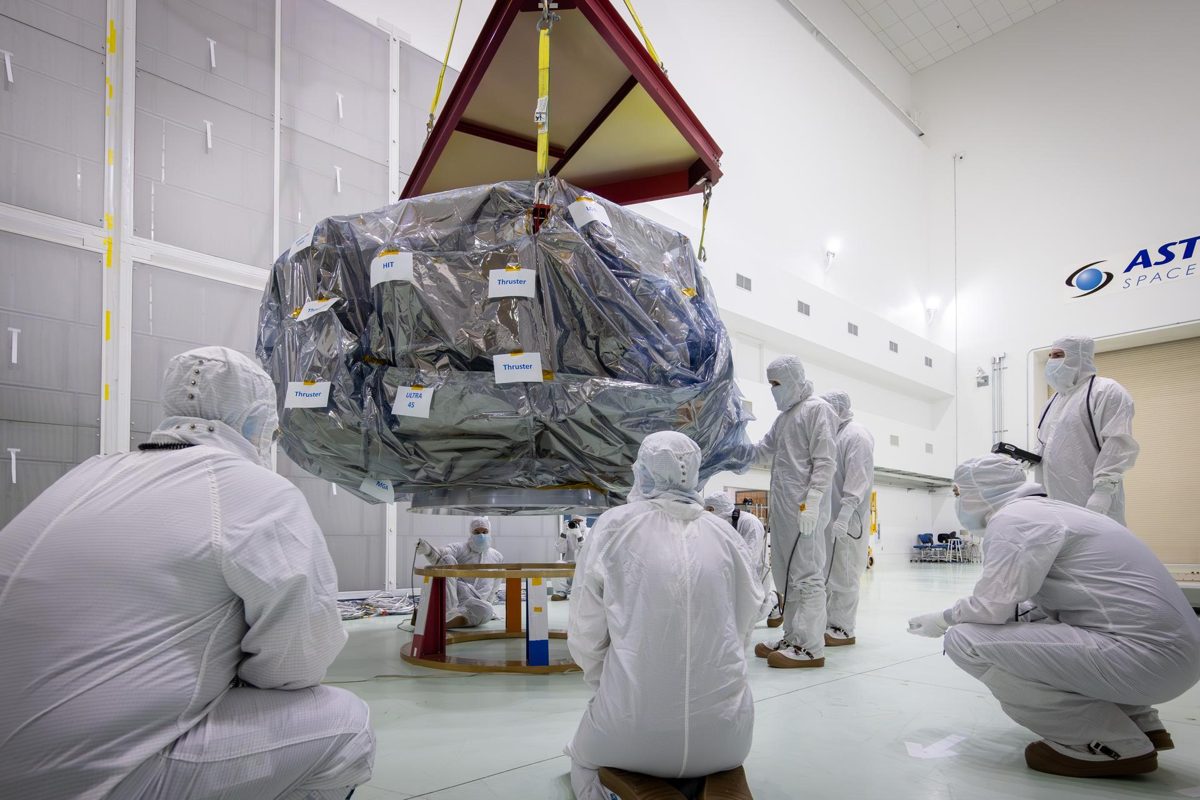
Image: NASA/KSC.
Last reviewed: 2 sources cited
A 900 kg spacecraft that measures particles from the Sun and maps the boundary of the heliosphere, the bubble that helps shield the solar system from cosmic rays.
Source: NASA, IMAP mission
Launched September 24, 2025, together with NOAA's space weather satellite; now operating at L1.
Source: NASA, IMAP launch release
The Sun–Earth L1 A spot in space where the pull of the Sun and Earth balance, so a spacecraft can stay in place with little fuel. L1 sits between Earth and the Sun. Glossary, about one million miles from Earth toward the Sun.
Source: NASA, IMAP mission
Earlier warnings of solar radiation protect astronauts, satellites and the technology we rely on, and IMAP's maps show how the heliosphere shields life in the solar system.
Source: NASA, IMAP mission
Agency solution · active
NASA's IMAP (Interstellar Mapping and Acceleration Probe) launched on September 24, 2025 and works from the Sun–Earth L1 point, about one million miles from Earth toward the Sun. From there it can give astronauts and spacecraft near Earth about a half hour's warning of harmful radiation, and its I-ALiRT real-time link shares space weather data with forecasters.
Source: NASA, IMAP mission
Source: NASA, IMAP launch release
For Further Information: NASA, IMAP mission
From about a million miles toward the Sun, NASA's IMAP can give astronauts and spacecraft near Earth about a half hour's warning of incoming radiation.
Want to go deeper? NASA, IMAP mission has the full story and the latest updates.
For Further InformationMore solutions like this one, matched by meaning.
NASA doesn't take donations, but anyone can join one of its citizen science projects.
Sources are listed with each fact in the Five W's above.
APA
Saving Planets. (n.d.). IMAP (NASA). https://www.savingplanets.com/IMAP.html
MLA
"IMAP (NASA)." Saving Planets, https://www.savingplanets.com/IMAP.html.