Want to go deeper? ESA, Sentinel-1 has the full story and the latest updates.
 For Further Information
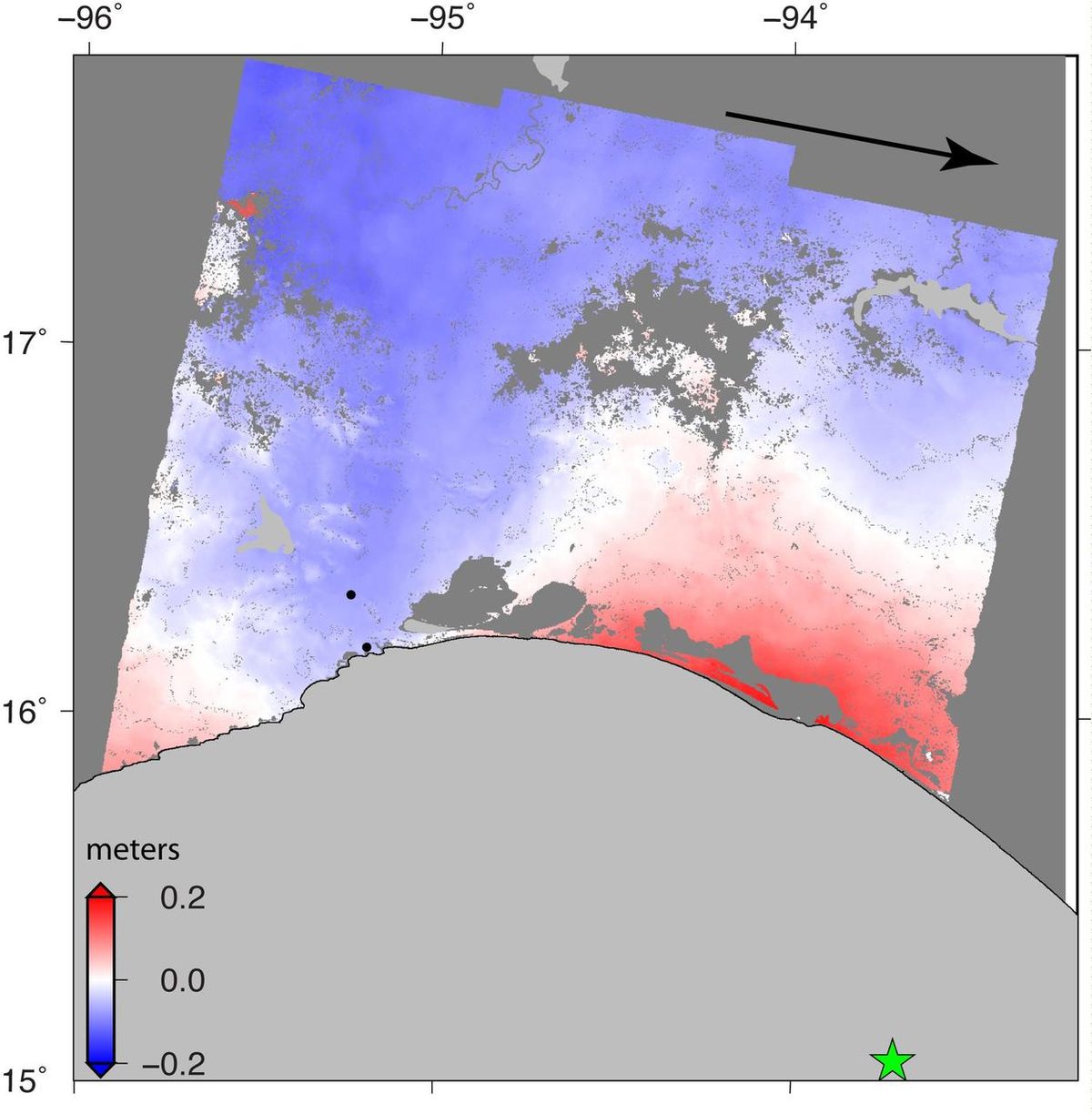
Sentinel-1 radar sees through clouds, day and night, to map floods, earthquakes and ice; Sentinel-1C and 1D joined in 2024 and 2025.
Image: NASA/JPL-Caltech (contains Copernicus Sentinel-1 data, ESA).
Last reviewed: 1 source cited
A 693 km The curved path an object takes as it travels around a planet, moon or star, like a satellite circling Earth. Glossary, covering the whole planet.
Source: ESA, Sentinel-1
Continuous radar imagery for disaster response, ice, land and ocean monitoring.
Source: ESA, Sentinel-1
Agency solution · active
The Copernicus Sentinel-1 satellites carry an advanced radar that supplies all-weather, day-and-night imagery of Earth's surface. Sentinel-1C launched on December 5, 2024 and Sentinel-1D on November 4, 2025, renewing the fleet. Recent ESA stories show it measuring ground movement after earthquakes and major ice loss from Greenland glaciers.
Source: ESA, Sentinel-1
Radar that ignores weather is vital when storms and floods hit.
Want to go deeper? ESA, Sentinel-1 has the full story and the latest updates.
For Further InformationMore solutions like this one, matched by meaning.
Sources are listed with each fact in the Five W's above.
APA
Saving Planets. (n.d.). Copernicus Sentinel-1 (ESA). https://www.savingplanets.com/Sentinel-1.html
MLA
"Copernicus Sentinel-1 (ESA)." Saving Planets, https://www.savingplanets.com/Sentinel-1.html.