Want to go deeper? Visit Starcloud (company).
 For further information
AI chips in orbit, powered by the sun and cooled by space itself.
Last reviewed: 1 source cited
The payoff is on Earth: compute that does not draw cooling water from rivers and lakes. The flights so far prove chips can run in The curved path an object takes as it travels around a planet, moon or star, like a satellite circling Earth. Glossary. They do not yet replace a terrestrial data center.
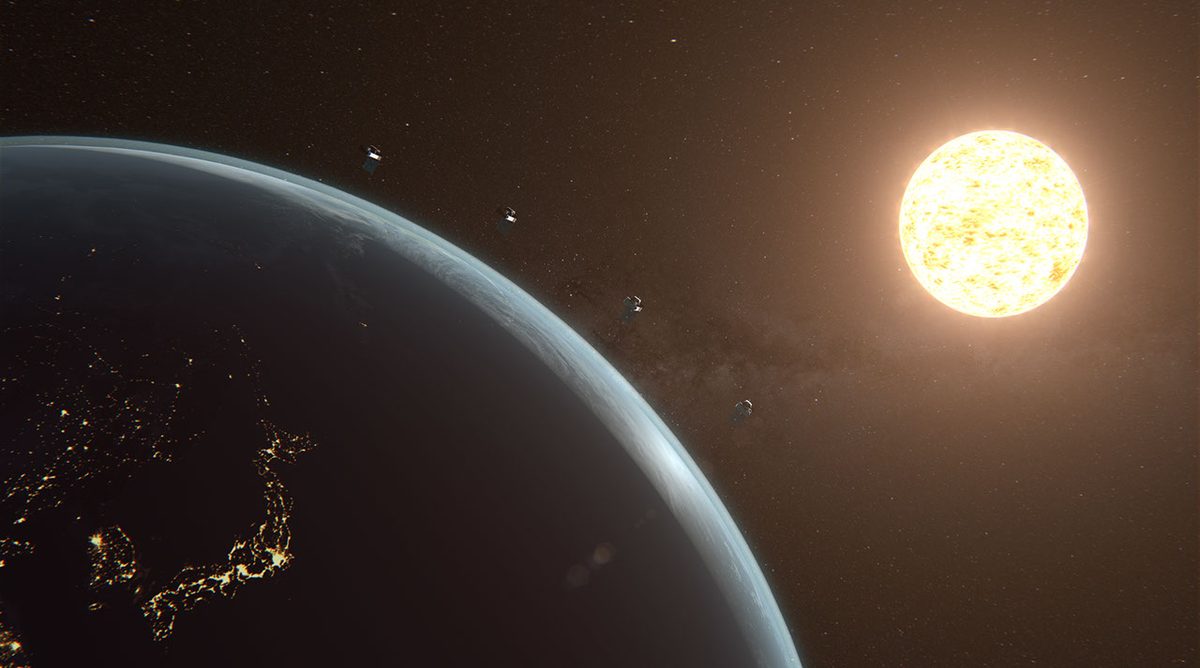
Companies moving compute off Earth. Starcloud flew the first NVIDIA H100. Google flew four TPUs on Project Suncatcher.
Satellites that run AI chips on solar power and dump waste heat by radiating it into space, instead of using water-cooling towers on the ground.
Starcloud put an H100 in orbit in November 2025. Project Suncatcher flew four TPUs on 1 October 2026. These are early flights, not a full data-center constellation.
Low Earth orbit. The chips stay above the atmosphere. The work they do is for users on the ground.
Ground data centers use large amounts of electricity and water for cooling. Orbit has continuous solar power and a cold sink for heat.
Want to go deeper? Visit Starcloud (company).
For further informationMore solutions like this one, matched by meaning.
Sources are listed with each fact in the Five W's above.
APA
Saving Planets. (n.d.). Orbital Data Centers. https://www.savingplanets.com/Orbital_Data_Centers.html
MLA
"Orbital Data Centers." Saving Planets, https://www.savingplanets.com/Orbital_Data_Centers.html.