Want to go deeper? NOAA, Blue carbon fast facts has the full story and the latest updates.
 For Further Information
Seagrass covers just 0.1% of the seafloor but stores 11% of the ocean's buried organic carbon. See also Mangroves on Deforestation.
Image: NASA/KSC.
Last reviewed: 2 sources cited
Natural solution · active
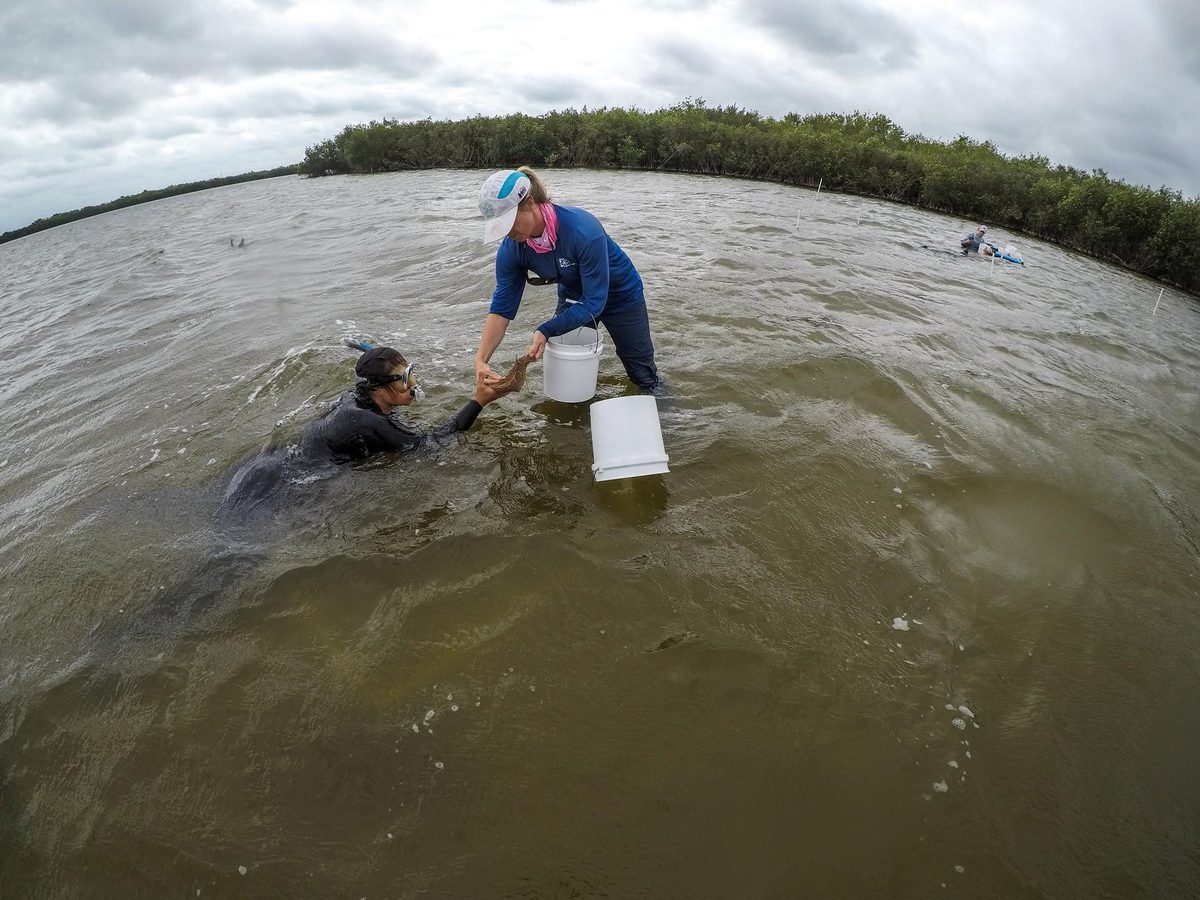
Flowering plants that grow underwater in shallow seas, forming meadows that shelter animals and store carbon. Glossary meadows cover just 0.1 percent of the world's seafloor but store 11 percent of the organic carbon buried in the ocean, NOAA says. They are also nurseries: a single acre of seagrass can support almost 40,000 fish, and animal abundance in grassbeds is 10 to 100 times higher than over nearby sand.
Source: NOAA, Blue carbon fast facts
Source: NOAA Fisheries, Submerged aquatic vegetation
See also Mangroves.
For Further Information: NOAA, Blue carbon fast facts
Seagrass covers just 0.1% of the world's seafloor but stores 11% of the organic carbon buried in the ocean.
Want to go deeper? NOAA, Blue carbon fast facts has the full story and the latest updates.
For Further InformationMore solutions like this one, matched by meaning.
Sources are listed with each fact in the Five W's above.
APA
Saving Planets. (n.d.). Seagrass Meadows. https://www.savingplanets.com/Seagrass.html
MLA
"Seagrass Meadows." Saving Planets, https://www.savingplanets.com/Seagrass.html.