Support The Great Bubble Barrier directly.
 Donate
SI-generated image by Saving Planets.
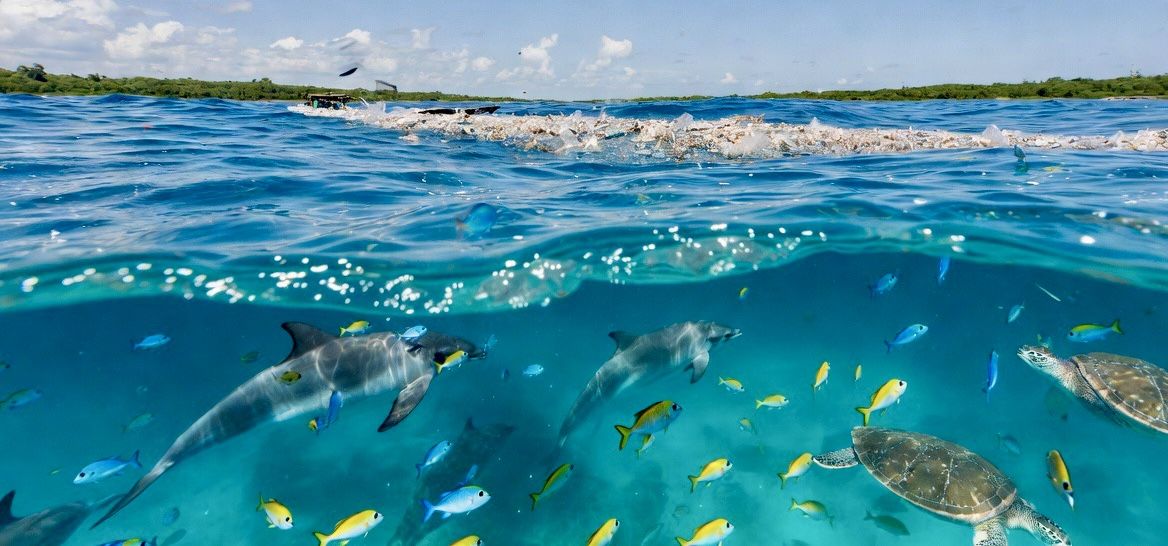
A bubble curtain that guides plastic aside without blocking boats or fish.
SI-generated image by Saving Planets.
Last reviewed: 0 sources cited
Amsterdam’s barrier is also a monitoring site: catch is dried, sorted, and analyzed so the city can see what is entering the canals. The official Amsterdam page did not show a verified piece-count in the text retrieved for this draft, so no total is stated here.
The Great Bubble Barrier, a Dutch social enterprise in Amsterdam. Bubble Barrier Amsterdam was commissioned by Waterschap Amstel, Gooi en Vecht and the Municipality of Amsterdam, with Waternet emptying the catch.
A perforated tube on the riverbed pumps air into a diagonal curtain of bubbles. The rising current lifts plastic to the surface and the flow carries it into a catchment system. Their FAQ says it targets plastic from 1 mm to 1 m and cites an 86 percent catch rate for floating plastic.
The first long-term Bubble Barrier was installed in Amsterdam’s Westerdok in autumn 2019. Later systems include Katwijk (summer 2022), Vila do Conde, Portugal (winter 2023), and Harlingen (spring 2024). A research installation also ran at a wastewater plant in Wervershoof.
Amsterdam’s Westerdok, on the way from the canals to the IJ and the North Sea; other Dutch waterways, including Katwijk and Harlingen on the way to the Wadden Sea; and Vila do Conde, Portugal, on the way to the Atlantic.
Boats and fish can pass. The screen runs 24/7 across the full width and depth, including plastic below the surface that a boat crew can miss.
Support The Great Bubble Barrier directly.
DonateSI-generated image by Saving Planets.
More solutions like this one, matched by meaning.
Links go straight to the organization. Saving Planets doesn't receive any of the money.
Sources are listed with each fact in the Five W's above.
APA
Saving Planets. (n.d.). The Great Bubble Barrier. https://www.savingplanets.com/Great_Bubble_Barrier.html
MLA
"The Great Bubble Barrier." Saving Planets, https://www.savingplanets.com/Great_Bubble_Barrier.html.